Español
 English
 Français
 Deutsch
 Italiano
 Nederlands
 Português
 日本語
 中文
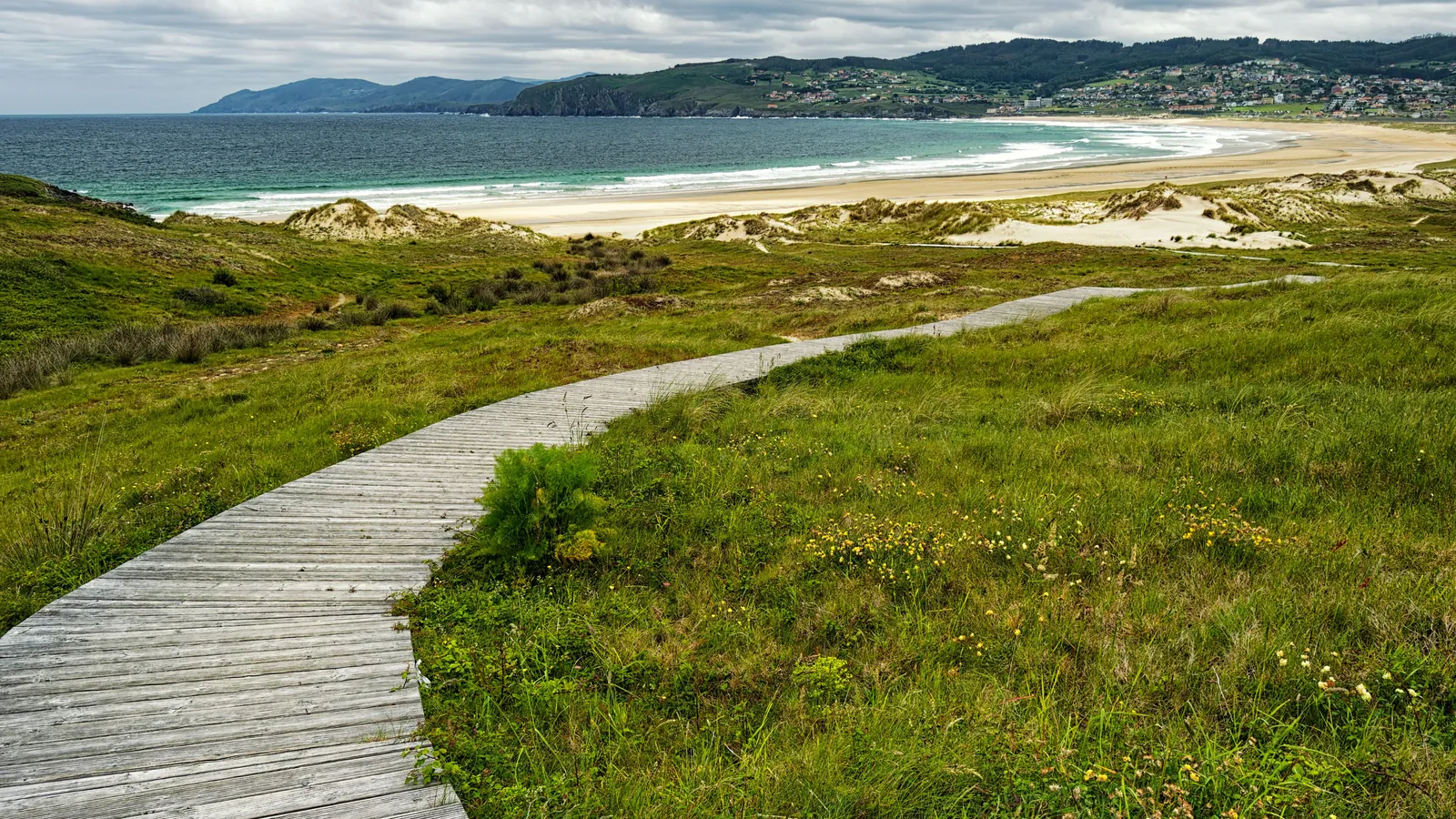
Galicia is granite, fine rain, rías reaching inland and a tomb that has drawn pilgrims for more than a thousand years. In 2025, it welcomed 8.8 million tourists and recorded more overnight stays than ever before.
Deciding where to stay in Galicia depends on whether you’re here to see cities, stretch out on a sandy beach or go walking. We’ve reviewed the places to stay in Galicia listed on our site and picked them one by one. Of the nearly 1,300 places that meet our standards, a third are hotels, with guesthouses close behind: accommodation here tends to be small-scale.
How to choose an area
Galicia is bigger than it looks: driving from Fisterra to Ourense takes more than two hours. These are the six bases we recommend:
- Santiago de Compostela: the cathedral, the historic centre and a gateway to the Costa da Morte and A Coruña.
- Sanxenxo and O Salnés: beaches, marinas, seafood and Ons Island.
- Pontevedra: a pedestrianised old town in the heart of the Rías Baixas, with the Portuguese Way on its doorstep.
- Vigo: the most populous city, with boats to the Cíes Islands and a ría sheltered by them.
- Sarria and the French Way: the final hundred kilometres through villages, oak groves and places serving octopus.
- Ourense and the Ribeira Sacra: free hot springs, the Sil canyons and terraced vineyards.
For a first week, combine Santiago with a base in the Rías Baixas. If you’re here to walk, the decision is already made: your stage determines where you sleep. Let’s take a look at each area.
Santiago de Compostela
Santiago is best explored on foot and at an unhurried pace: the historic centre, a UNESCO World Heritage Site since 1985, links Praza do Obradoiro, Praza da Quintana, the Mercado de Abastos and Alameda Park within a few minutes’ walk. We take you street by street through where to stay in Santiago de Compostela; see all the places to stay in Santiago.
In 2027, 25 July falls on a Sunday: it’s a Holy Year and the Holy Door will remain open all year, so book well ahead. Since October 2025, the city has also charged a tourist tax per person, per night, as does A Coruña. Right by the cathedral:
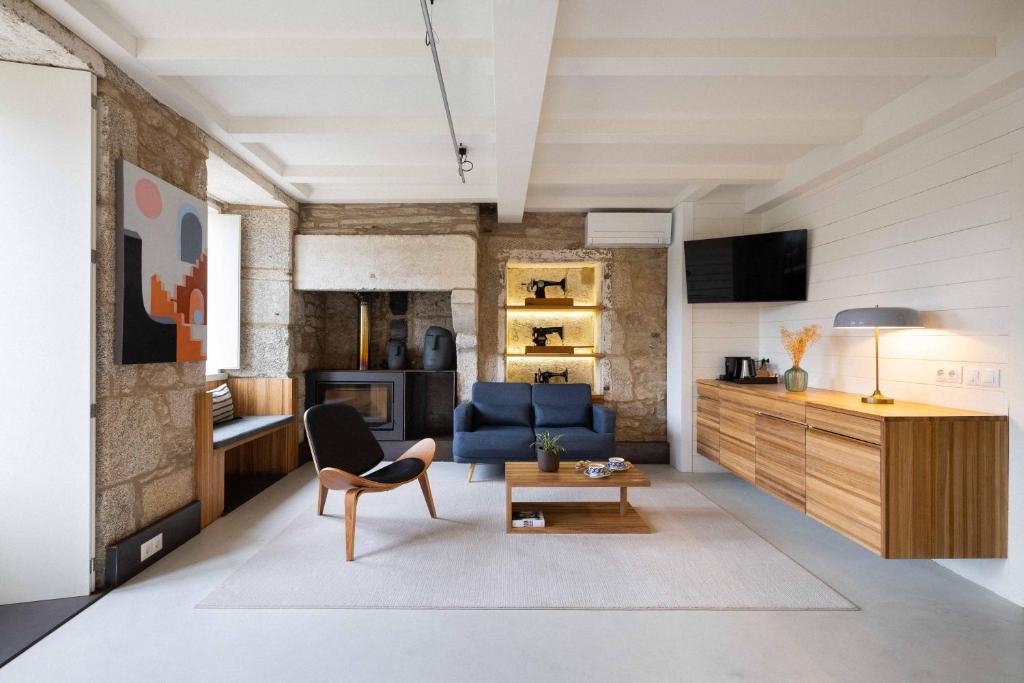
The Tailor's Garden
About 150 metres from Praza do Obradoiro, with its own garden—a welcome feature in the heart of the historic centre. The suite has a separate bedroom and living room, useful if you’re travelling as a couple and want a little more space. No parking; the buffet breakfast costs extra, and it’s best to arrive before five in the afternoon.
For groups or families, two whole houses:
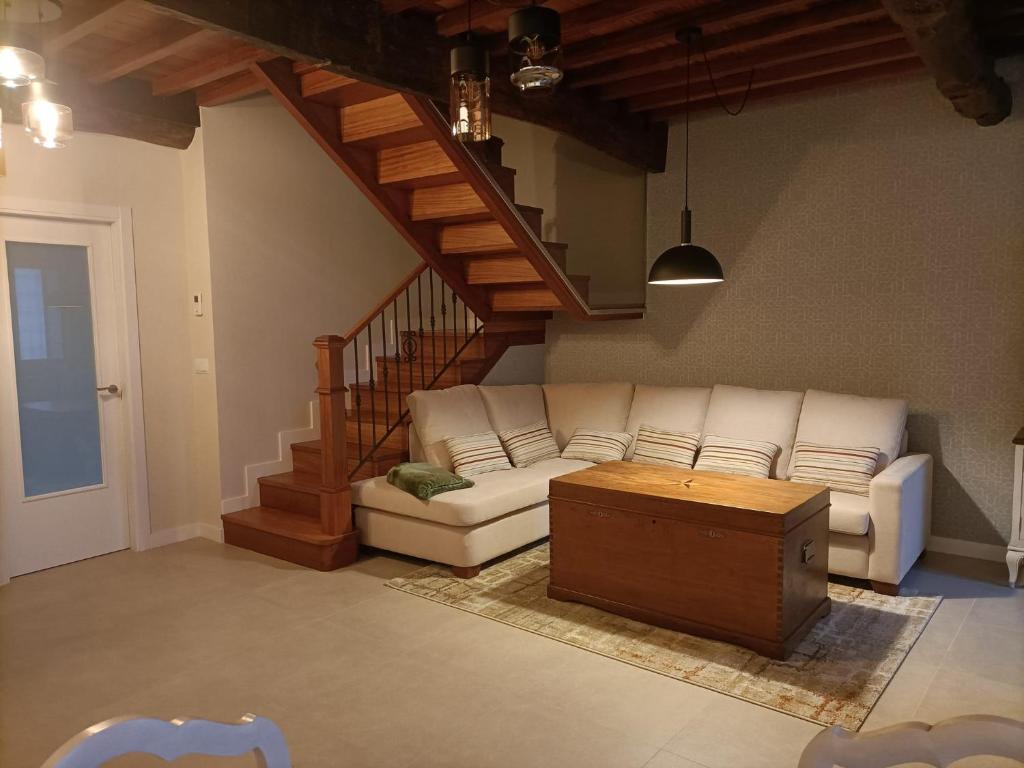
Casa a Antiga Tenda
A four-bedroom house for six, with a patio, terrace and green views. The kitchen, with an oven and dishwasher, makes it easy to settle into home life between outings. There’s no private parking, the upper floors are accessible only by stairs, and celebrations aren’t allowed.
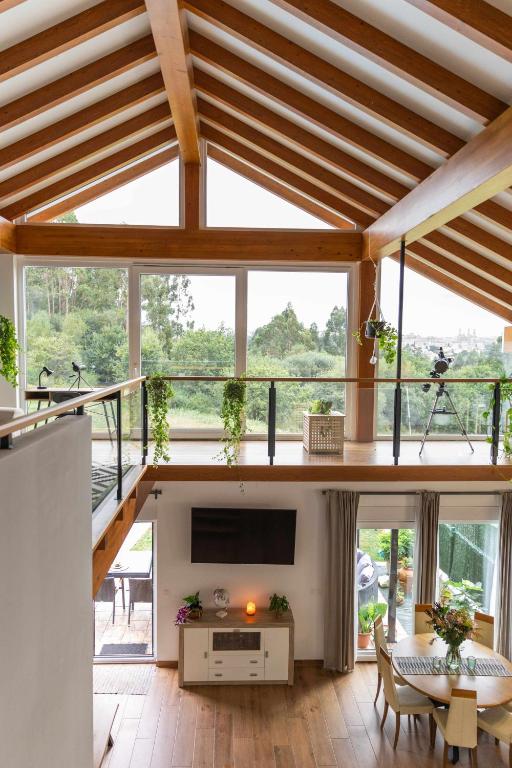
La Casa del Camino
A 250 m² villa for up to ten people, with five bathrooms, a private pool and a garden overlooking the city. A washer and dryer come in handy if you’re arriving from the Camino with laundry to do. Public parking is available without reservation, and a damage deposit is due on arrival.
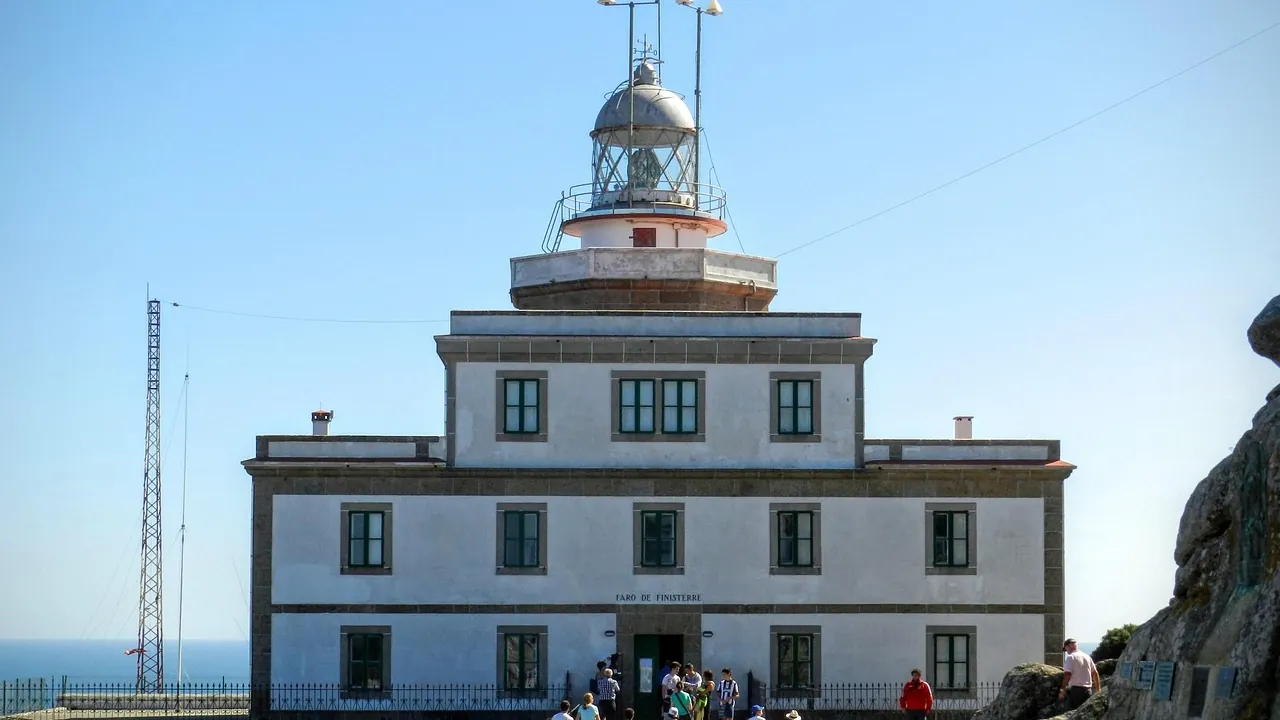
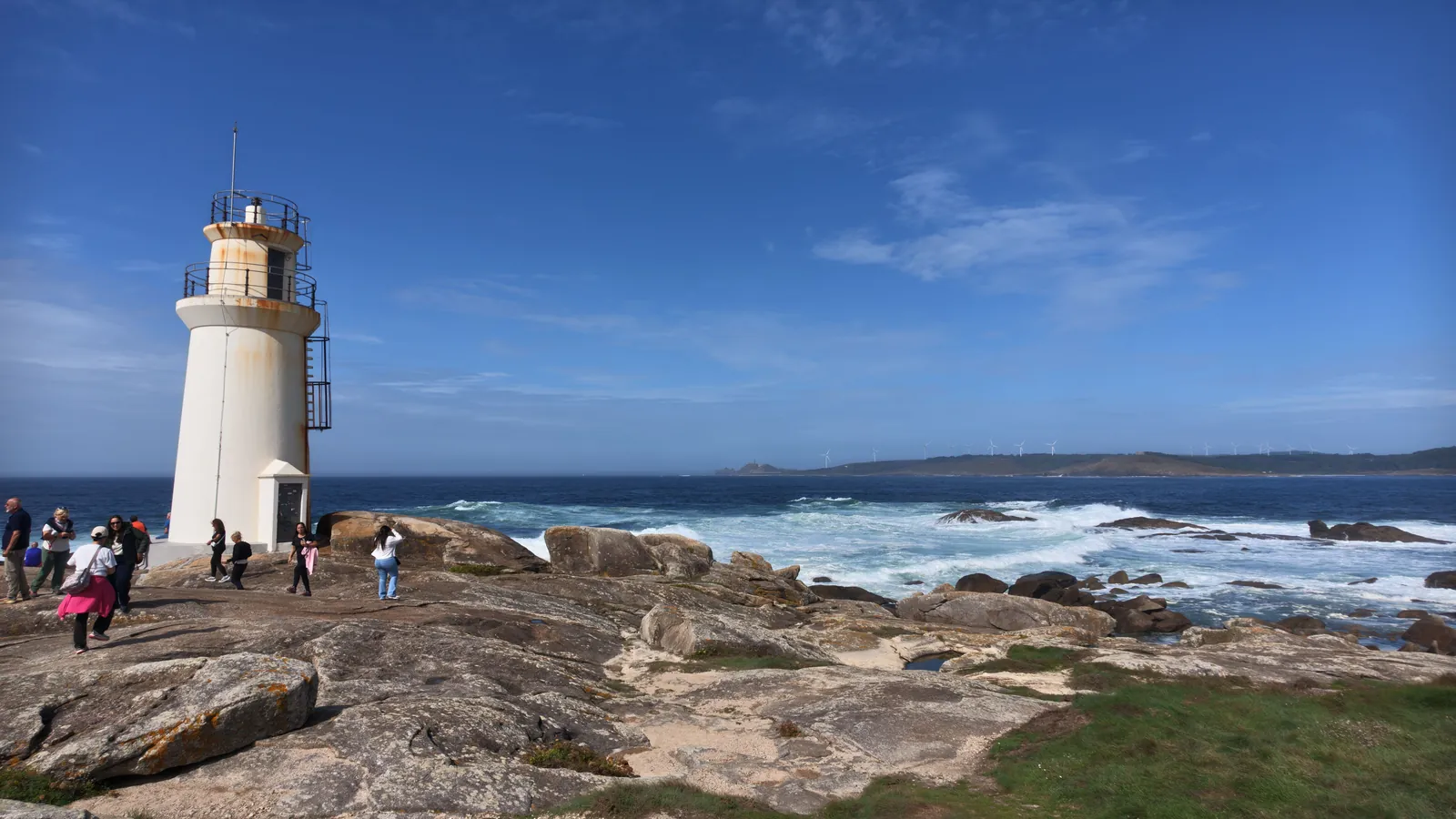
A Coruña is half an hour away by train: the Tower of Hercules and its seafront promenade are covered in where to stay in A Coruña. To the west, the Camino routes end at Fisterra and Muxía on the Costa da Morte. On the Portuguese Way, the last stop is Padrón, home of the peppers and Rosalía de Castro.
Sanxenxo and O Salnés
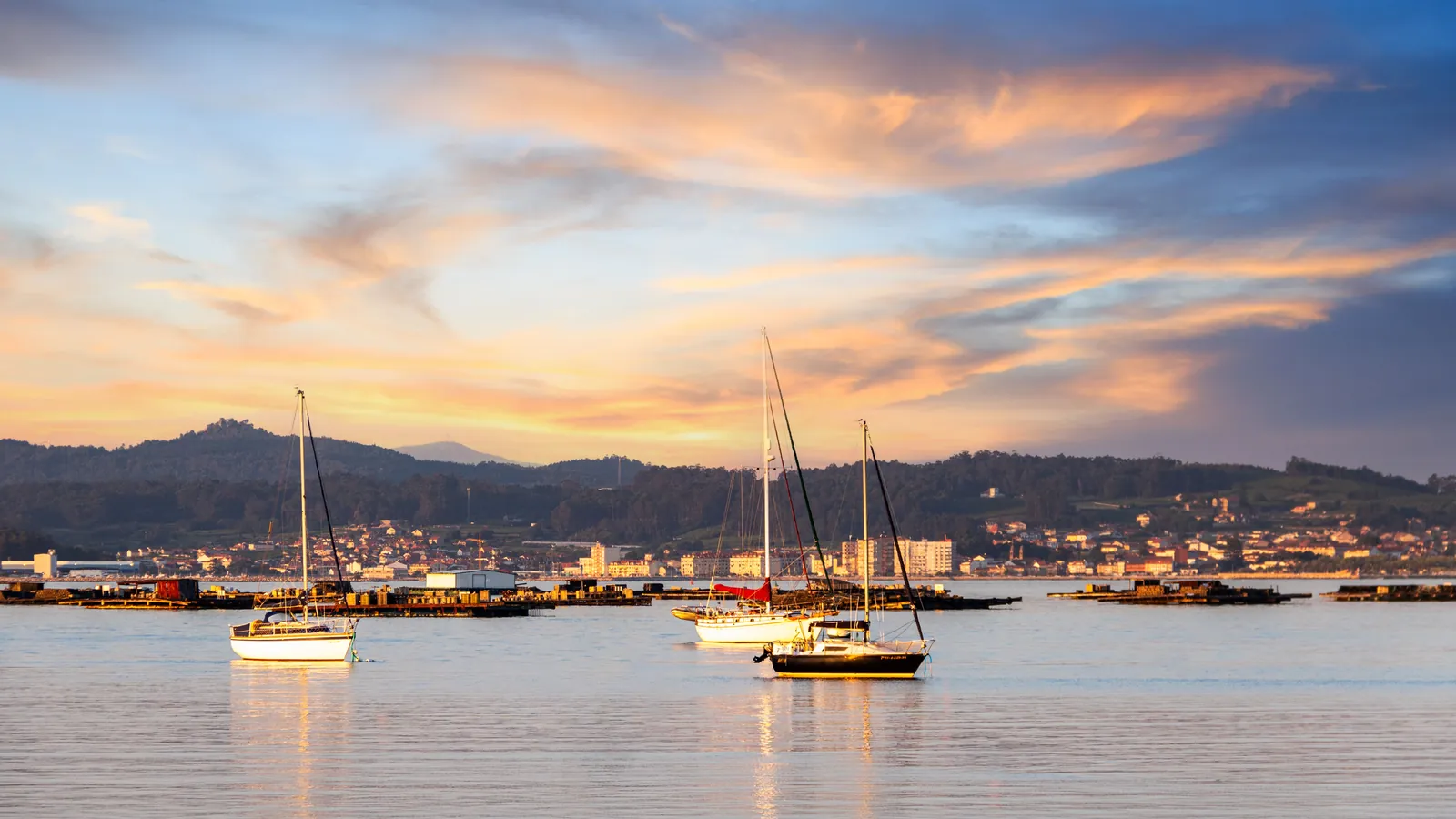
Sanxenxo is Galicia’s quintessential summer holiday spot: in 2026, it had 18 Blue Flag beaches, more than any other municipality in Spain. Silgar is next to the harbour, while Portonovo has coves and a seafaring atmosphere; boats to Ons Island leave from both, and during peak season you’ll need prior authorisation from the regional government of Galicia. We cover it in where to stay in Sanxenxo and in our guide to places to stay in Sanxenxo.
Across A Lanzada, the longest sandy beach in the Rías Baixas, O Grove holds its Festa do Marisco every October. For a beach stay, here are three options to suit different kinds of trips:
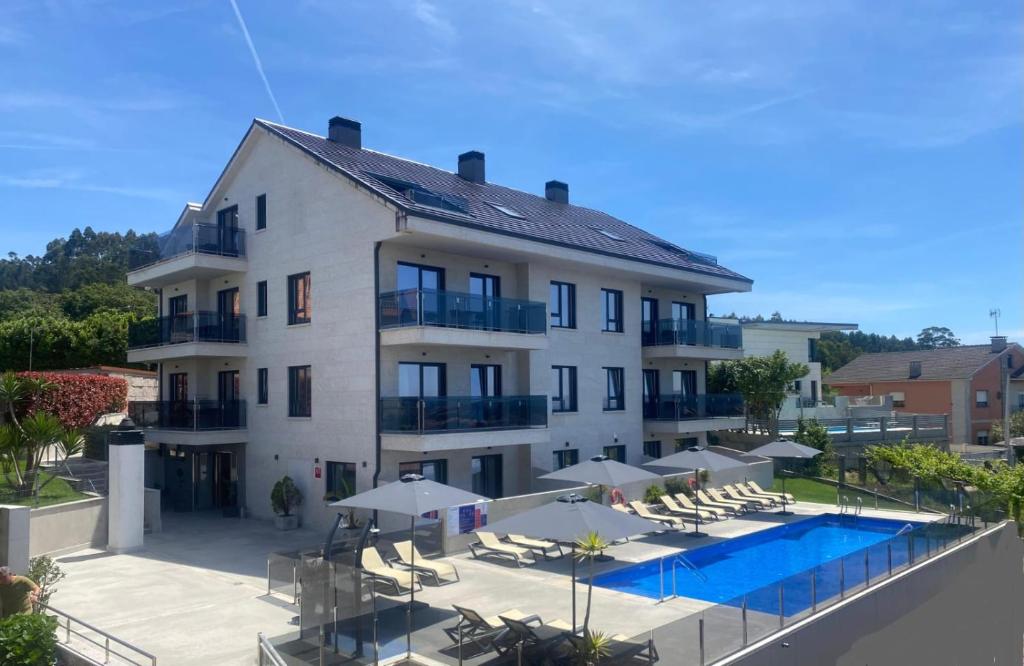
Apartamentos Onzamar
Two-bedroom apartments for six, with a fully equipped kitchen, outdoor pool and garden: a good fit for a family holiday. Silgar is just over a kilometre away, and garage parking is free, with no reservation needed. A minimum two-night stay is required, and quiet hours begin at midnight.
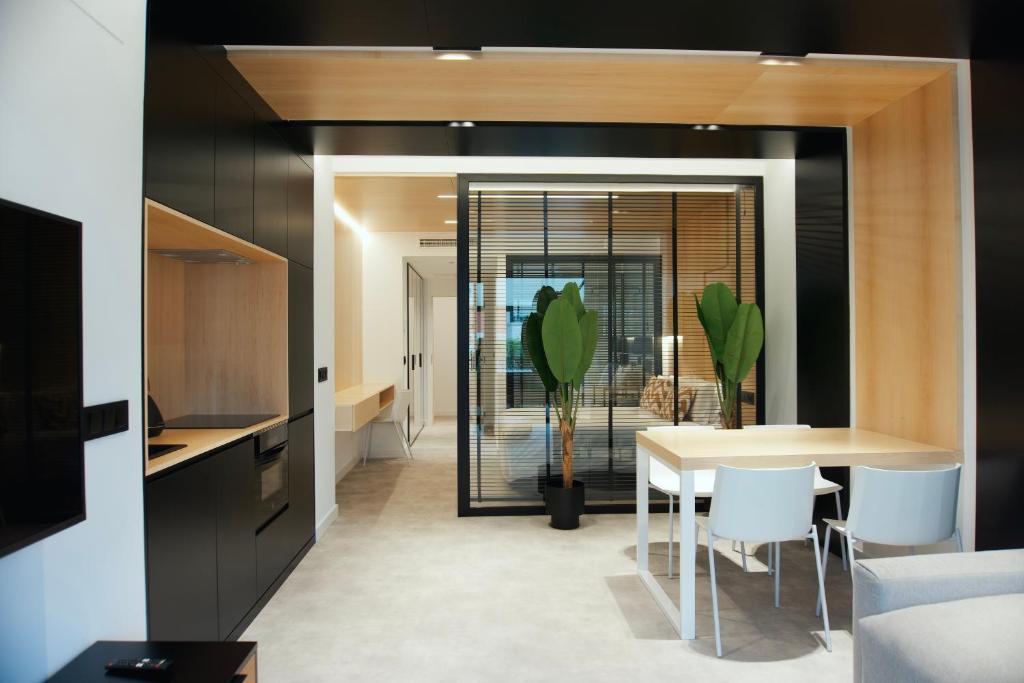
Loft Mardevela
If you’re travelling with a dog, they’re welcome here at no extra charge—just let the property know in advance. The one- and two-bedroom apartments have a terrace, and Carabuxeira beach is just a few minutes’ walk away. It’s a quiet place, with quiet hours from nine in the evening; nearby parking is paid.
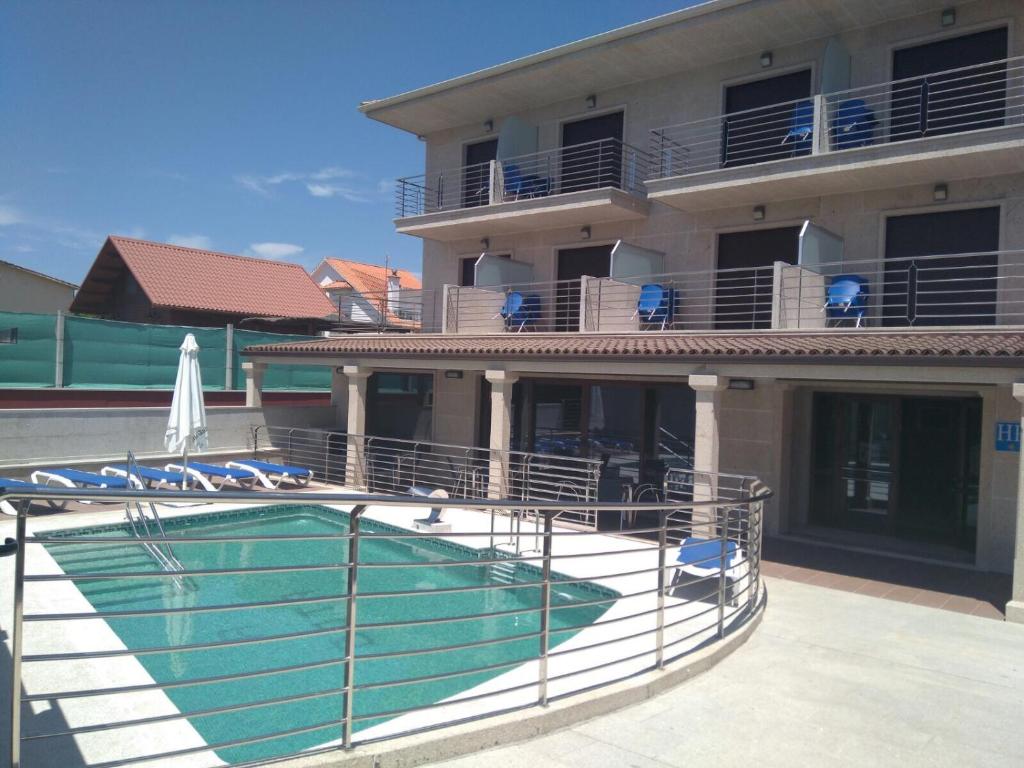
Hotel A Bota
A three-star hotel in the Portonovo area, a short walk from Canelas and Caneliñas, with air conditioning and an adapted room. Ask for a sea-facing room: these have a terrace, while standard rooms look out over the garden. Breakfast and parking cost extra, and a parking space must be reserved.
Pontevedra
Pontevedra has kept cars out of its centre: the old town, Galicia’s second-largest after Santiago, is best explored among stone squares, the Church of the Pilgrim Virgin and the Basilica of Santa María. Every first weekend of September, the Feira Franca fills it with medieval markets. Find out more in where to stay in Pontevedra and in our guide to places to stay in Pontevedra.
It’s also a stop on the Portuguese Way: the next is Caldas de Reis, with its thermal waters. The granaries of Combarro are just a few kilometres away. One place to stay right in the centre, another in the countryside:

Hostel Charino
140 metres from Santa María, it has dormitory beds in female, male or mixed rooms, as well as double rooms with private bathrooms. There’s a shared kitchen and a terrace; the buffet breakfast costs extra. Ideal if you’re travelling solo or walking a stage. There’s no parking, and check-in is only from three to six in the afternoon.
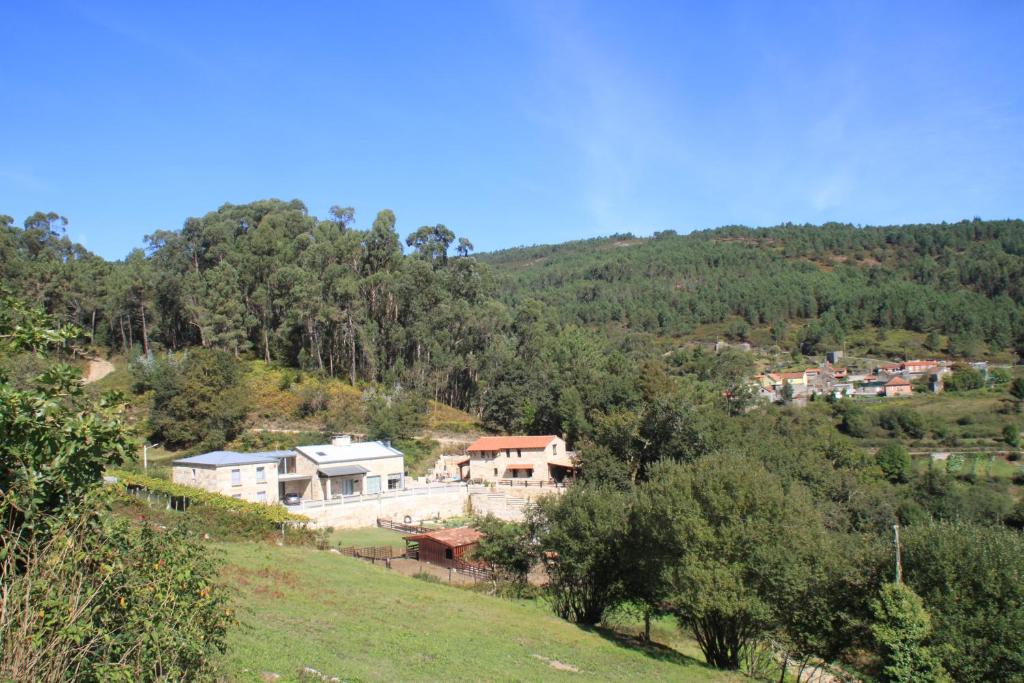
Hotel a Ecogranxa
A two-star hotel surrounded by hills, near the monastery of Poio, with a garden, picnic tables and walking and cycling routes starting right outside. Free parking is available without reservation. It’s best suited to travellers with a car: the station is 7 km away and the beach is almost three kilometres away.
Vigo
Vigo is Galicia’s most populous city: oysters on rúa da Pedra, the Casco Vello above the harbour and O Castro hill as a viewpoint. In 2026, it had 12 Blue Flag beaches, second only to Sanxenxo. Boats to the Cíes Islands leave from its maritime station; during peak season, you’ll need prior authorisation as well as a ticket. Find everything in where to stay in Vigo and in our guide to places to stay in Vigo.
Across the ría, Cangas de Morrazo is a short boat ride away; inland, Redondela connects the two routes of the Portuguese Way. Our two picks are at opposite ends of the spectrum:
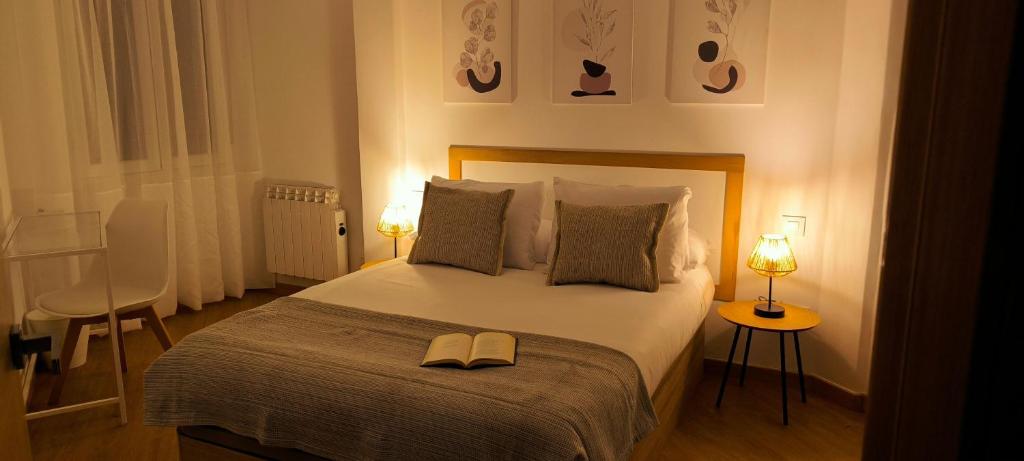
Hotel Arias
A simple one-star hotel 100 metres from the high-speed train station, ideal if you’re arriving by train and getting around on foot. The rooms have a seating area with a sofa, and there’s a lift and luggage storage. Breakfast isn’t included, and nearby public parking is paid.
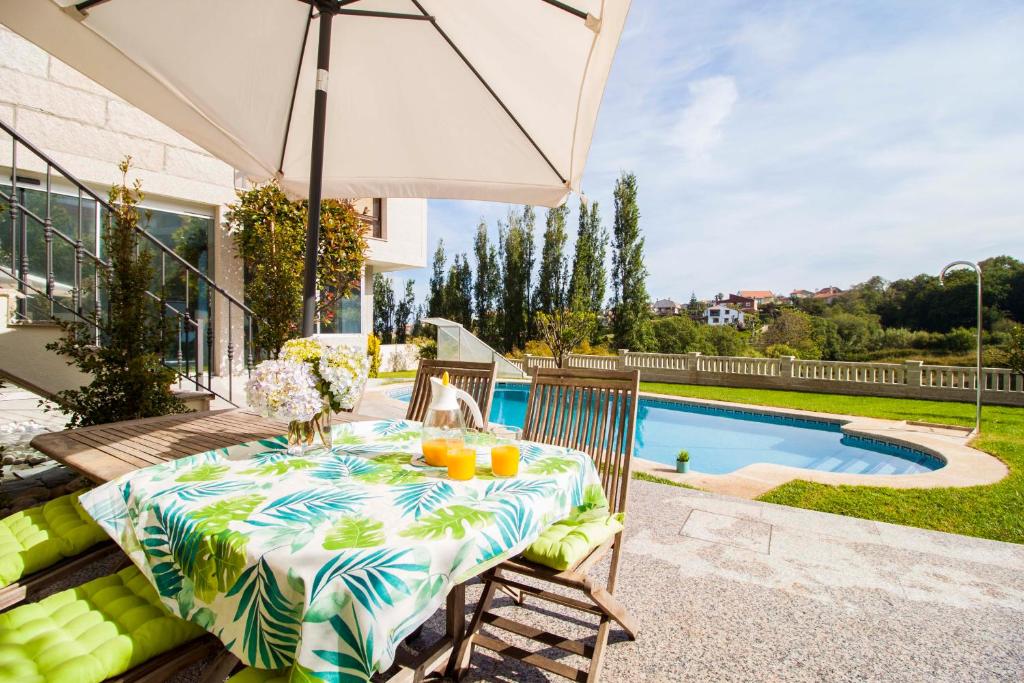
Villa El Castañal con Piscina Privada
Six bedrooms for thirteen people in Saiáns, with a seasonal pool, hot tub, sea views and O Fortiñón beach 250 metres away. Private parking is free. A cash deposit is required, and check-in is limited to a two-hour window in the afternoon.
Sarria and the French Way
In 2025, the Pilgrim’s Reception Office issued 530,987 compostelas, a record, and almost a third of those pilgrims set out from Sarria, just over a hundred kilometres from the cathedral. The town revolves around the Camino, with rúa Maior climbing towards the fortress. We cover it in where to stay in Sarria and in our guide to places to stay in Sarria.
The next stages pass through Portomarín, Palas de Rei, Melide, famous for its octopus, and Arzúa, known for its cheese, before reaching Santiago. For the night before setting out:
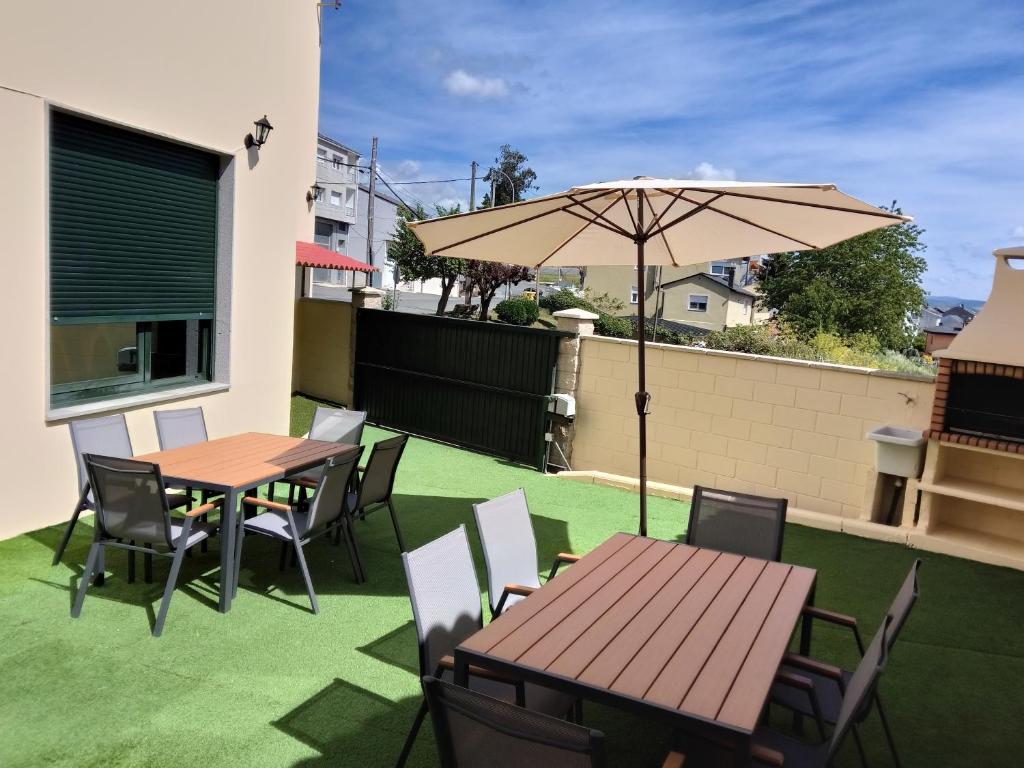
Pensión Casa Rego Sarria
A guesthouse designed with pilgrims in mind: it can provide a pilgrim passport and scallop shell, and arrange to have your backpack sent to the next stage. Every room has a kitchenette, and there’s a terrace and shared lounge. Rooms sleep two, children aren’t allowed, and some rooms share a bathroom.

Baixo a Lua Rooming
Right by the French Way, with rooms overlooking the town from their terraces, a garden and a family room for four. If you arrive by train or bus, the stations are a short walk away. There’s no parking, and check-in closes at ten in the evening.
Ourense and the Ribeira Sacra
Ourense is the city of hot water: As Burgas springs bubble up right in the centre, while the A Chavasqueira, O Muíño da Veiga and Outariz pools on the banks of the Miño are free. The cathedral is home to the Pórtico do Paraíso. Find out more in where to stay in Ourense and in our guide to places to stay in Ourense.
The Ribeira Sacra begins to the north: the Sil canyons, Romanesque monasteries and impossibly steep terraced vineyards. In 2026, UNESCO gave its bid another year, and the regional government hopes to see it listed in 2027 as Galicia’s fifth World Heritage Site. Two peaceful bases if you have a car:
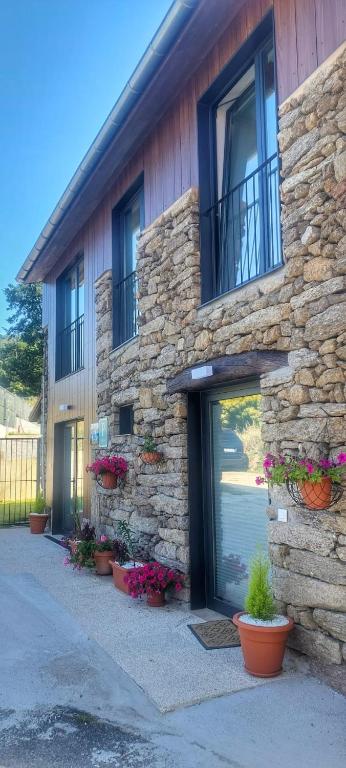
Armada Sacra A Teixeira
Two apartments in A Teixeira, in the heart of the Ribeira Sacra, with separate living rooms, mountain-view balconies and a seasonal garden pool. They’re close to viewpoints and wineries, and parking is free. Check-in is from five to eight in the evening, and parties aren’t allowed.
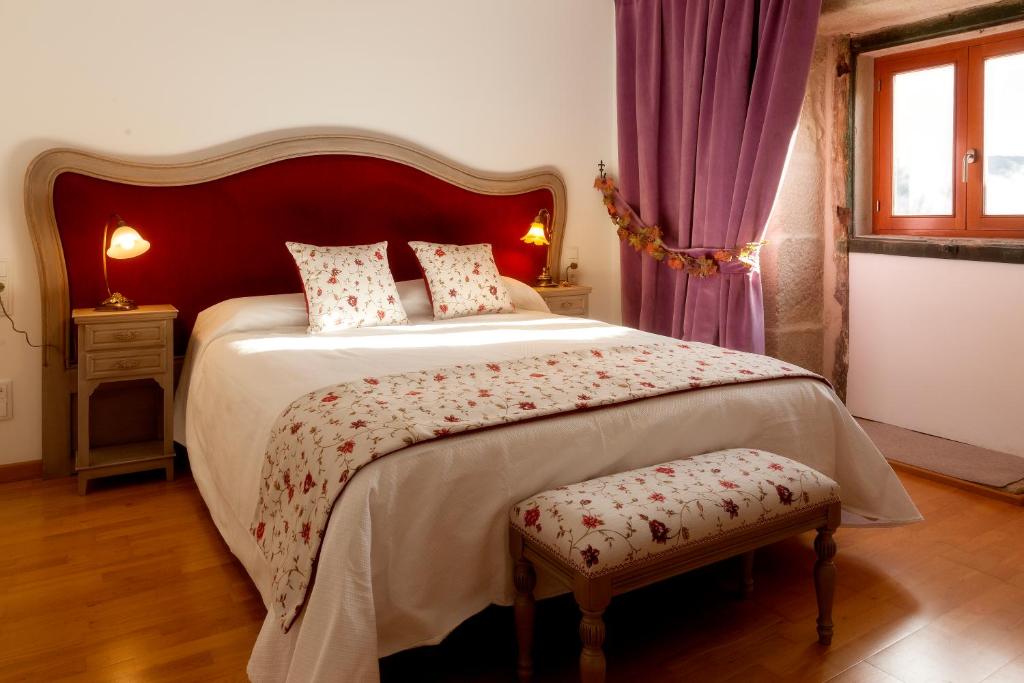
CASA RECTORAL DE SAN EUSEBIO
A rural hotel in the parish of San Eusebio, with a garden, terrace and seasonal outdoor pool. Choose from a continental breakfast or à la carte options, and make use of the free private parking. As Burgas is about nine kilometres away, so a car is essential.
When to go
From June to September, there’s little rain and the heat rarely becomes oppressive, although the Atlantic is still cold. It’s the season for the rías, the islands and festivals: on the night of 24 July, the eve of the Feast of St James, Santiago fills with fireworks.
Spring and autumn are ideal for walking the Camino and exploring the cities, with fewer people around; O Grove celebrates its seafood festival in October. Winter is rainy, but perfect for Ourense’s hot springs. In 2027, the Holy Year means you should book well ahead along the entire Camino route.
Getting there and getting around
Galicia has three airports: Santiago, Vigo and A Coruña. High-speed trains link Madrid with Ourense in just over two hours, then continue to Santiago, A Coruña and Vigo; the Atlantic Axis connects Vigo, Pontevedra, Santiago and A Coruña by train. Trains and buses are enough for travelling between cities, but a car is almost essential for the Costa da Morte, the Ribeira Sacra and the villages.
This is our general guide to Galicia. For more detail, see our guides to Santiago de Compostela, A Coruña, Vigo, Pontevedra and Ourense; our coastal guides to Sanxenxo, O Grove, Cangas, Fisterra and Muxía; and our Camino guides, from Sarria, Palas de Rei and Arzúa to Redondela, Caldas de Reis and Padrón.
Frequently asked questions
Answers to the questions that come up most often when planning a trip around Galicia.
What’s the best area to stay in Galicia?
It depends on your trip. Santiago de Compostela is the most well-rounded base for sightseeing, with A Coruña half an hour away by train. For beaches, head to the Rías Baixas: Sanxenxo has sandy beaches and a lively summer atmosphere, while Pontevedra and Vigo combine city and sea. For walking, Sarria is the classic starting point for the final hundred kilometres of the French Way. Ourense is a gateway to the Ribeira Sacra and the free hot springs on the Miño.
Where should I stay in Galicia for a first visit of one week?
Split the week between two bases. Spend three or four nights in Santiago to see the cathedral and historic centre, and take day trips to Fisterra or A Coruña. Then head down to the Rías Baixas: choose Pontevedra if you prefer a city with train connections, or Sanxenxo if you’re after a beach. From there, you can get to Combarro, A Lanzada and O Grove, and take a boat to the Cíes or Ons Islands. Changing hotels every night wastes a lot of time.
Do I need a car to get around Galicia?
Not between cities: the Atlantic Axis connects Vigo, Pontevedra, Santiago and A Coruña by train, while high-speed trains run from Madrid to Ourense, Santiago, A Coruña and Vigo. Buses serve Sanxenxo, O Grove and Fisterra. For the Costa da Morte, the Ribeira Sacra and rural accommodation, however, a car is almost essential, as many villages and viewpoints have very little public transport. If you rent one, choose accommodation with parking.
When’s the best time to visit Galicia?
For the beach, go from June to September, when the days are long and temperatures are mild; the Atlantic water is cold, though. Spring and autumn are ideal for the Camino, the cities and the Ribeira Sacra, with fewer people around, and O Grove holds its seafood festival in October. Rainy winter is a good time to visit Ourense’s hot springs. 2027 is a Holy Year in Santiago, which expects many more visitors, so book ahead.
Where should I stay if I’m walking the Camino de Santiago through Galicia?
On the French Way, the most popular starting point is Sarria, as the 100 km minimum needed to apply for the Compostela can be walked from there; overnight stops then include Portomarín, Palas de Rei, Melide and Arzúa. On the Portuguese Way, the Galician stages pass through Redondela, Pontevedra, Caldas de Reis and Padrón. Book each night in peak season, especially in 2027, and look for guesthouses that can forward your backpack.