Español
 English
 Français
 Deutsch
 Italiano
 Nederlands
 Português
 日本語
 中文
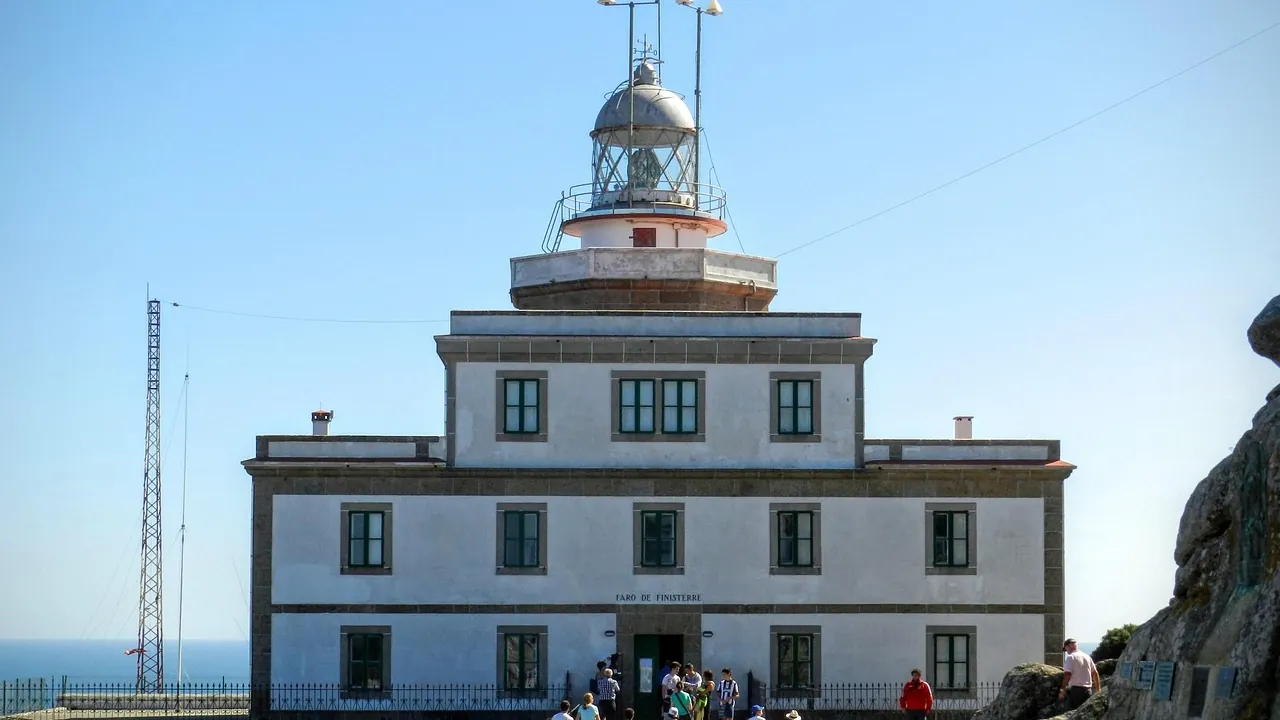
Finisterre (Fisterra in Galician) is a fishing village at the end of a granite peninsula, in the heart of the Costa da Morte. For centuries, it was thought to be the farthest edge of the known world. Today, it’s the destination for pilgrims who continue walking beyond Santiago to see the Atlantic.
The village is easy to explore on foot, so deciding where to stay in Finisterre mainly comes down to choosing between the harbour, the beach or somewhere quiet. Here’s how the areas compare, along with places to stay that we’ve personally selected.
How to choose an area
Most of the accommodation is in the village centre:
- The centre and harbour: steep streets around Ribeira Beach, with the fish market, restaurants and bus stop. The most practical choice if you’re arriving without a car.
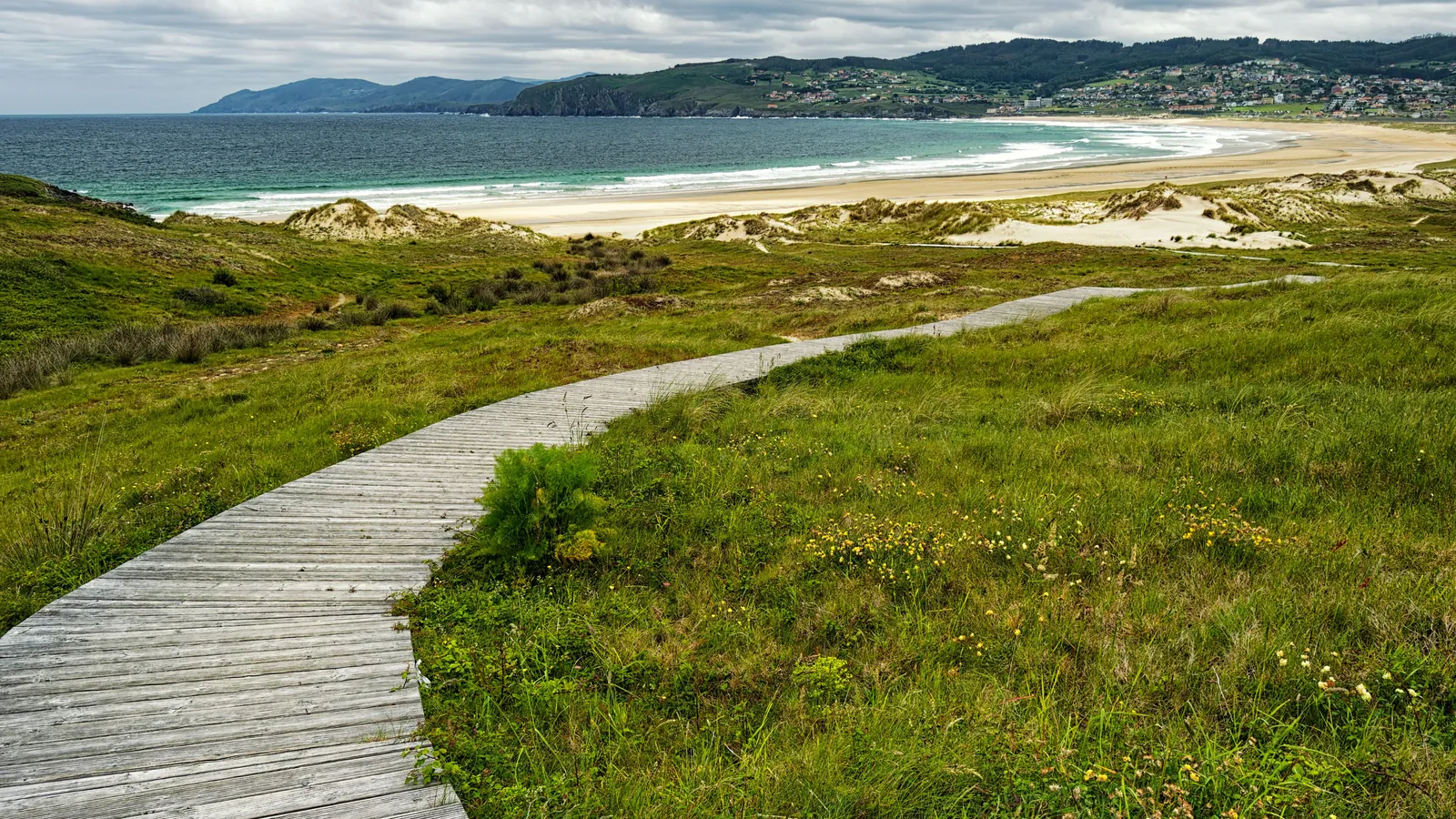
- Langosteira: the long, sheltered beach at the entrance to the village, where the Camino arrives. More space, more peace and a calm swim in summer.
- The cape: the only place to stay by the lighthouse is the former navy semaphore station, now the small Hotel O Semaforo. Ideal if you want the sunset right on your doorstep.
If you’re driving, bear in mind that only three of the six places we recommend have free private parking, and the streets in the centre are narrow.
Where to stay in Finisterre: our picks
Six places between the harbour and Langosteira. You’ll find more options on our page of places to stay in Finisterre. We’ll start in the centre.
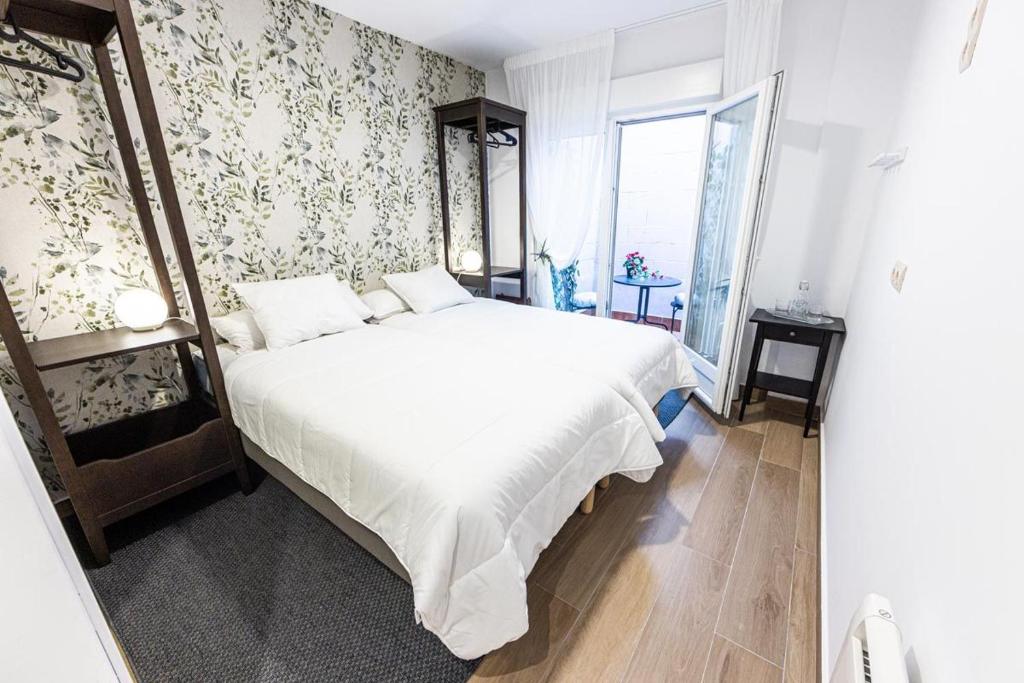
Hospedaxe Memorias de Sophia
An adults-only guesthouse in the centre, a few minutes from the bus stop: convenient if you’re arriving from Santiago with a backpack. The rooms are soundproofed and the entire building is accessible, with a lift. There’s no parking, and rooms sleep a maximum of two.
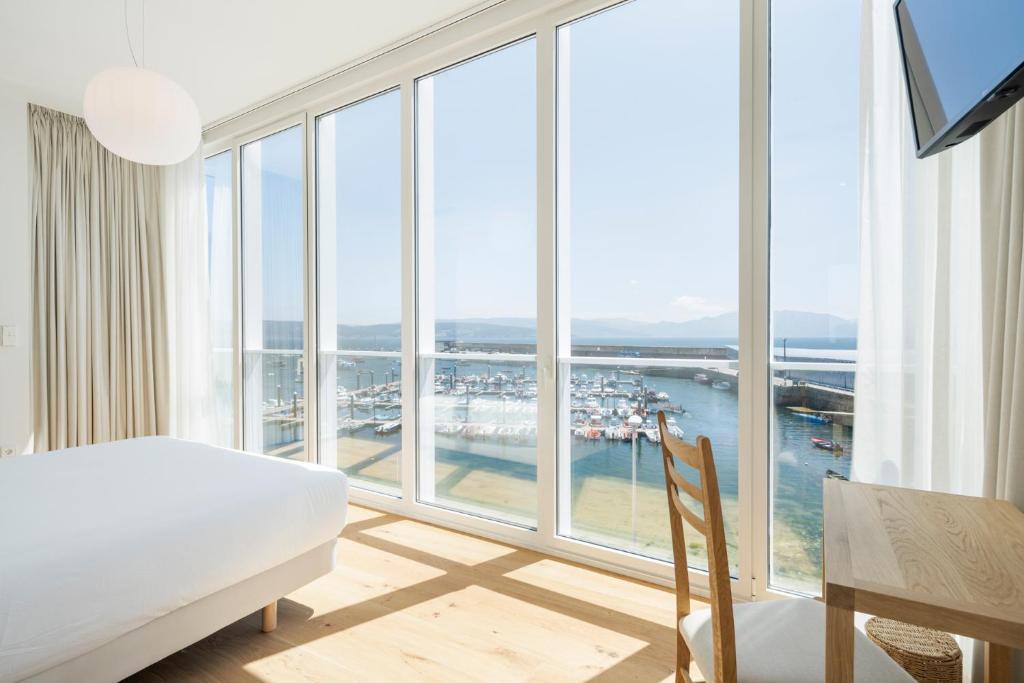
Porto Real Hotel
A three-star hotel 150 metres from Ribeira Beach, with rooms overlooking the sea and hills. Breakfast is available as a buffet, continental or gluten-free option. There’s no private parking, and if you’re travelling as a group of three, the suite with a terrace is the only option.
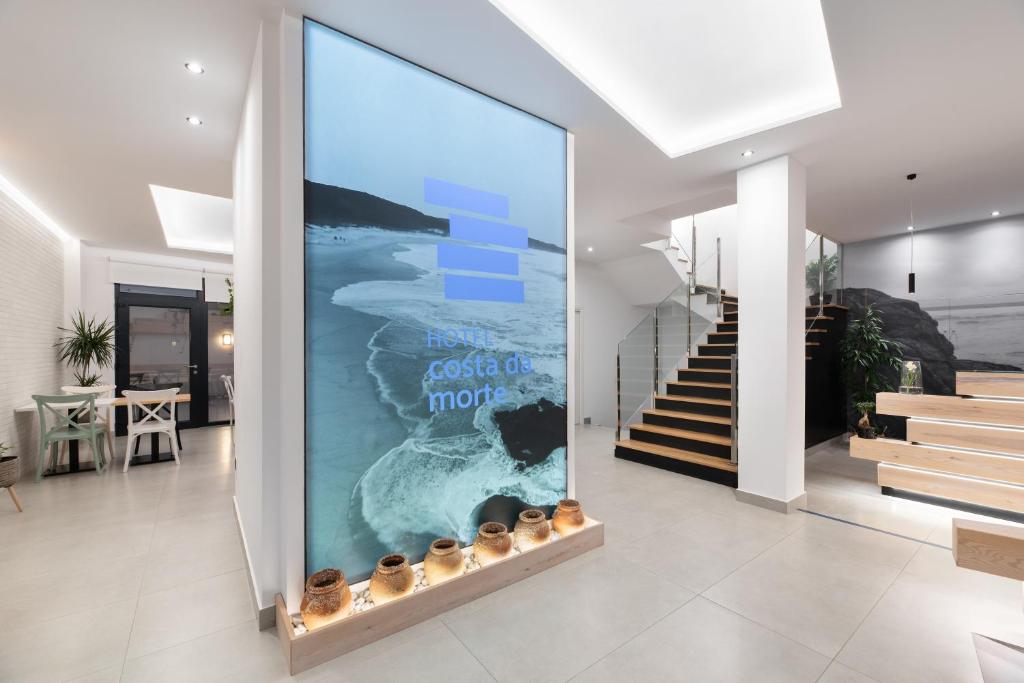
Hotel Costa da Morte
A simple hotel a few minutes’ walk from Ribeira, with a bar, terrace and rooms with balconies or sea views. The 40 m² Junior Suite has a living room and plenty of space for a longer stay. Private parking is free but cannot be reserved, so it isn’t guaranteed.
If you’d rather have sand on your doorstep, these three places are in Langosteira.
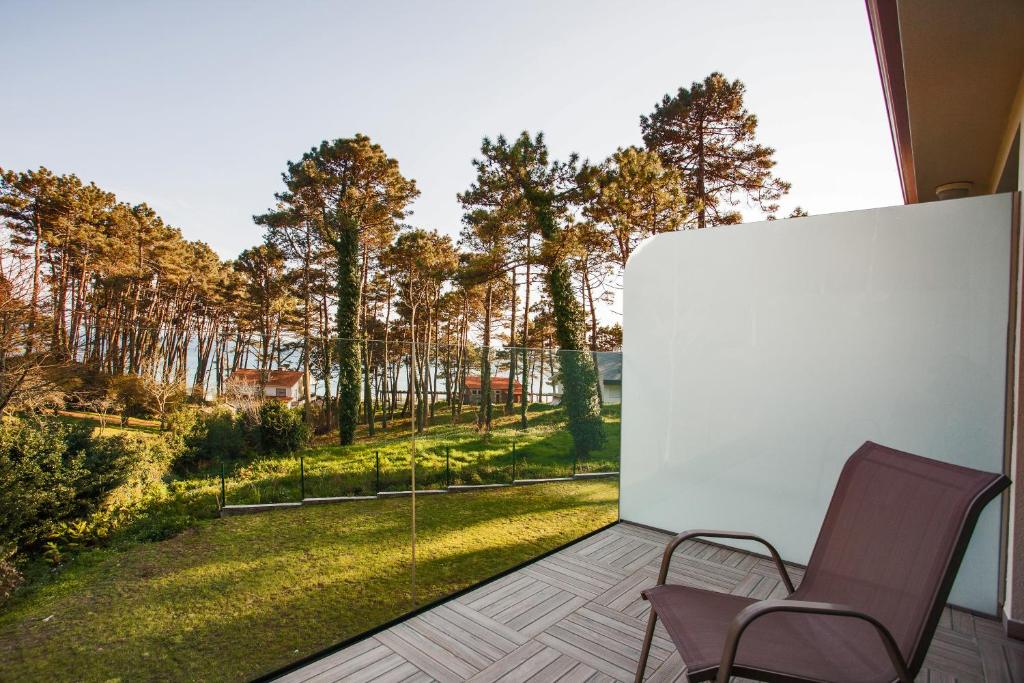
Hotel Alén do Mar
A family-run hotel 150 metres from Langosteira, with gardens and terraces overlooking the bay; some rooms have a whirlpool bath. Free parking is handy for driving to Muxía or the lighthouses. Breakfast costs extra, and rooms sleep two.
Pension Casa Pedro
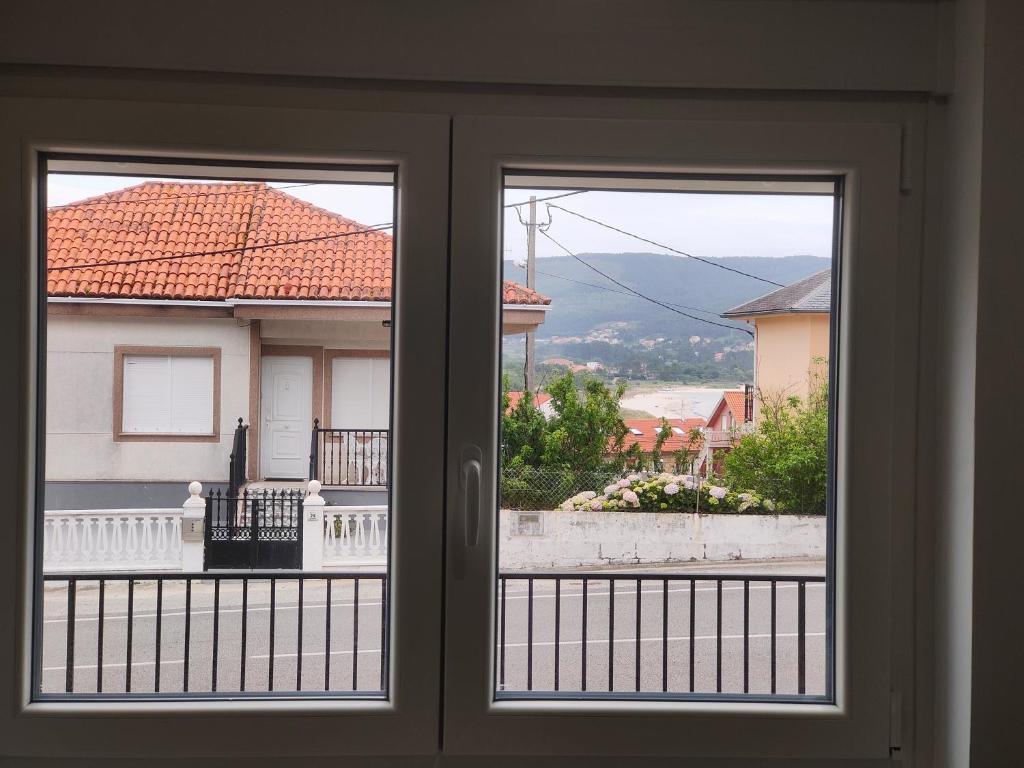
A guesthouse opposite Langosteira, with an en-suite bathroom in every room and some double rooms overlooking the garden. The fast connection is good enough for video calls if you’re working while travelling. Check-in closes at nine in the evening, and there’s no parking.
Cabañas de Mallas
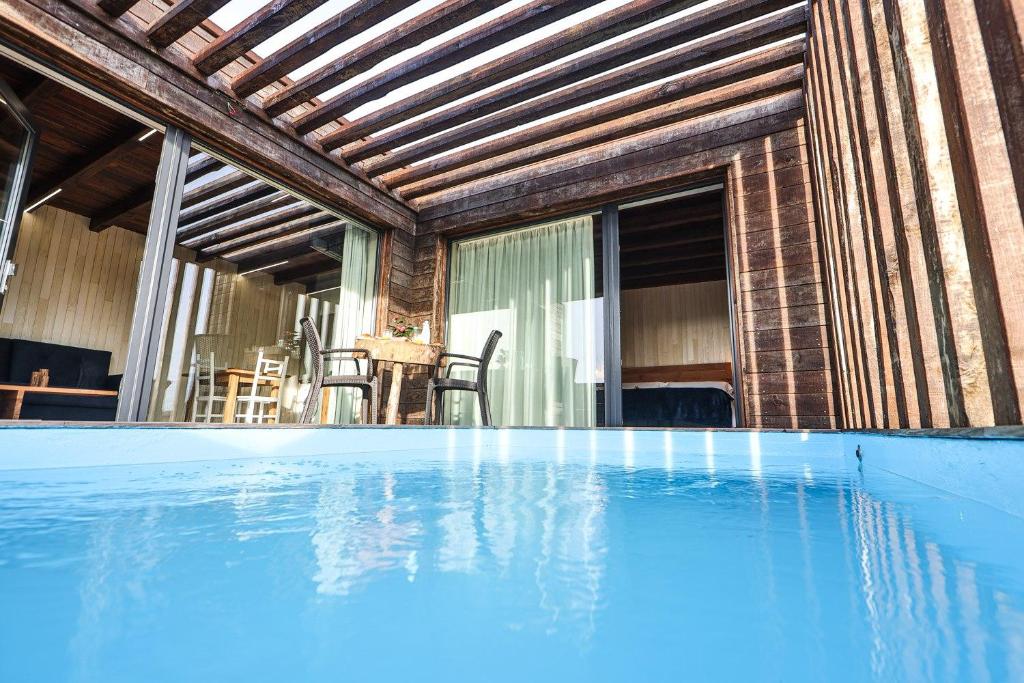
Cabins for four with a private pool, whirlpool bath and fully equipped kitchen, about an eight-minute walk from Langosteira. A good fit for families or friends who want to cook and park without hassle. Parties aren’t allowed, and guests are asked to keep noise down from midnight to eight.
What to see in Finisterre
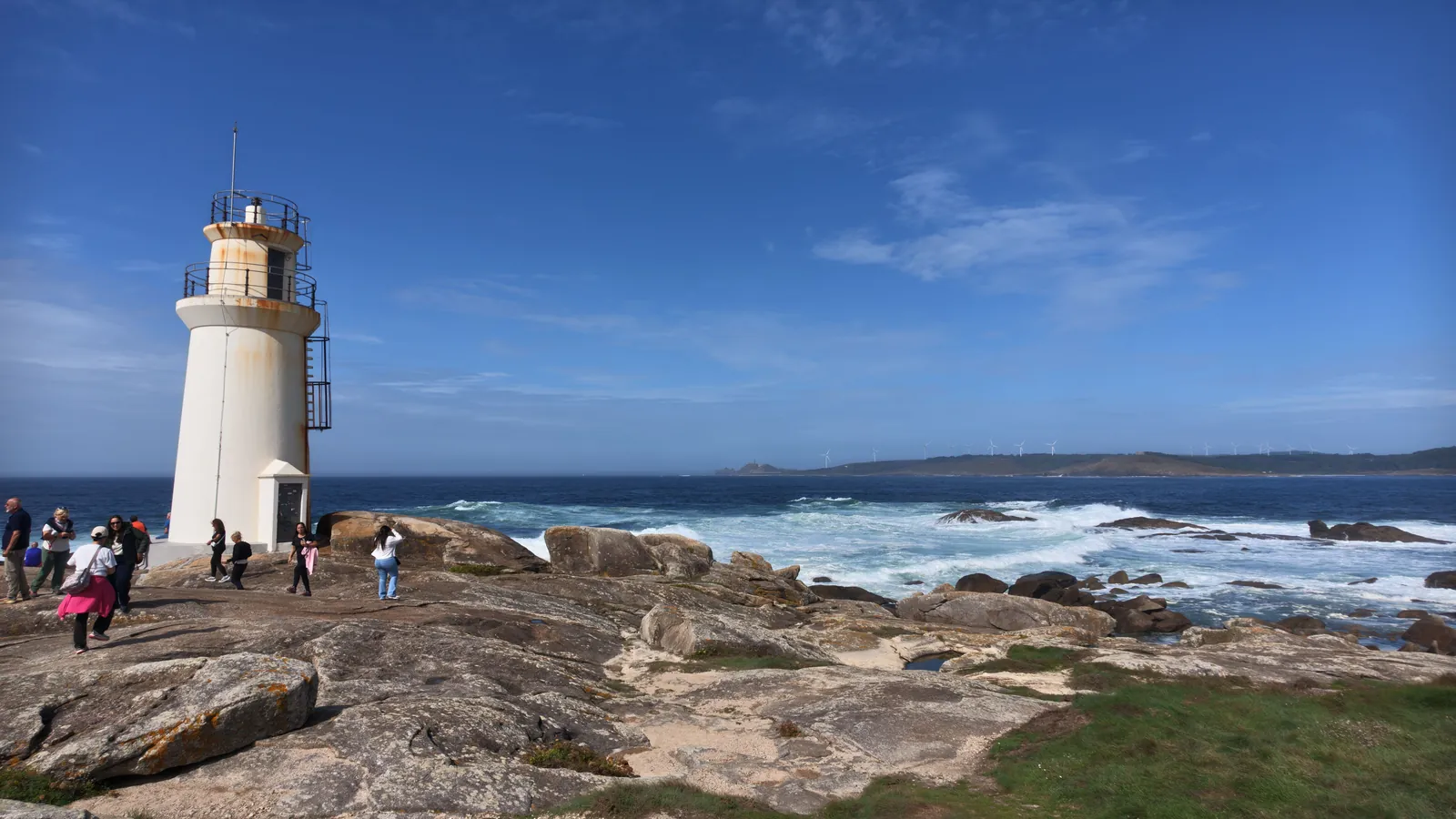
The must-see is the cape, about three kilometres from the village along the lighthouse road, which many people walk. The lighthouse, built in 1853, is still in service, and beside it is the foghorn known locally as the Cow. At the kilometre-zero marker, pilgrims finish the Camino while looking out over the ocean.
Monte Facho rises above the cape, where tradition places the Ara Solis, an ancient altar to the sun. In the village, it’s worth stopping at the Romanesque church of Santa María das Areas, home to the Santo Cristo, and San Carlos Castle, with its small fishing museum. From the fish market’s gallery, you can watch the auction by arranging a visit with the fishermen’s guild.
For a swim, Langosteira is the sheltered beach. Mar de Fóra, on the exposed side of the peninsula, is impressive, but its currents are dangerous and swimming is not recommended. If you’re staying longer, Muxía is less than an hour away by car.
When to visit Finisterre
The climate is Atlantic: mild, windy summers and mild, rainy winters. It’s worth booking ahead for these dates:
- Easter Week: the Santo Cristo festivities, with their processions, are the village’s most deeply rooted celebration.
- Festa do Longueirón: the first weekend in August, with razor clams grilled or served in empanada and an Encontro Pirata that recreates the 1404 attack by English corsairs.
- Holy Year 2027: 25 July 2027 falls on a Sunday, making it a Holy Year of Santiago, with more pilgrims on the Camino.
Getting there and getting around
The nearest airport is Santiago, about 90 km away. Several direct Monbus services run every day from Santiago bus station, taking a little over two hours. By car, it takes around an hour and a half.
On foot, the Camino de Fisterra and Muxía connects Santiago with the coast in three or four stages. For Xacobeo 2027, Turismo de Galicia is preparing paths separated from traffic and safer crossings. The Camiño dos Faros comes from the north: about 200 km from Malpica, ending at the lighthouse after a final stage of almost 27 km from Nemiña.
You don’t need a car in the village, but it’s almost essential for exploring the Costa da Morte.
Finisterre is part of our guide to where to stay in Galicia. If you’re continuing along the Costa da Morte, see where to stay in Muxía; if you’re looking for a city next, see where to stay in A Coruña and where to stay in Vigo.
Frequently asked questions
Answers to the questions we’re most often asked by people planning a few days at the edge of the earth.
What’s the best area to stay in Finisterre?
The centre, by the harbour and Ribeira Beach, is the most convenient choice without a car: the bus stop and restaurants are just a few steps away. Langosteira, at the entrance to the village, is quieter and has the best beach for swimming. There’s hardly any accommodation by the lighthouse, so most people stay in the village and head up to the cape at sunset.
How do you get to Finisterre from Santiago without a car?
By bus: several direct Monbus services run every day from Santiago bus station, taking a little over two hours. Santiago Airport, about 90 km away, is the nearest. Many people also arrive on foot via the Camino de Fisterra and Muxía, in three or four stages. Once in the village, you can get around on foot, including the walk to the lighthouse.
How long does it take to get from the village to the lighthouse?
The cape is about three kilometres from the centre. Walking along the lighthouse road takes around 45 minutes, with sea views for most of the way; by car, it’s just a few minutes. At the top are the lighthouse, the foghorn known as the Cow and the kilometre-zero marker. If you’re going for sunset, allow plenty of time and bring an extra layer.
Which beach in Finisterre is safe for swimming?
Langosteira is the most convenient for swimming: long, with fine sand and sheltered by the estuary, at the entrance to the village. In the centre, there’s the small Ribeira Beach by the harbour. Mar de Fóra, open to the ocean, is spectacular for an evening walk, but has dangerous currents and is not suitable for swimming. The water is cold here even in the middle of August.
When is the best time to visit Finisterre?
Between June and September, the weather is more stable and there’s more going on, though it’s also busier; spring and autumn are good times for peaceful walks. Book early for Easter Week and the Santo Cristo festivities, and for the first weekend in August, when the Festa do Longueirón takes place. In 2027, the Holy Year of Santiago will bring plenty of activity along the Camino.