Español
 English
 Français
 Deutsch
 Italiano
 Nederlands
 Português
 日本語
 中文
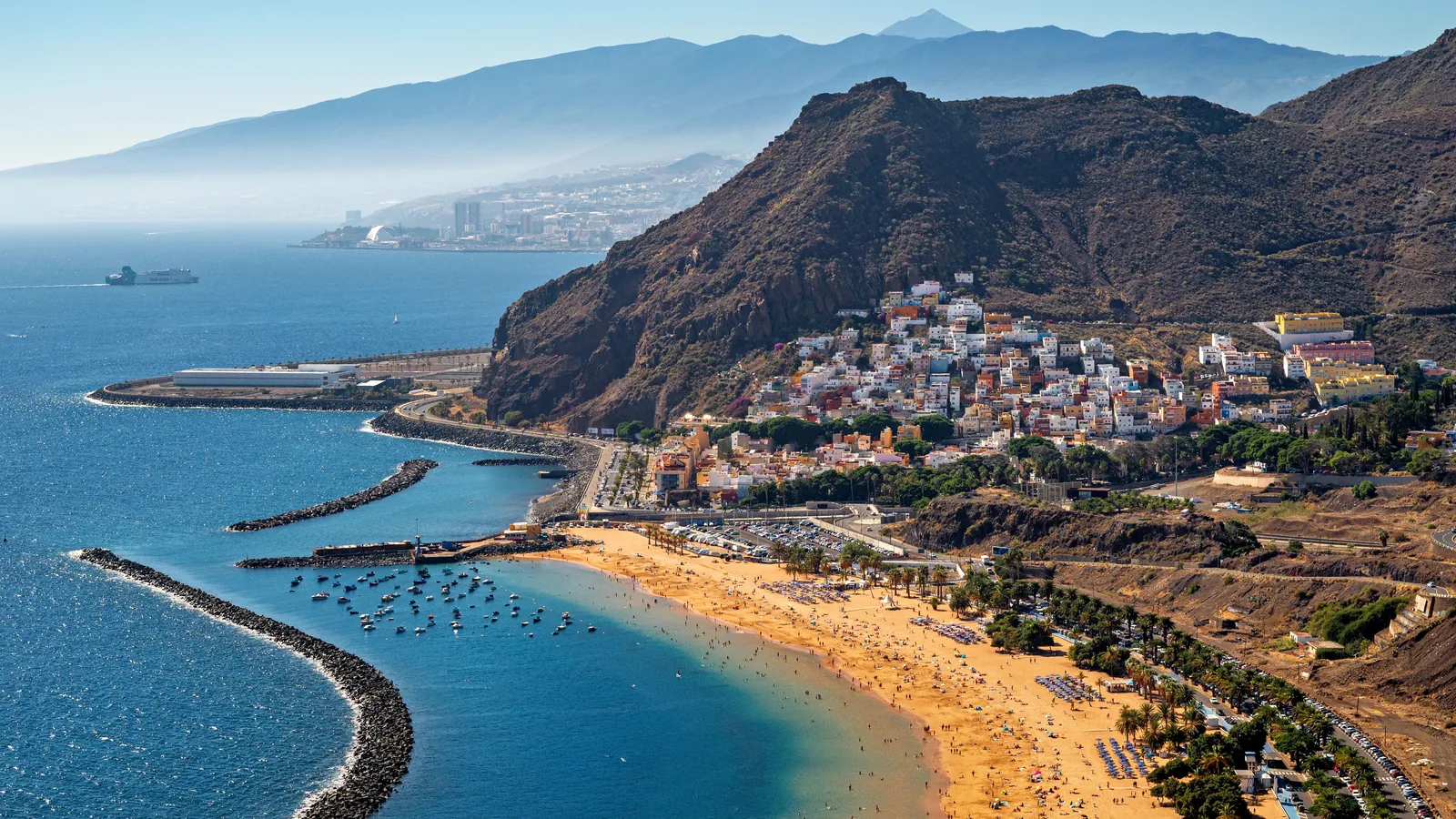
The Canary Islands lie more than a thousand kilometres from mainland Spain, off the African coast, so flying is the usual way to get there. In return, the archipelago is very well connected, with flights year-round and ferries linking the islands. If you haven’t decided which island to stay on yet, take a look at our accommodation in the Canary Islands.
By plane: eight airports across seven islands
All the inhabited islands except La Graciosa have an airport, and Tenerife has two, although traffic is very unevenly distributed. According to Aena, Canary Islands airports handled more than 54.7 million passengers in 2025: Gran Canaria was the busiest, with 15.8 million, followed by Tenerife South, with almost 14 million. This scale explains the number of direct routes, even in the middle of winter.
Which airport to choose on each island
- Gran Canaria: Gran Canaria Airport, on the east coast, is halfway between Las Palmas de Gran Canaria and the southern beaches, such as Maspalomas.
- Tenerife: the island has two airports. Tenerife South is the most convenient if you’re staying in Adeje, Los Cristianos or El Médano; Tenerife North, next to La Laguna, puts you close to Santa Cruz, Puerto de la Cruz and the La Orotava Valley.
- Lanzarote: César Manrique Airport is next to Arrecife and just a few minutes from Puerto del Carmen.
- Fuerteventura: the airport, next to Puerto del Rosario, is a short distance from Caleta de Fuste; Corralejo in the north and Morro Jable in the south require a longer drive.
- La Palma, La Gomera and El Hierro: small airports, with connections mainly to Tenerife and Gran Canaria, plus some direct flights from mainland Spain to La Palma.
Direct flights to the larger islands are available from Spain’s main cities with Iberia, Vueling, Air Europa, Binter and several low-cost airlines. The journey takes around two and a half hours from Madrid and up to three and a half hours or a little more from the north and north-east of mainland Spain.
Before you book, check which Tenerife airport you’re flying into: the drive between the north and south takes almost an hour on the motorway.
By ferry from mainland Spain
The ferry makes sense if you want to bring your car or are travelling with a pet. There are two departure ports:
- From Huelva: a route with stops in Arrecife, Las Palmas de Gran Canaria and Santa Cruz de Tenerife. Since January 2026, the route has been served by the Buenavista Express and Marie Curie.
- From Cádiz: the traditional route, with ferries to Lanzarote, Gran Canaria and Tenerife and fewer weekly departures.
Allow a day and a half to almost two days for the crossing, depending on the port and island. The industry is also changing: in March 2026, the CNMC approved the purchase of Armas Trasmediterránea’s business by Baleària subject to conditions, and required it to end its partnership with Fred. Olsen on the Huelva route. Check which ferry operator is running on your date before finalising your plans.
How to get between the islands
Combining two islands is easy. Binter is the main inter-island airline, with flights lasting between half an hour and an hour. Ferries are the natural choice for shorter routes and let you take your hire car if the rental company allows it.
- Gran Canaria – Tenerife: between Agaete and Santa Cruz de Tenerife, around an hour and a half by fast ferry; ferries also run from the port of Las Palmas.
- Lanzarote – Fuerteventura: from Playa Blanca to Corralejo in around 30 minutes.
- Lanzarote – La Graciosa: from Órzola, in around 25 minutes.
- Tenerife – La Gomera: from Los Cristianos to San Sebastián de La Gomera in around 50 minutes.
- Tenerife – El Hierro and La Palma: longer crossings of two hours or more, with fewer departures.
These routes are operated by Fred. Olsen Express and Armas Trasmediterránea; to La Graciosa, they’re operated by Líneas Romero and Biosfera Express. In summer and during long weekends, book ahead if you’re bringing a car.
Getting around each island
Buses
In the Canary Islands, buses are called guaguas, and each island has its own network: TITSA in Tenerife, Global in Gran Canaria, Guaguas Municipales within Las Palmas and Tiadhe in Fuerteventura. The main airports have routes to the capital and tourist areas. In Tenerife, the tram also connects Santa Cruz with La Laguna.
Hire car
A car is the most practical way to explore an island: viewpoints, inland villages and national parks such as Teide and Timanfaya are far from the guagua routes. In La Palma, La Gomera and northern Tenerife, mountain roads have lots of bends, so allow extra time for your journey.
Taxi and bicycle
Taxis are useful for getting from the airport or going out for dinner. Cycling is popular in flatter Lanzarote and Fuerteventura, and on the long climbs in Tenerife and Gran Canaria; watch out for the wind.
When to go and practical tips
Thanks to their mild climate, the Canary Islands welcome visitors all year round. Winter is high season for travellers from northern Europe, while August, Christmas, Easter and Carnival fill up flights and accommodation.
In 2027, Santa Cruz de Tenerife Carnival is taking place two weeks later than usual: the opening gala will be on 22 January, and the street celebrations will run from 19 to 28 February. Las Palmas de Gran Canaria Carnival, dedicated to music, will take place between 22 January and 28 February. If your trip coincides with these dates, book early.
- Time: the Canary Islands are one hour behind mainland Spain.
- Shopping: the islands have their own tax system, with limits on tobacco, alcohol and other purchases when returning to mainland Spain.
- Weather: the north of the higher islands is greener and cloudier; the south is drier and sunnier. Bring warm clothing if you’re heading up Teide or into the mountains.
Where to stay when you arrive
Once you’ve chosen your airport, it’s time to pick a base. Our selection includes villas, rural houses and characterful hotels across the seven main islands, with the widest choice in Playa Blanca, Corralejo, Adeje and Puerto del Carmen. We hand-pick every place to stay: find out how on our about us page.
Already know which island you’re visiting? We have specific guides on how to get to Tenerife, Gran Canaria, Lanzarote and Fuerteventura. And to choose where to stay, start with where to stay in the Canary Islands, or go straight to Tenerife, Gran Canaria, Lanzarote or Fuerteventura.
Frequently asked questions
Answers to the questions that come up most often when planning a trip to the islands.
What’s the fastest way to get to the Canary Islands?
By plane, without a doubt. There are eight airports across seven islands and direct flights from most Spanish cities, taking around two and a half hours from Madrid and a little longer from the north of mainland Spain. The ferry from Huelva or Cádiz takes between a day and a half and almost two days, so it’s only worth it if you need to bring your car.
Can you take your car to the Canary Islands by ferry?
Yes. There are regular routes from Huelva, with stops in Arrecife, Las Palmas de Gran Canaria and Santa Cruz de Tenerife, and from Cádiz, with fewer weekly departures. The crossing is long—between a day and a half and almost two days depending on the island—so it’s a good idea to book a cabin. Vehicle spaces sell out sooner in summer and at Christmas. As the industry is being reorganised, check which ferry operator is running on your date.
Which Tenerife airport should I fly to?
It depends on where you’re staying. Tenerife South is most convenient for Adeje, Los Cristianos, Playa de las Américas and El Médano, where most beach tourism is concentrated. Tenerife North, next to La Laguna, puts you close to Santa Cruz, Puerto de la Cruz and the La Orotava Valley. The drive between them takes almost an hour on the motorway, so it’s worth choosing the right one.
How do you travel from one island to another?
By plane or by boat. Binter connects the main airports with flights lasting between half an hour and an hour. By sea, Fred. Olsen Express and Armas Trasmediterránea serve routes such as Agaete–Santa Cruz de Tenerife, Los Cristianos–La Gomera and Playa Blanca–Corralejo, the last of which takes around 30 minutes. You can reach La Graciosa from Órzola in Lanzarote. Ferries are more convenient for short trips or if you have a car; planes are better between more distant islands.
Do you need to hire a car in the Canary Islands?
It’s highly recommended if you want to explore an island properly. Guaguas connect airports, capitals and tourist areas, but inland villages, viewpoints and national parks are far from the frequent routes. If you’re spending the week at the same beach resort, you can hire a car for just a day or two. In La Palma, La Gomera and northern Tenerife, expect narrow roads and journeys that take longer than the map suggests.