Español
 English
 Français
 Deutsch
 Italiano
 Nederlands
 Português
 日本語
 中文
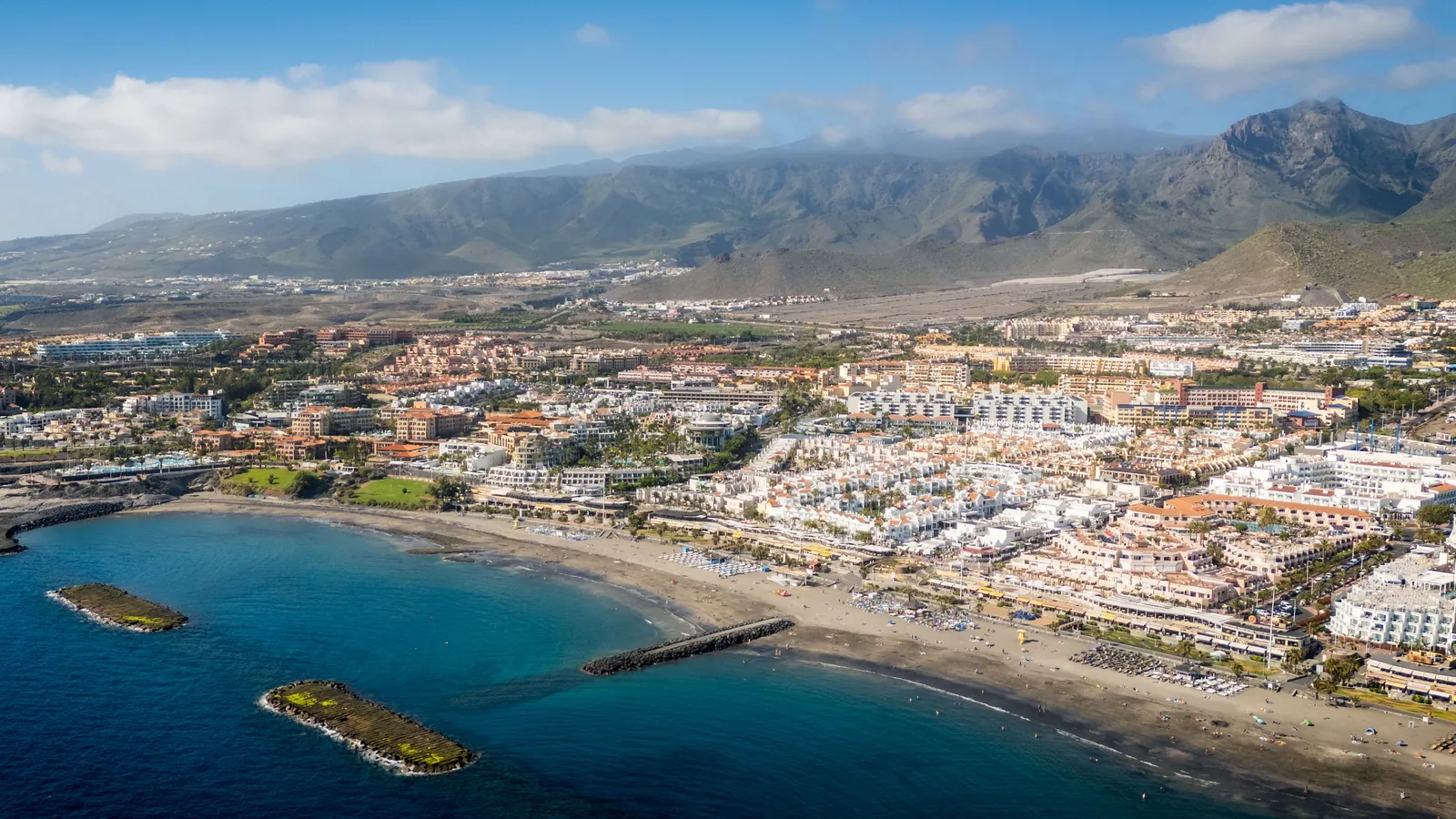
Getting to Tenerife is straightforward: there are direct flights from almost all of Spain and much of Europe year-round. What really matters is choosing the airport closest to your accommodation, because the north and south of the island are two very different places. If you haven’t decided where to stay yet, take a look at our accommodation in Tenerife, which we hand-pick, as we explain in about us.
By plane: two airports, two different islands
Tenerife has two airports, around 60 km apart by motorway.
Tenerife South (Reina Sofía)
It’s in Granadilla de Abona, a few kilometres from the coast, and handles most international and low-cost flights. According to Aena, it ended 2025 with nearly 14 million passengers. It’s the natural gateway to Adeje, Los Cristianos, Playa de las Américas, San Miguel de Abona and El Médano.
Aena plans a major redevelopment of the terminal, so extensive that it will amount to building a new one. Work is due to take place between 2027 and 2031, with the airport remaining operational throughout.
Tenerife North (Ciudad de La Laguna)
Smaller, with just over 7 million passengers in 2025, it’s next to La Laguna and around 10 km from Santa Cruz. Most flights here are to mainland Spain, along with inter-island flights operated by Binter. It’s the best choice if you’re heading to Puerto de la Cruz, La Orotava or the capital.
Flights from mainland Spain and abroad
Flights take around three hours from Madrid and about three and a half hours from Barcelona. Direct flights are available from almost all major Spanish cities with Iberia Express, Vueling, Air Europa, Ryanair or Binter, depending on the route and season. Remember that the Canary Islands are one hour behind mainland Spain.
There are also direct flights from the UK and much of Europe. New for this winter: from late October 2026, there will be direct flights between Tenerife South and two Canadian cities, Toronto and Montreal.
From the airport to your accommodation
TITSA buses (known as guaguas in the Canary Islands) run from both airports. When you arrive, you have these options:
- Bus from Tenerife South: route 40 goes to Costa Adeje via Los Cristianos, while other routes connect with Santa Cruz and the north of the island.
- Bus from Tenerife North: La Laguna and Santa Cruz are just a few minutes away, and you can connect to the rest of the island from there.
- Taxi: there are ranks outside both terminals. The trip from the south to Costa Adeje is short; crossing the island to the north is much more expensive.
- Hire car: companies have desks at both terminals. If you plan to explore, it’s the most practical option from day one.
By boat: ferries from mainland Spain and between the islands
The ferry makes sense if you want to bring your own car or aren’t in a hurry. The crossing takes more than a day and a half, but you can book a cabin and avoid the plane’s baggage limits.
From Huelva and Cádiz
Fred. Olsen Express and Baleària jointly operate the route from Huelva to Santa Cruz de Tenerife and Las Palmas, with several departures each week. In January 2026, the Buenavista Express joined the route alongside the Marie Curie: a 172-metre ship with room for 1,250 passengers and 390 vehicles.
Weekly ferries from Cádiz to the Canary Islands call at Santa Cruz. In May 2026, Armas Trasmediterránea’s Canary Islands operations, including routes to mainland Spain, were transferred to Baleària, which operates them under the Baleària Canarias brand; for a while, you’ll see both names.
Island hopping
Several boats a day leave from the port of Los Cristianos in the south for San Sebastián de La Gomera, a journey of around 50 minutes. There are also routes to La Palma and El Hierro. From Santa Cruz, fast ferries reach Gran Canaria in just over an hour.
Getting around Tenerife
Tenerife is large and mountainous: the elevation difference between Mount Teide and the coast is more than 3,700 metres. The TF-1 motorway runs through the south and the TF-5 through the north, together circling much of the island.
- Car: the most flexible option for driving up Mount Teide, exploring Anaga or reaching Masca. Avoid rush hour on the approach to Santa Cruz and La Laguna, where traffic jams are common.
- Bus: TITSA’s network reaches almost every town and is very useful for travelling between the main areas. A rechargeable card costs less than paying in cash.
- Tram: connects central Santa Cruz with La Laguna, making it ideal if you’re staying in that area.
- Taxi: convenient for short trips and getting back after dinner.
- Bike: the southern coast, including El Médano, is easy to explore by e-bike; mountain climbs are only for experienced cyclists.
Climbing Mount Teide: book before you go
Since 19 January 2026, the island council has charged an ecotax for the most popular trails in Teide National Park: Telesforo Bravo, which leads to the summit, and Montaña Blanca-La Rambleta. Residents of Tenerife and children under 14 don’t pay, and bookings are made on the Tenerife ON platform.
The island council, which has managed the park since May 2026, has also announced access controls, reservable parking and a network of shuttle buses from the coast from 2027. These plans are still in development, so check the rules before driving up.
Practical tips and the best time to visit
The weather is mild all year, but varies considerably from one side of the island to the other. The south is drier and sunnier; the north is greener and often wakes up under low clouds. If you’re looking for reliable beach weather in winter, the south is your best bet.
- Winter: peak season for European visitors. Book flights and a car in advance.
- Carnival: Santa Cruz’s carnival, held in February or March depending on the year, fills the capital.
- Summer and Easter: many visitors come from mainland Spain, and ferries with car spaces sell out sooner.
- Spring and autumn: good weather, fewer people and more affordable prices.
Know how you’re getting here? Now choose where to base yourself: start with where to stay in Tenerife, then explore our guides to Adeje and San Miguel de Abona. If you’re visiting several islands, these guides will help: how to get to the Canary Islands and where to stay in the Canary Islands.
Frequently asked questions
Here are the questions we hear most often from people planning a trip to Tenerife.
Which airport in Tenerife should I fly to?
It depends on where you’re staying. If you’re heading to Costa Adeje, Los Cristianos, Playa de las Américas, San Miguel de Abona or El Médano, fly to Tenerife South, which is close to all these areas. If you’re staying in Santa Cruz, La Laguna, Puerto de la Cruz or La Orotava, Tenerife North saves you almost an hour on the road. The two airports are around 60 km apart by motorway, so choosing the wrong one isn’t a disaster, but it can be inconvenient on arrival.
How long is the flight to Tenerife from mainland Spain?
Flights take around three hours from Madrid and about three and a half hours from Barcelona. There are direct flights from almost all major Spanish cities, with more frequent services in summer and at Easter. Remember that the Canary Islands are one hour behind mainland Spain, which is worth bearing in mind when planning connections, picking up your hire car and checking in to your accommodation.
Can you take a car to Tenerife by ferry?
Yes. Fred. Olsen Express and Baleària operate a route from Huelva to Santa Cruz de Tenerife and Las Palmas, with several departures each week; there are also weekly departures to the Canary Islands from Cádiz. The crossing takes more than a day and a half, so it’s only worthwhile if you want your own car on the island or are travelling with a lot of luggage. Vehicle spaces sell out quickly in summer, so it’s best to book in advance.
Do you need a car to get around Tenerife?
It’s not essential, but it helps a lot. TITSA buses connect the airports, the main tourist areas and almost every town, while the tram links Santa Cruz with La Laguna. If you’re planning to spend time on the southern beaches and take an organised excursion or two, you can manage without a car. For visiting Mount Teide at your own pace, exploring Anaga or reaching Masca and the inland villages, a hire car gives you the most freedom.
Do you need to book to climb Mount Teide?
For some trails, yes. Since January 2026, the Telesforo Bravo trail, which leads to the summit, and the Montaña Blanca-La Rambleta trail require an ecotax and advance booking on the Tenerife ON platform; residents of Tenerife and children under 14 don’t pay. The island council has also announced access controls for cars and shuttle buses to the park from 2027, so check the current rules before setting off.