Español
 English
 Français
 Deutsch
 Italiano
 Nederlands
 Português
 日本語
 中文
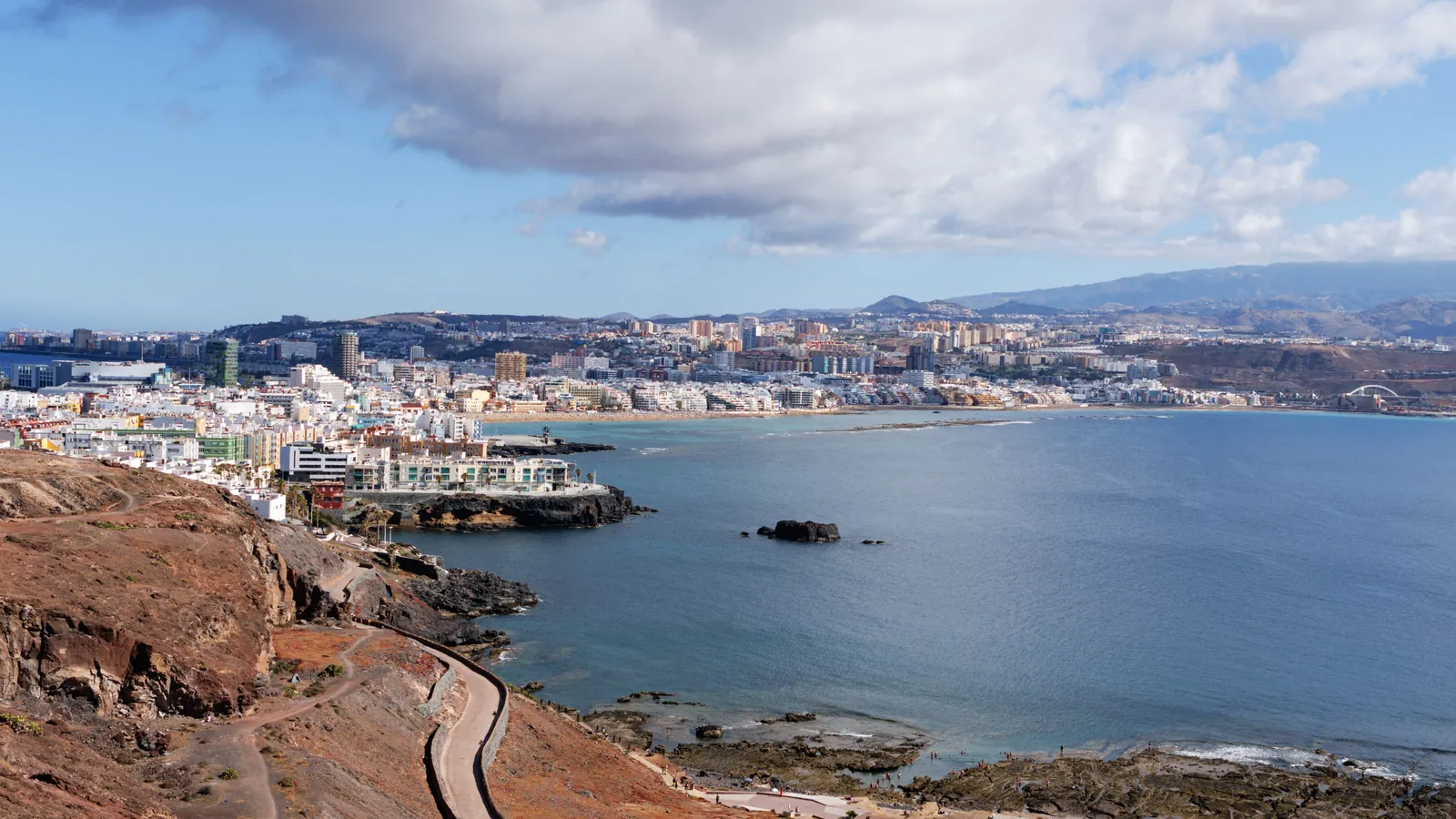
From the airport, Gran Canaria’s two main accommodation areas are less than half an hour away by motorway. The main thing to decide before setting off is where you’ll stay, as that determines which bus to take or whether it’s worth renting a car. If you haven’t chosen a base yet, take a look at our accommodation in Gran Canaria.
By plane: Gran Canaria Airport
Gran Canaria Airport (code LPA), known as Gando, is on the east coast, between Telde and Ingenio, halfway between the capital and the tourist resorts in the south. According to Aena, it ended 2025 with 15.8 million passengers, 4% more than the previous year and the highest figure of all the Canary Islands’ airports.
Flights from mainland Spain and Europe
There are daily direct flights from Madrid and Barcelona, with airlines such as Iberia, Air Europa, Vueling, Ryanair or Binter depending on the route. The journey takes around 2 hours and 45 minutes from Madrid and nearly 3 and a half hours from Barcelona; there are also direct flights from Bilbao, Valencia, Málaga and other cities. In summer 2026, routes such as the one from Seville were launched or expanded, and the island had direct connections to 116 airports in 28 countries.
Winter is the peak season for European tourism, with many flights from northern Europe. airBaltic, which already had a base on the island, is adding a second aircraft and new routes to Warsaw, Poznan, Katowice and Liège from October 2026. Book ahead for Christmas and Carnival.
From the airport to your accommodation
Global’s intercity bus stop is on the departures level of the domestic and international terminal, one floor above baggage reclaim. You can buy your ticket on the bus or at the machine at the stop. These are the routes you’re most likely to need:
- Route 60: airport–Las Palmas de Gran Canaria, terminating at San Telmo or the Santa Catalina interchange, a few minutes from Las Canteras beach.
- Route 66: south via San Agustín and Playa del Inglés, as far as the Maspalomas lighthouse.
- Route 91: links the capital with the southwest, passing through the airport, Arguineguín and Puerto Rico.
- Route 5: night service between San Telmo and the Maspalomas lighthouse, stopping at the airport; useful if you land in the early hours.
If you arrive late or have a lot of luggage, taxis wait outside the terminals and take you to Las Palmas or Playa del Inglés in around 25–30 minutes. Car rental desks are just beyond the arrivals hall.
By ferry: from mainland Spain and between islands
The ferry from mainland Spain is mainly worthwhile if you want to bring your car, a motorhome or a large pet. There are two departure ports:
- Huelva: sailings to the port of La Luz in Las Palmas several times a week throughout the year, with Fred. Olsen Express among the operators.
- Cádiz: Naviera Armas operates a couple of weekly sailings to Las Palmas, stopping in Lanzarote or Fuerteventura.
In either case, expect more than a day at sea, often close to two, so a cabin is practically essential.
If you’re visiting several islands
Between the islands, the ferry is convenient and fast. Fred. Olsen connects the port of Agaete, in the northwest, with Santa Cruz de Tenerife in around 80 minutes, with several sailings a day. Ferries also leave from the port of Las Palmas for Tenerife, Lanzarote and Morro Jable, on Fuerteventura, which is around 2 hours away. If you’d rather fly, Binter connects Gando with the other islands on short flights.
Getting around Gran Canaria
The island is almost round, but the terrain makes journeys longer: Maspalomas to Tejeda is around 50 km, almost all of it on winding roads, and takes more than an hour. The east coast and south are well connected; the interior and west much less so.
Buses
In the Canary Islands, buses are called guaguas. Global’s blue buses cover the whole island, with main stations at San Telmo and Santa Catalina in the capital, and at the Maspalomas lighthouse. The yellow Guaguas Municipales buses run within Las Palmas. If you’ll be using them a lot, the TransGC rechargeable card, available to all travellers, adds extra credit with every top-up and works on both operators.
Car, taxi and bicycle
The GC-1 motorway runs along the east coast from Las Palmas, passes the airport and continues to Mogán; the GC-2 heads north via Arucas and Gáldar to Agaete. To reach Tejeda, Roque Nublo or Pico de las Nieves, you’ll need a car, patience for the bends and an early start: car parks at the summit fill up quickly at weekends.
Taxis work well for short journeys within each area. In the capital, you can use the public Sítycleta bike-sharing scheme, while cycling elsewhere on the island is mainly a road activity: the climbs to the summit attract cyclists from across Europe in winter.
When to go and practical tips
Gran Canaria has good weather all year, so there’s no clear low season. More European flights arrive from November to March, and prices in the south rise; domestic tourism takes over in summer, when there are more ferries. The 2027 Las Palmas de Gran Canaria Carnival will run from 22 January to 28 February, with music as its theme: book flights and accommodation ahead for those weeks.
- If you’re staying in Las Palmas, Playa del Inglés or Maspalomas, direct buses from the airport mean you can do without a car for the first few days.
- If you choose a rural house in the interior or north, a car is almost essential.
Where you stay determines many of your journeys. At karmahoteles, we select our accommodation one by one, and you’ll find the other islands on our Canary Islands page.
Already know how to get there? The next step is deciding where to stay in Gran Canaria: if you’re after a city break and an urban beach, see our guide to where to stay in Las Palmas de Gran Canaria; if you’d rather have sunshine and dunes, read where to stay in Playa del Inglés. If you’re combining several islands, start with how to get to the Canary Islands and where to stay in the Canary Islands.
Frequently asked questions
Some of the most common questions from people planning a trip to Gran Canaria.
What’s the best way to get to Gran Canaria?
For almost all travellers, flying. Gran Canaria Airport at Gando receives direct flights from Madrid, Barcelona and many other Spanish and European cities, and the journey from Madrid takes around 2 hours and 45 minutes. The ferry from Huelva or Cádiz is only worthwhile if you want to bring your car, a motorhome or a pet, as the crossing takes more than a day.
How do I get from Gran Canaria Airport to Las Palmas?
The cheapest option is Global’s route 60, which leaves from the terminal’s departures level and terminates at San Telmo or the Santa Catalina interchange, near Las Canteras beach. A taxi takes around 25 minutes depending on traffic and is the best option if you arrive very late or with a lot of luggage.
Is there a bus from the airport to Maspalomas and Playa del Inglés?
Yes. Global’s route 66 runs south from the airport, stopping in San Agustín and Playa del Inglés, and continues to the Maspalomas lighthouse. Route 91 continues southwest via Arguineguín and Puerto Rico, and route 5 runs at night, stopping at the airport. If you’ll be using buses a lot, the TransGC rechargeable card is available to all travellers and adds extra credit with every top-up.
Do I need a car to explore Gran Canaria?
It depends on where you’re staying. If you’re based in Las Palmas or the south and mainly want to go to the beach, you can get by with Global buses and the occasional taxi. A car makes all the difference for reaching Tejeda, Roque Nublo or the villages in the north, as buses to the interior run infrequently. A good option is to rent one for just two or three days.
Can you take a ferry from Gran Canaria to Tenerife?
Yes, and it’s very straightforward. Fred. Olsen connects the port of Agaete in northwest Gran Canaria with Santa Cruz de Tenerife in around 80 minutes, with several sailings every day. Ferries to Tenerife also leave from the port of Las Palmas, with a slightly longer crossing. If you’re travelling with a rental car, check first whether the company allows you to take it to another island, as many restrict this or charge an extra fee.