Español
 English
 Français
 Deutsch
 Italiano
 Nederlands
 Português
 日本語
 中文
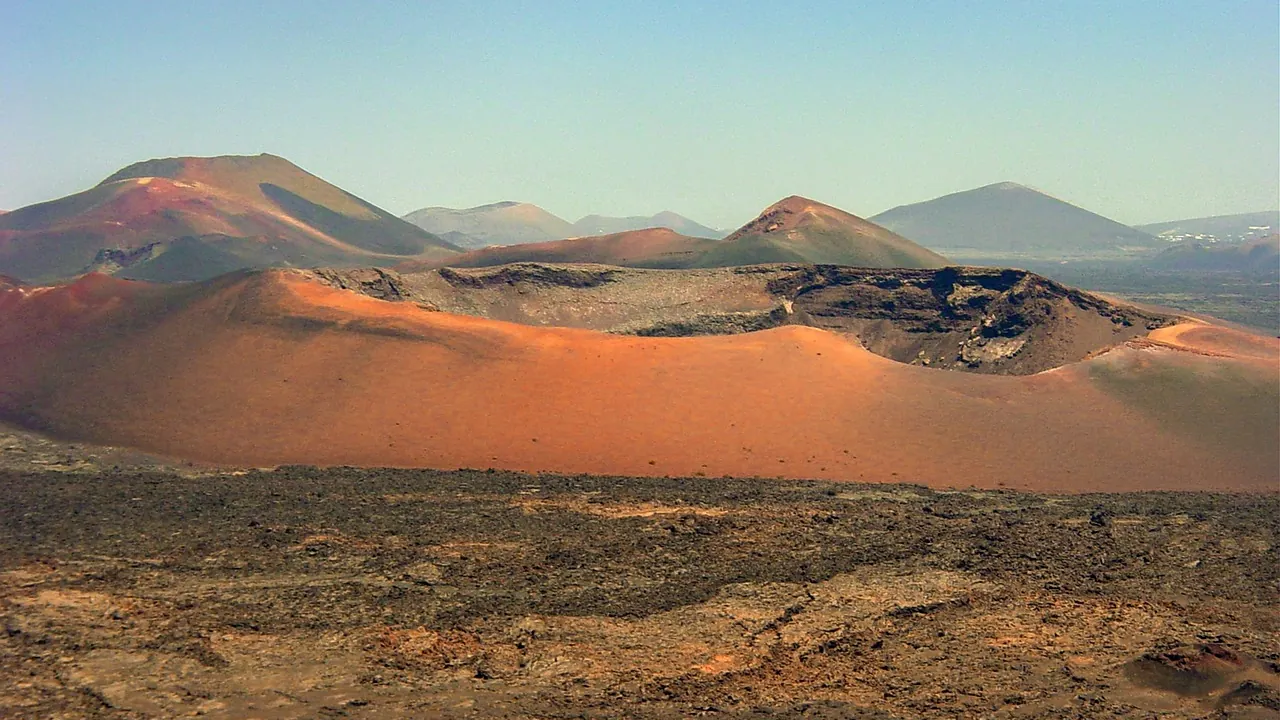
Lanzarote is an island of black volcanoes, white houses and vineyards carved into the ash. A Biosphere Reserve since 1993 and a UNESCO Global Geopark since 2015, it measures around 60 kilometres from north to south and has preserved a landscape that César Manrique helped protect from concrete: there are hardly any high-rise buildings, and almost everything is built in white, with green or blue doors and windows.
Choosing where to stay in Lanzarote is mainly a matter of choosing a stretch of coast. Almost all the accommodation is in three tourist hubs in the south and east, with inland villages as a quieter alternative. Here’s what each area has to offer and the places we hand-pick one by one, including their drawbacks. See the full list of places to stay in Lanzarote.
One useful fact: of the roughly 650 places on the island that meet our standards, more than half are villas and almost 200 more are holiday homes. Much of island life happens in a home of your own, with a pool and a car outside.
How to choose an area
It’s a little over half an hour by car from the airport to Playa Blanca, the furthest hub, but each area has a very different character:
- Playa Blanca: at the southern tip, facing Fuerteventura, with a seafront promenade, marina and the Papagayo coves close by.
- Puerto del Carmen: the oldest tourist hub, with kilometres of urban beach, nightlife and the old fishing harbour.
- Costa Teguise: north of Arrecife, with constant winds, windsurfing schools, a golf course and a water park.
- Tías: the inland village that gives its name to the municipality of Puerto del Carmen, at the gateway to the La Geria wine region.
- Playa Honda: a residential town beside the airport, with a long beach and a more Canarian than touristy feel.
- Yaiza: a white village among volcanoes, halfway between Timanfaya, El Golfo and the Janubio salt flats.
For a first visit without a car, Puerto del Carmen is the most convenient. With young children, Playa Blanca and its calm-water beaches work very well. For peace and volcanic scenery, choose Yaiza or Tías; for wind sports, Costa Teguise.
Beyond these six areas, Arrecife, the capital, suits business travellers; Puerto Calero is a quiet marina, while in the north, Haría and Famara draw hikers and surfers.
Staying in Playa Blanca
Playa Blanca began as a small fishing village in the municipality of Yaiza and is now the area with the most places in our island selection. Its seafront promenade links the town beach with Marina Rubicón and Castillo de las Coloradas, then continues west towards Pechiguera Lighthouse, with Fuerteventura across the water.
Its biggest draw is the Papagayo beaches, a succession of golden-sand coves within the Los Ajaches Natural Monument, reached by dirt track or on foot along the coast. It’s a quiet area, better suited to families and couples than to nightlife.
Almost all the accommodation here consists of villas in low-rise developments. These are the two we like most, one for large groups and the other for anyone who wants to walk to the beach:
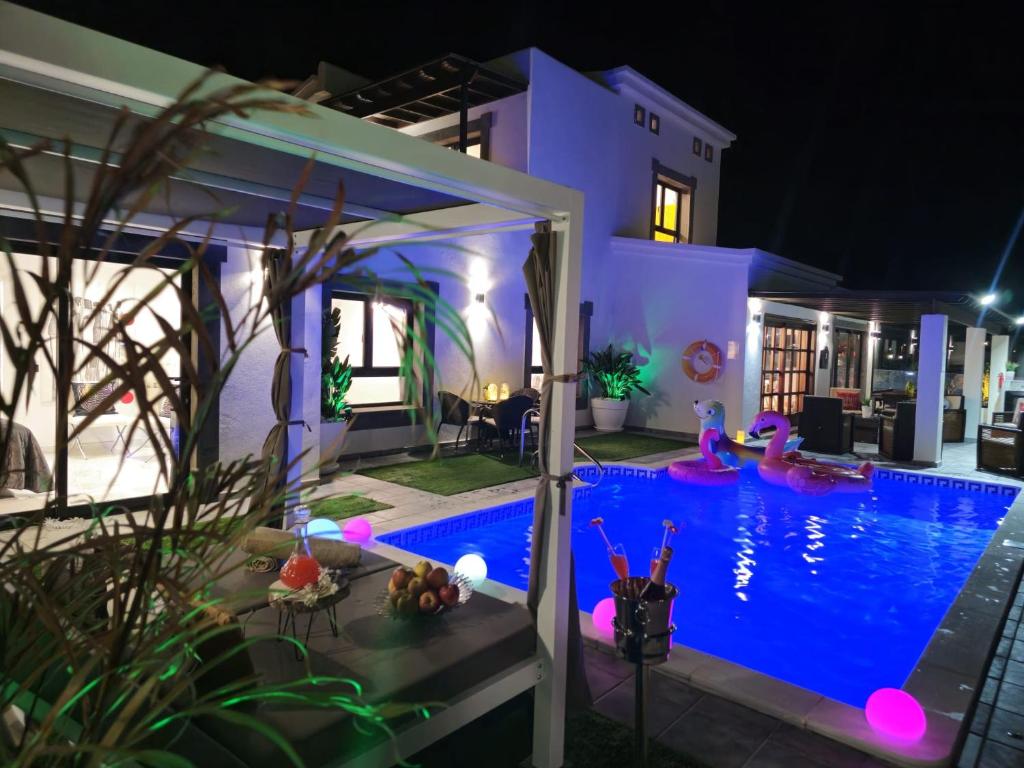
VILLA KARLA
Four bedrooms, four bathrooms, room for eight and a sea-facing terrace: two families can stay together without getting in each other’s way. There’s a private pool, garden and hot tub for relaxing in the afternoons, and it’s about a 12-minute walk to Montaña Roja beach. Bear in mind that a cash deposit is required on arrival and quiet is expected after ten at night.
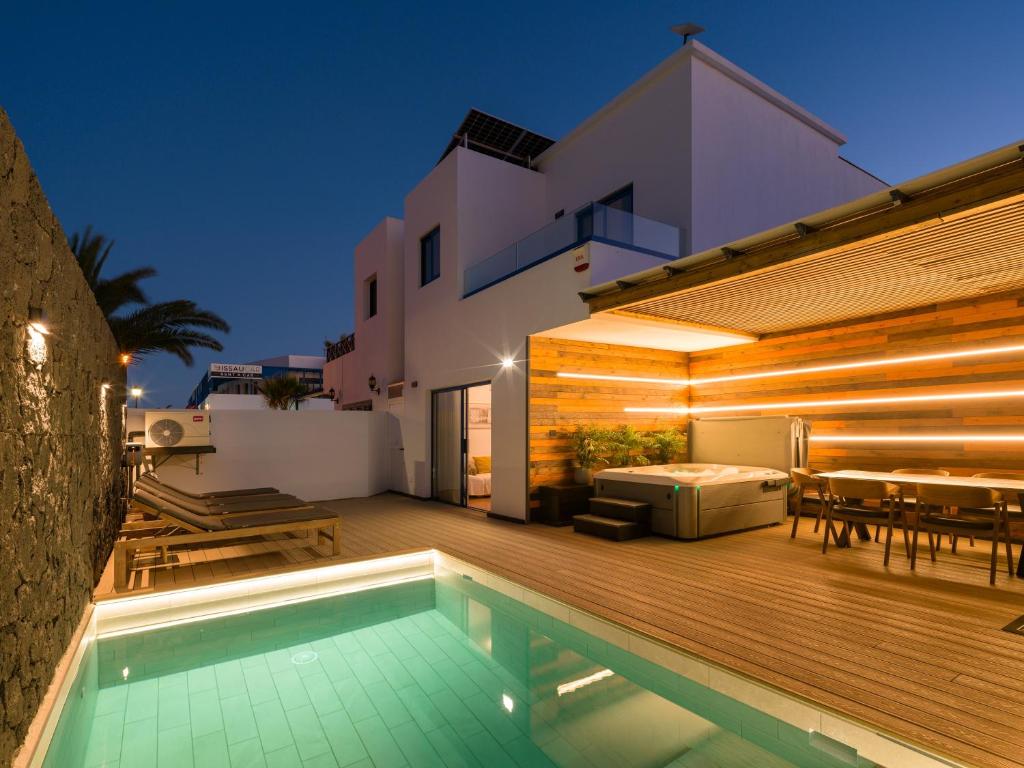
Villa Victoria - Playa Blanca
About 350 metres from Las Coloradas beach and just over a kilometre from Playa Mujeres, this is the one for walking down to the sand. It has three bedrooms, three bathrooms, a private pool with a hot tub and a fully equipped kitchen; it also welcomes pets, which is unusual. Parking is public and the bus station is a long way off, so a car is a good idea.
Staying in Puerto del Carmen
Puerto del Carmen was Lanzarote’s first major tourist hub and remains its most well-rounded. Avenida de las Playas runs alongside several kilometres of pale sand, including Playa Grande and Playa Chica, while the old harbour at the western end still has fishing boats, seafood restaurants and some good diving spots.
It’s the island’s most practical base: about ten minutes from the airport, with a direct bus to the terminal, and halfway between the north and south. There’s nightlife along the avenue, but head a few streets uphill and you’ll find some peace and quiet.
Two very different ways to stay here: an adults-only hotel by the sea and a villa beside the beach.
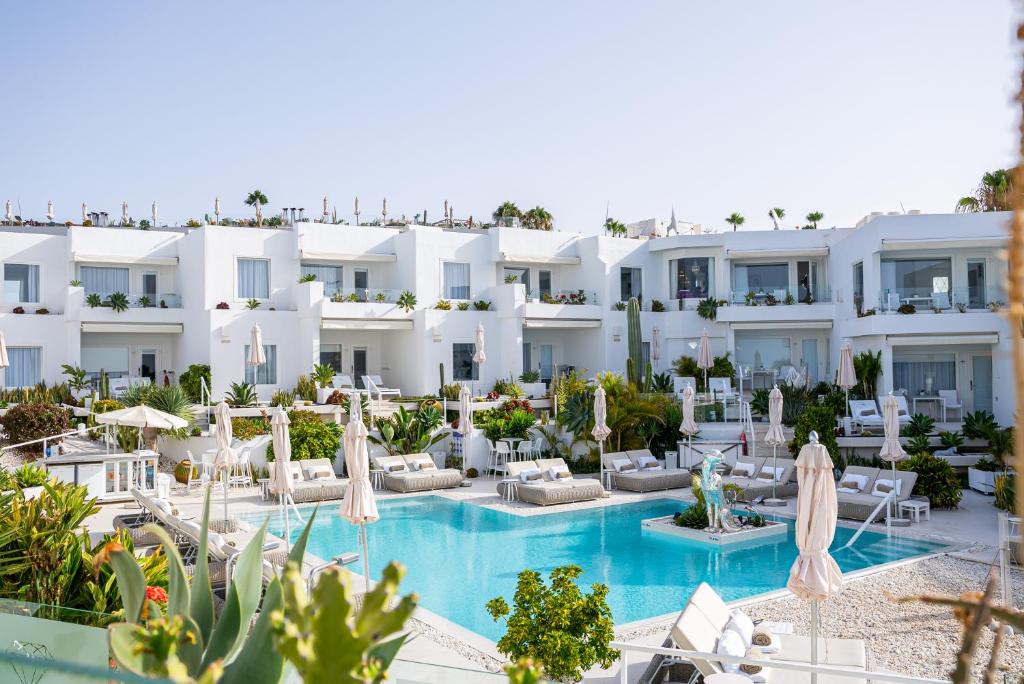
Lani's Suites de Luxe - Adults Only
A five-star hotel by the sea where every room is a one- or two-bedroom suite, with views of the ocean or pool and the option of a balcony or terrace. It’s a good fit for couples looking for massages, treatments and peace and quiet, as guests must be over 16. There’s no on-site parking, so if you rent a car you’ll need to find a spot nearby.
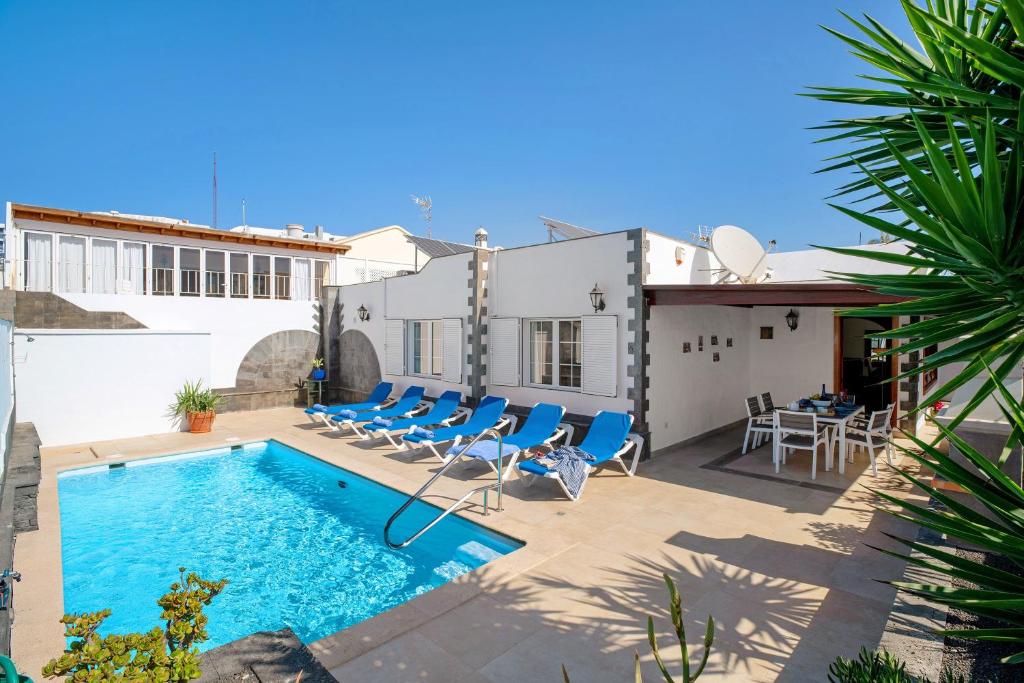
Villa Muñoz
It’s hard to find a private pool and the sea just 50 metres away in Puerto del Carmen, but this villa has both. It sleeps six in three bedrooms, with its own garden, a terrace with views and a kitchen designed for proper cooking. A deposit is required and refunded a few days after departure; parties aren’t allowed.
Staying in Costa Teguise
Costa Teguise was developed in the 1970s north of Arrecife, with Pueblo Marinero, designed by César Manrique, as its first hub. It has small, sheltered beaches such as El Jablillo and Bastián, as well as a more open one, Las Cucharas, where the trade winds make the bay one of the Canary Islands’ best-known windsurfing spots.
There’s also a golf course, a water park and a more residential feel than Puerto del Carmen. The historic town of Teguise, with its Sunday market, is about 15 minutes away. Our two picks are family-friendly homes with pools:
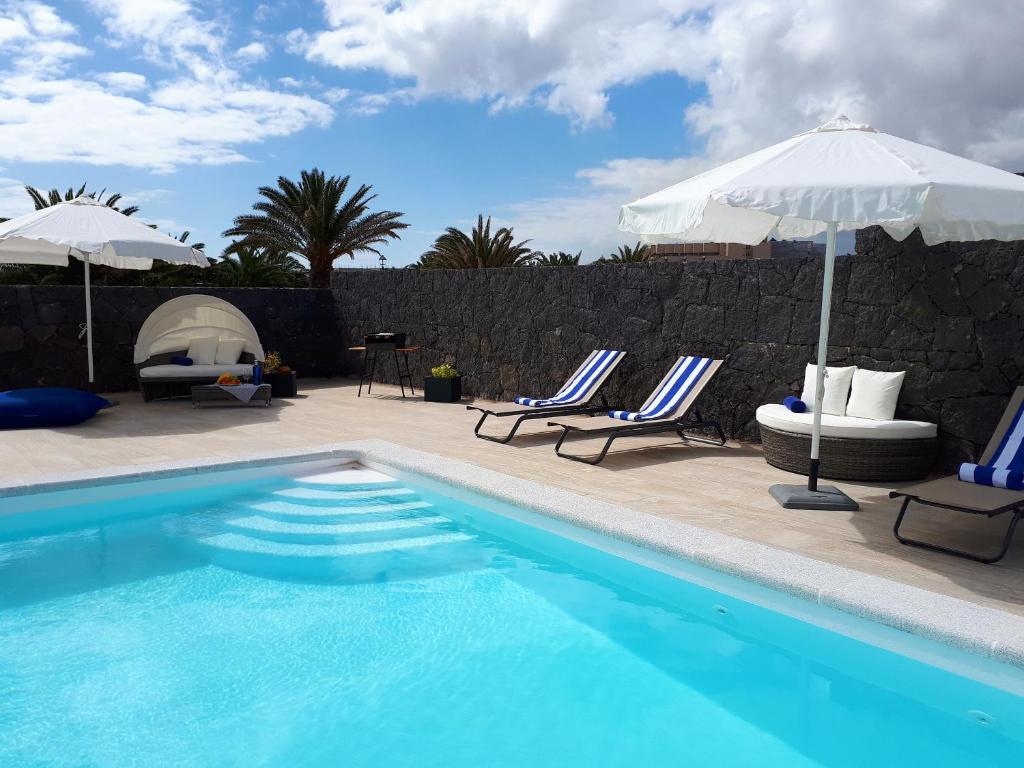
Casa volcanes
Three bedrooms and three bathrooms for up to six people, a private pool, garden and barbecue, with El Ancla beach about 350 metres away. It’s a comfortable base for alternating mornings at the beach with afternoons in the garden. Free Wi-Fi is limited to the communal areas, and the upper floors are only accessible by stairs.
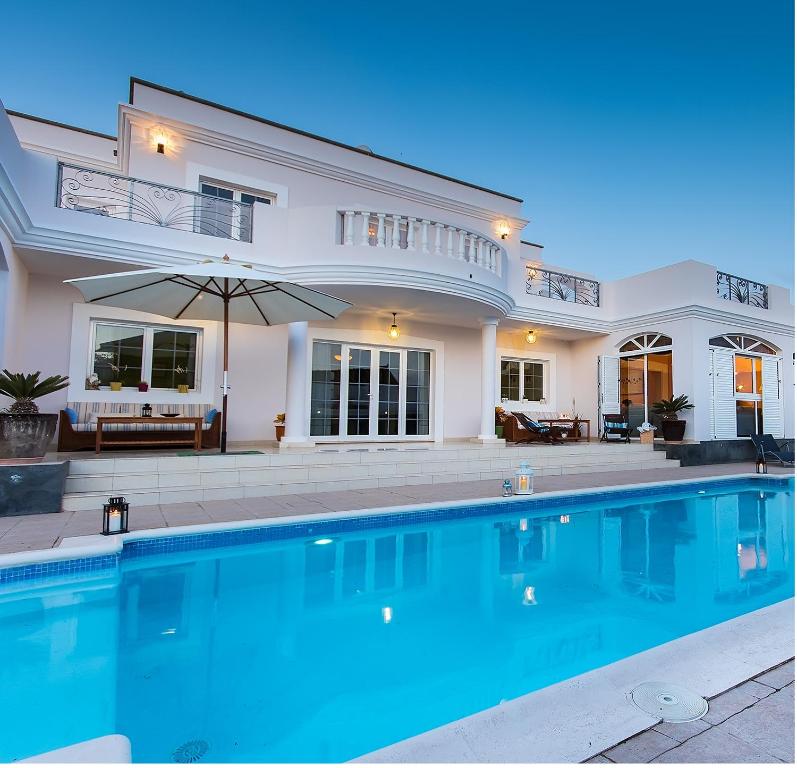
Villa Costa Golf
Six bedrooms across 250 square metres give a large group room to stay under one roof. There’s a private pool, patio and sea-view terrace, and the golf course and water park are less than a kilometre away. Air conditioning is available only in the living room and only in July and August, something to consider in the height of summer.
Staying in Tías
Tías is the main town of the municipality that includes Puerto del Carmen, but it lies inland on a hillside, a five-minute drive from the coast. It’s a real Canarian village, with neighbourhood bars and the house where José Saramago lived, now open to visitors.
Staying here or in nearby hamlets such as Mácher or La Asomada is a way to keep the beach close without the tourist atmosphere. Views stretch out towards the sea and the vineyards of La Geria. We suggest a villa for groups and a house for two:
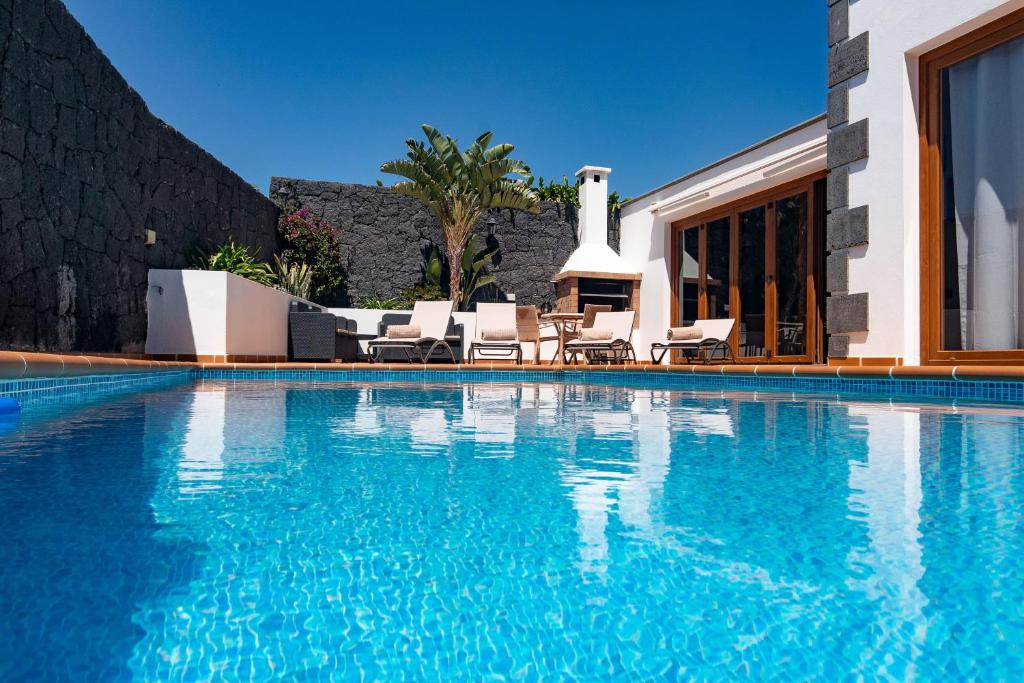
Villa Feel
Four bedrooms and three bathrooms for eight guests, with a private pool, garden, barbecue and sea views from the terrace. Wi-Fi speeds exceed 300 Mbps, so it also works for anyone who needs to work for a few days. Check-in is between four in the afternoon and midnight, and celebrations aren’t allowed.
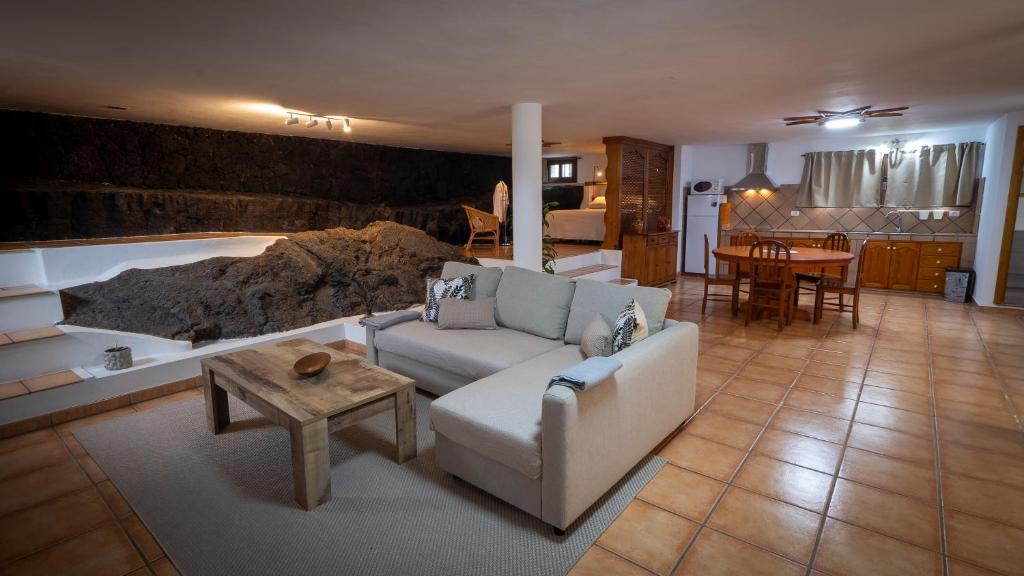
Casa Ico Lanzarote
A one-bedroom house for two, with a garden, barbecue and a terrace with views, designed for couples who want to hike and explore the volcanic landscape. El Grifo winery is about 650 metres away, and there are hiking trails nearby. You’ll need to agree on an arrival time in advance, and parking is public.
Staying in Playa Honda
Playa Honda belongs to the municipality of San Bartolomé and stretches between Arrecife and the airport. Many people from Lanzarote live here; it has a long beach, a seafront promenade and a large shopping centre.
Its advantage is its location: the terminal is next door, the capital is ten minutes away and the rest of the island is less than an hour away. The downside is just as obvious: the airport runway is very close, and planes can be heard in some spots. It’s worth considering for short stays or early flights. Here are our two picks:
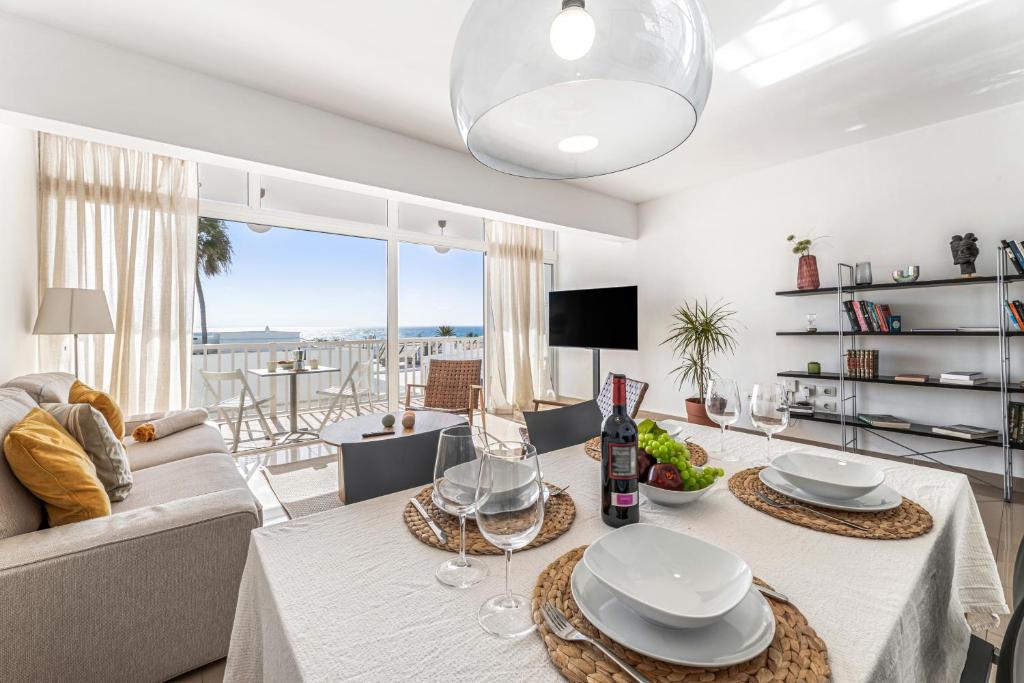
La casa de la playa
True to its name, it’s about 240 metres from Playa la Concha and has a sea-view terrace, balcony, patio and barbecue. Three bedrooms and two bathrooms are enough for a family of six. The free parking space is nearby, not at the house, and the upper floors are only accessible by stairs.
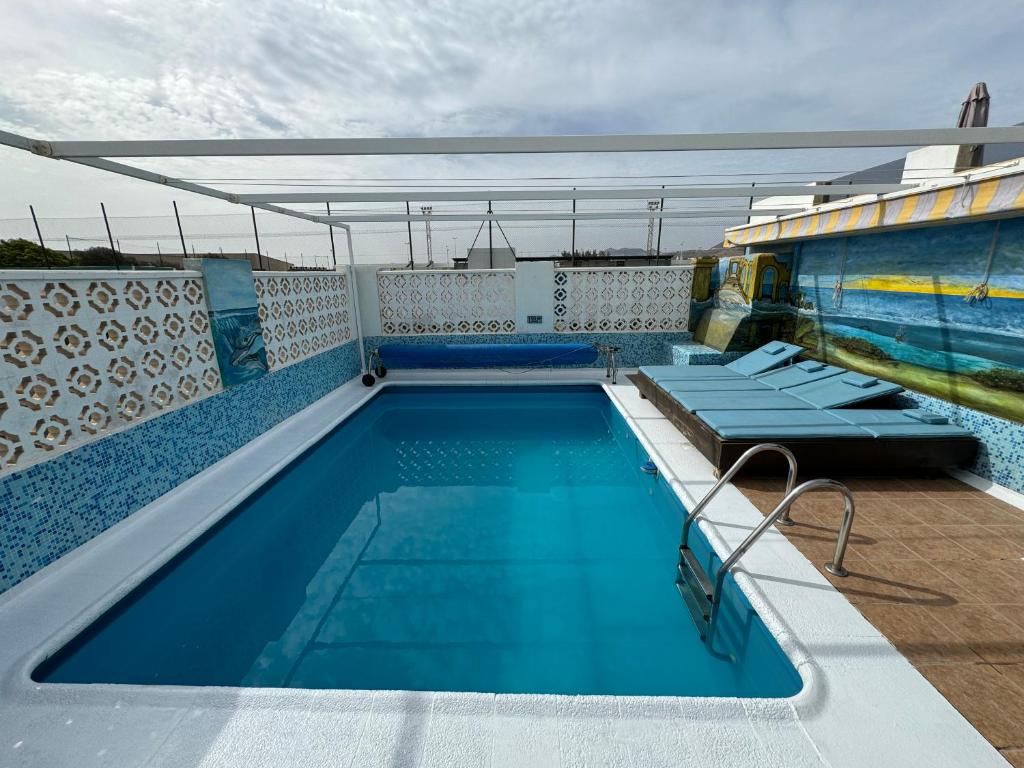
ITY House - Playa Honda
Five bedrooms, six bathrooms, a private pool with a hot tub and Guacimeta beach 100 metres away: a large house for big families or several couples. Pool heating costs extra and must be requested; the free parking is public, with no space reserved.
Staying in Yaiza
Yaiza is a village of whitewashed houses, cacti and bougainvillea at the foot of the volcanoes. Its municipality includes much of Timanfaya National Park, as well as Playa Blanca, El Golfo and the village of Uga.
Staying here means waking up to the Montañas del Fuego on the horizon, with the Janubio salt flats, the Los Hervideros cliffs and the green lagoon of Charco de los Clicos all a 15-minute drive away. The beach isn’t within walking distance and a car is essential; in return, the nights are quiet. Two villas with pools to come back to after a day out:
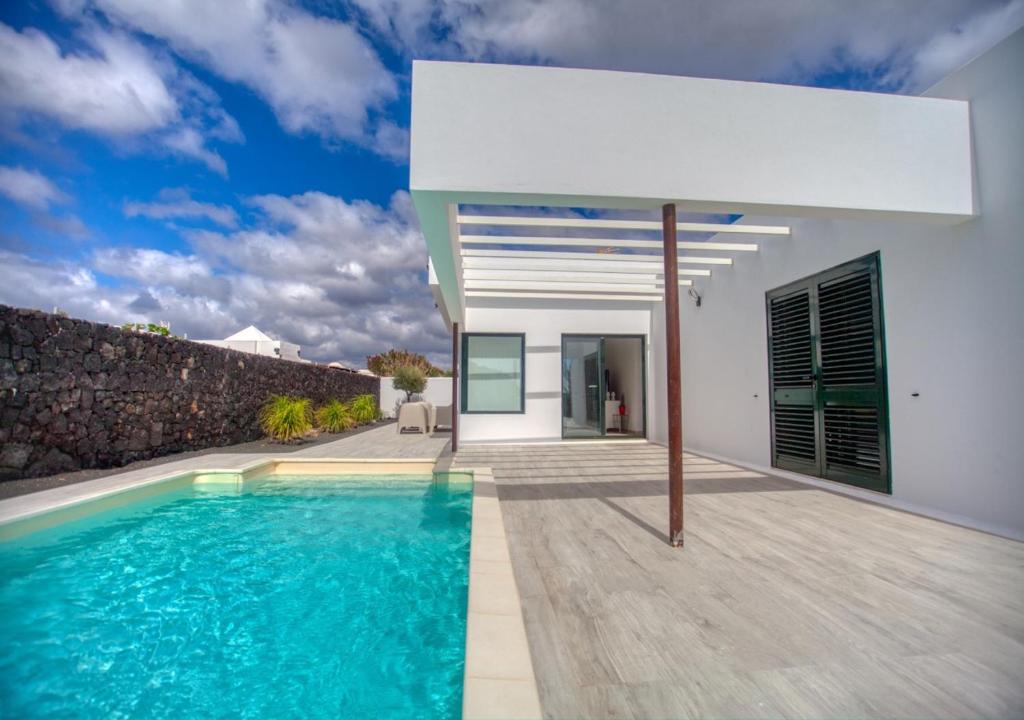
Lava Dreams
Three bedrooms for six, a private pool and a mountain-view terrace, plus a fast connection for remote work or streaming in the evening. It’s a good fit for families exploring Timanfaya and the west coast. The nearest beach, Janubio, is about six kilometres away, and check-in must be before eight in the evening.
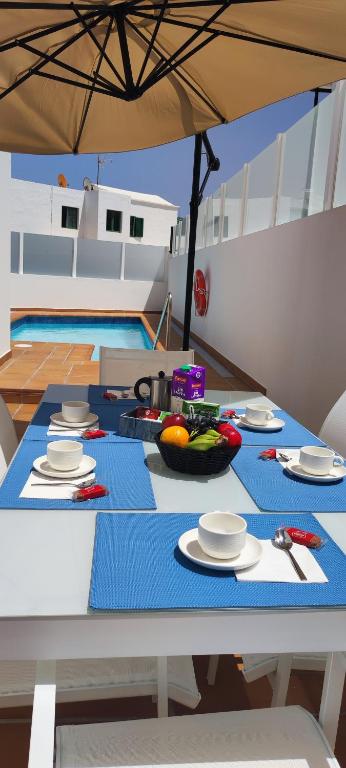
Villa Tingafa
A fully equipped villa with a pool, a terrace with a barbecue and three bedrooms for six, plus something that’s always welcome in Lanzarote: free private parking. The upper floors are only accessible by stairs, and guests are asked to keep the noise down after midnight.
What to see in Lanzarote
The island’s greatest spectacle is Timanfaya National Park, formed by the eruptions that buried almost a quarter of Lanzarote between 1730 and 1736. The Volcano Route, travelled by bus from Islote de Hilario, crosses a landscape of craters and lava flows with almost no vegetation; it’s best to arrive early. Nearby, La Geria showcases Malvasía grapes grown in ash pits sheltered by stone walls.
The other side of Lanzarote is the work of César Manrique, the artist who turned volcanic tubes and viewpoints into architecture. These are well worth a visit:
- Jameos del Agua and Cueva de los Verdes, in the north, inside the same volcanic tube.
- Mirador del Río, above the strait between Lanzarote and La Graciosa.
- Cactus Garden, in a former quarry in Guatiza.
- The César Manrique Foundation, his house built over lava bubbles in Tahíche.
The list is rounded out by Famara’s wild beach beneath the cliff and the village of Haría, in the Valley of a Thousand Palms. From Órzola, a short boat trip takes you to La Graciosa, with its sandy streets and fishermen’s houses in Caleta de Sebo.
When to visit Lanzarote
Lanzarote is enjoyable all year round. Winter highs hover around 20 degrees, and it’s peak season for visitors escaping the cold. Spring and autumn are ideal for walking in Timanfaya or Famara without the heat; summer brings more trade winds, perfect for wind sports.
The island is never empty. The airport closed 2025 with almost nine million passengers, and in July 2026 it surpassed 800,000 in a single month for the first time. Book ahead for Christmas, Easter and summer. The 35th edition of IRONMAN Lanzarote takes place in May 2027, the first organised by The IRONMAN Group after more than three decades in the hands of Club La Santa: Puerto del Carmen fills with triathletes for those few days, so it’s worth booking early.
Getting there and getting around
César Manrique-Lanzarote Airport is about five kilometres from Arrecife and has direct flights from mainland Spain and across much of Europe. Direct buses from the terminal go to Arrecife, Playa Honda, Puerto del Carmen, Puerto Calero, Yaiza and Playa Blanca. To reach Costa Teguise, you’ll need to change at Arrecife bus station.
Once on the island, a rental car is almost essential if you’re staying in Tías, Yaiza or a villa in a residential development: buses connect the tourist hubs well, but don’t go to Timanfaya or many of the coves. From Playa Blanca, ferries cross to Corralejo in Fuerteventura in around 25 or 35 minutes, depending on the boat. Find all the details in our guide to getting to Lanzarote.
Lanzarote is one of the islands featured in our guide to where to stay in the Canary Islands, and if you’re planning your trip from mainland Spain, see our guide to getting to the Canary Islands. If you’ve decided which area is right for you, read more about where to stay in Playa Blanca, where to stay in Puerto del Carmen, where to stay in Costa Teguise, where to stay in Tías, where to stay in Playa Honda and where to stay in Yaiza.
Frequently asked questions
Quick answers to the questions we’re most often asked by people planning a trip to Lanzarote.
What’s the best area to stay in Lanzarote?
It depends on your trip. Puerto del Carmen is the most practical for a first visit: it has a long urban beach, restaurants, a direct bus to the airport and a central location on the island. Playa Blanca is quieter and more family-friendly, with the Papagayo coves nearby. Costa Teguise appeals to windsurfers and golfers, while Yaiza and Tías suit anyone looking for peace and volcanic scenery, though you’ll need a car.
Is it better to stay in Playa Blanca or Puerto del Carmen?
Puerto del Carmen is about ten minutes from the airport, has more nightlife and gives you easy access to both the north and south of the island. Playa Blanca is further away, at the southern tip, but it’s quieter, has calm-water beaches for children and is close to Papagayo and the ferry to Fuerteventura. For getting around the island, choose Puerto del Carmen; for relaxed beach days, choose Playa Blanca.
Do you need a car to get around Lanzarote?
If you’re staying in Puerto del Carmen, Playa Blanca or Costa Teguise, you can go for several days without a car, as buses connect the tourist hubs with Arrecife and the airport. But a rental car is almost essential for exploring the island: there’s no convenient public transport to Timanfaya, La Geria, Famara, César Manrique’s centres in the north or many of the coves. If you’re staying in Tías, Yaiza or a villa in a residential development, you’ll need one from day one.
Where should you stay in Lanzarote with children?
Playa Blanca is the most convenient area with young children: its urban beaches have calm water, and the seafront promenade is flat and safe. Costa Teguise adds a water park and sheltered beaches such as El Jablillo. Puerto del Carmen works well if you want to get everywhere on foot. All three have plenty of villas with private pools, which can be better value than a hotel for a week-long stay.
When is the best time to visit Lanzarote?
The climate is mild all year round. Winter, with daytime temperatures around 20 degrees, is peak season for visitors escaping the cold. Spring and autumn are ideal for walking in Timanfaya and the north without the heat. Summer brings more wind, which is good for windsurfing and kitesurfing. Book ahead for Christmas, Easter, August and May 2027, when IRONMAN Lanzarote fills Puerto del Carmen.
Can you visit Fuerteventura or La Graciosa from Lanzarote?
Yes, and both make excellent day trips. Ferries leave from Playa Blanca harbour for Corralejo in northern Fuerteventura, with crossings of around 25 or 35 minutes, depending on the boat. You can reach La Graciosa by boat from Órzola, at the northern tip of Lanzarote, on a short crossing. Playa Blanca is best for the first trip; Costa Teguise is closer to the departure point for La Graciosa.