Español
 English
 Français
 Deutsch
 Italiano
 Nederlands
 Português
 日本語
 中文
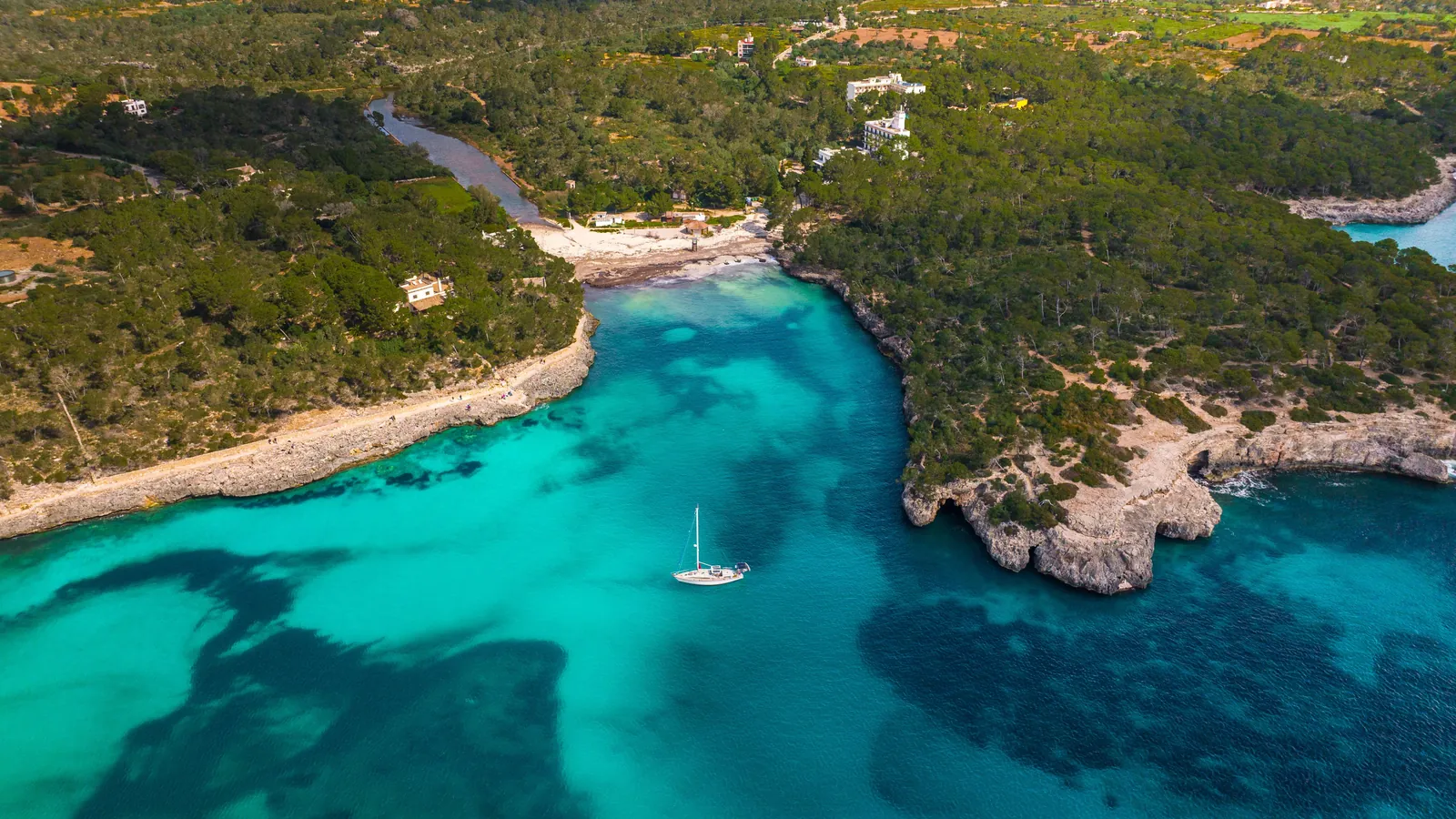
Mallorca is the largest of the Balearic Islands, but each corner offers a different experience. In the northwest, the Serra de Tramuntana, a UNESCO World Heritage Site since 2011, rises almost vertically above the sea; in the south and east, sandy beaches and coves alternate, while the Pla in the centre is dotted with farming villages and weekly markets.
That is why deciding where to stay in Mallorca is almost like deciding what kind of trip you want. A city break, a week of mountain walks or a family beach holiday all call for different bases.
In this guide, we look at the six areas where we select the most accommodation and suggest two places to stay in each, which we hand-pick for their facilities, location and the kind of traveller they suit. See our full selection of places to stay in Mallorca.
How to choose an area in Mallorca
The island is around a hundred kilometres from end to end, and almost everything revolves around Palma, where the airport and the hub of the bus network are located. These are the bases that work best:
- Palma de Mallorca: the old town, museums, restaurants and an urban beach. Ideal for short stays, off-season trips and travellers without a car.
- Sóller: an orange-growing valley in the heart of the Tramuntana, with a historic train from Palma. Ideal for hikers, cyclists and couples.
- Playa de Palma: the long sandy beach east of the capital, just minutes from the airport.
- Paguera: in the southwest, with three urban beaches and a family-friendly atmosphere.
- Cala Millor: a fine-sand bay in the east, especially popular with families.
- Cala Ratjada: the northeastern tip, with a fishing harbour and coves among the pine trees.
Without a car, Palma, Sóller and Playa de Palma are the most convenient bases, as they are well connected by train and bus. If you’re travelling between November and March, bear in mind that many hotels in Cala Millor, Cala Ratjada and Paguera close, while Palma and Sóller are lively all year round.
Where to stay in Palma de Mallorca
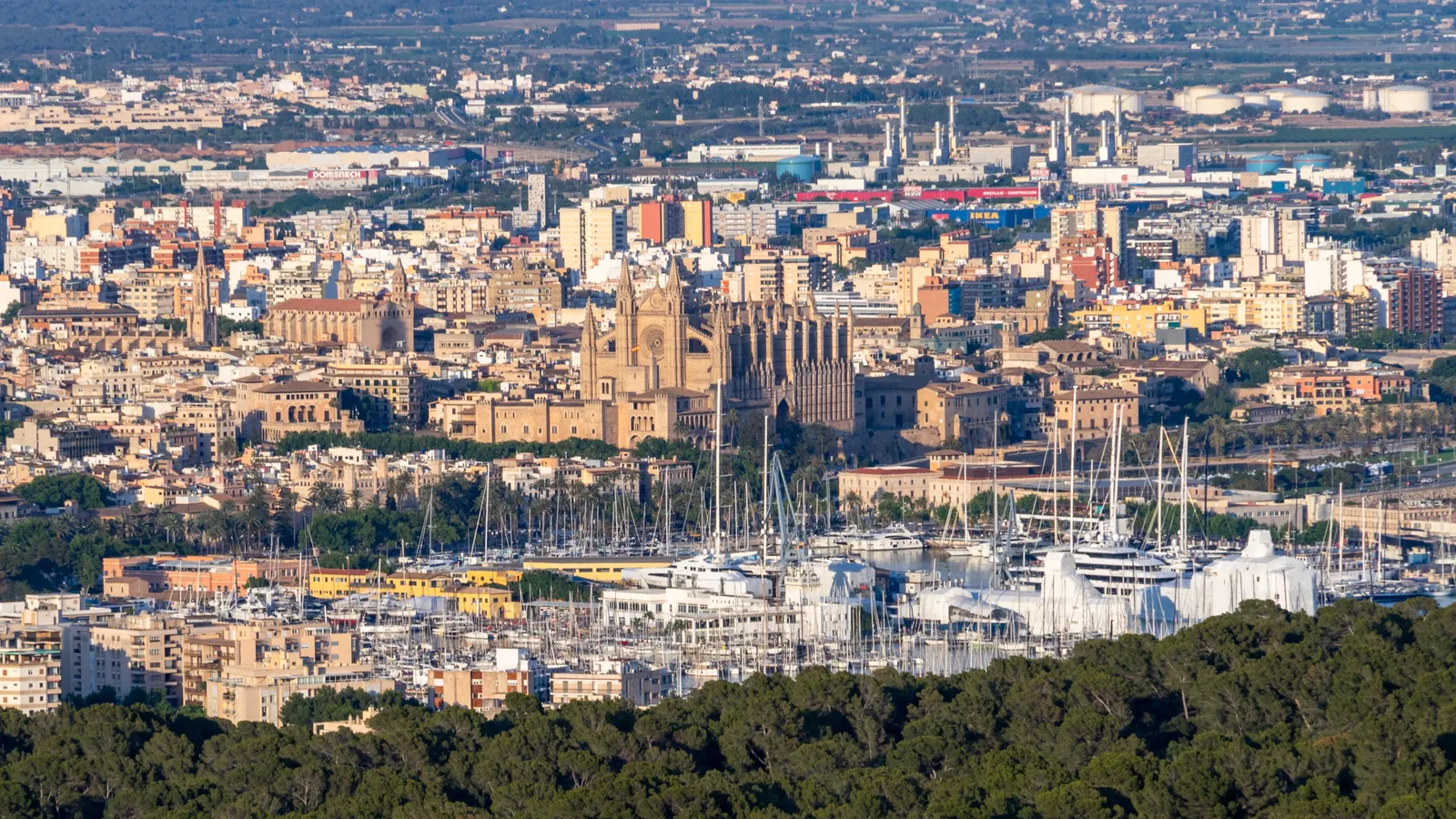
Almost half of Mallorca’s residents live in Palma, making it the most versatile base. The old town, between the Cathedral, the Almudaina Palace and Plaça Major, is best explored on foot among its grand courtyards; Santa Catalina, to the west, is the market and restaurant district, while Portixol offers a seafront promenade and swimming without leaving the city.
Staying here makes it easy to combine culture and the sea and take buses to much of the island. That said, the centre is a low-emission zone: from 1 January 2027, vehicles with a B emissions sticker will also be barred, with some exceptions. If you arrive in a hire car, ask your accommodation how to register its number plate or where to park.
Here are two old-town addresses we like; see the rest of our places to stay in Palma de Mallorca.
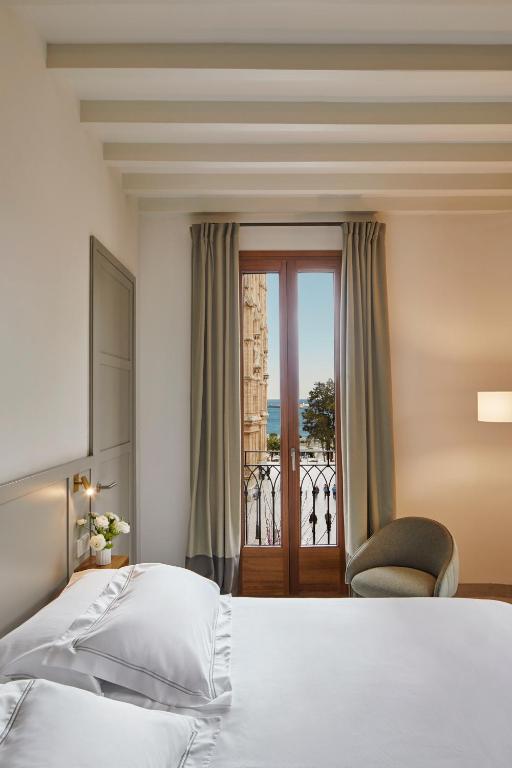
Vila Damunt
Suites beside the Cathedral, with views of the sea or rooftops, making it easy to explore the historic centre on foot. The two-bedroom suite, measuring 90 m² and equipped with a kitchen, is a good fit for a family of four. There’s no private parking, which is common in this part of Palma.
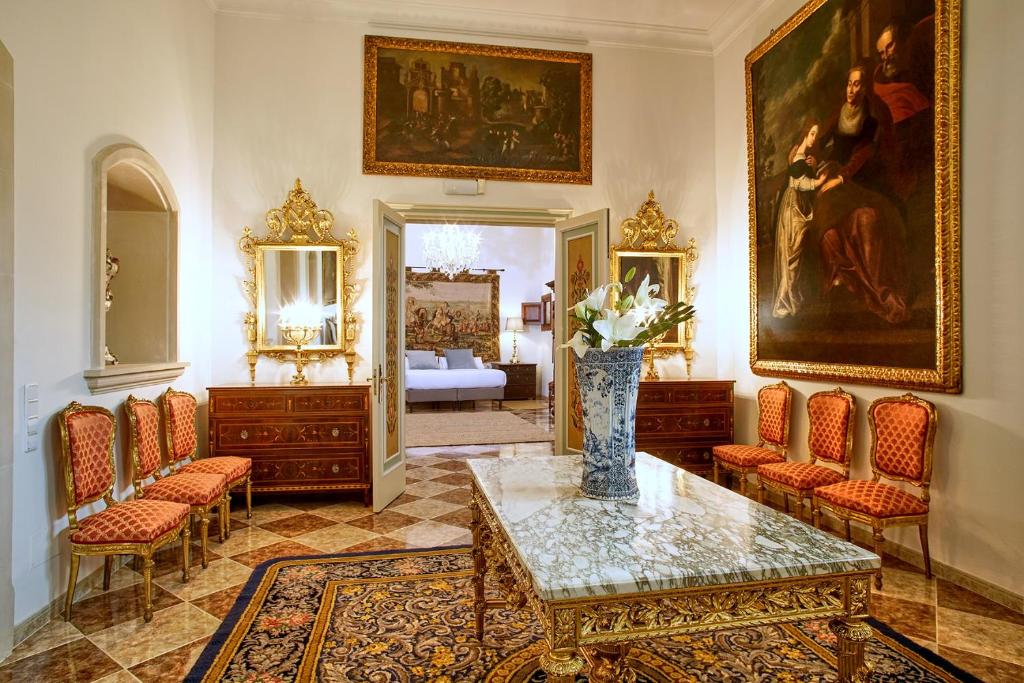
Casa Delmonte - Turismo de Interior
An adults-only hotel a few steps from the church of La Missió and around 200 metres from Plaça Major. Its main draw is a garden and terrace right in the city centre, which is unusual among these streets. There’s no parking, and the rooms accommodate two or three people.
Where to stay in Sóller
On the other side of the mountains, Sóller sits in a valley of orange and lemon groves enclosed by peaks over a thousand metres high. It retains its Modernist façades and the station of the wooden train that has connected it with Palma since 1912; around three kilometres away, Port de Sóller wraps around an almost enclosed bay with a beach and promenade.
It’s an ideal base for walking in the Tramuntana: the GR 221 dry-stone route crosses the valley, and the trail through the Biniaraix gorge starts here. The tram links the centre with the port, and bus route 204 connects Port de Sóller with Palma, with 38 services in each direction daily in summer 2026.
It’s best to leave the car outside the centre: since February 2026, cameras have issued fines for unauthorised access to the historic centre, which is reserved for residents, authorised vehicles and zero-emission cars. These two suggestions show two different ways to experience the valley; find more places to stay in Sóller.
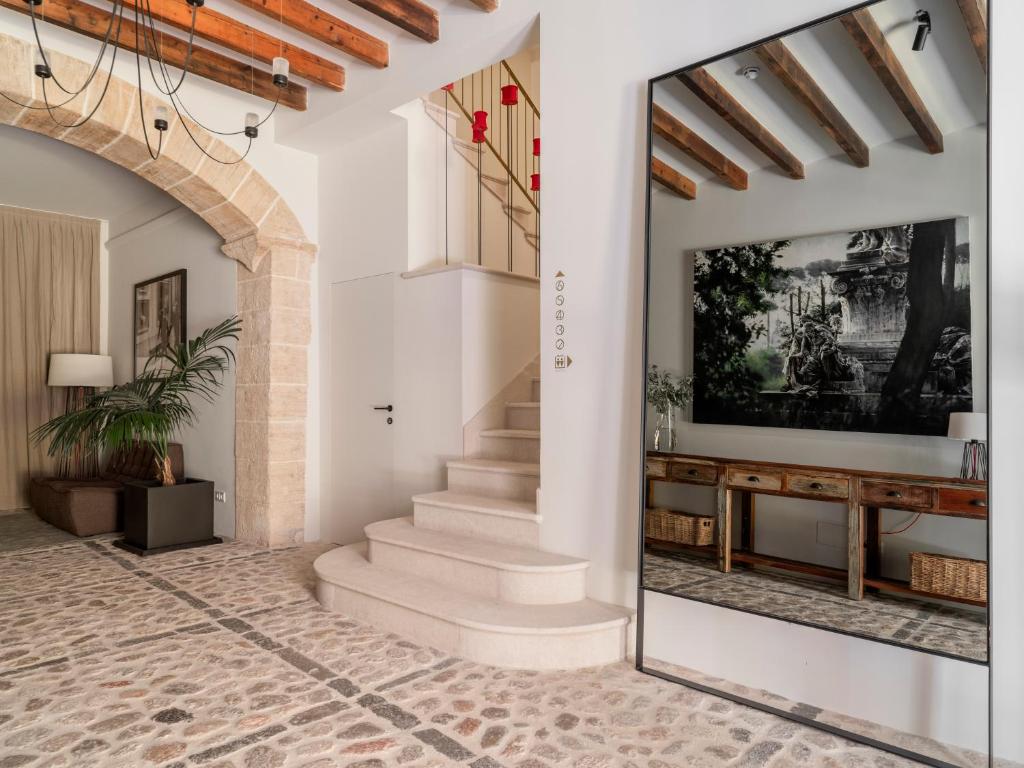
Can Verí Suites
The suites are apartment-sized, measuring between 59 and 76 m², with a separate living room, a kitchen with a dishwasher and private outdoor space, whether a balcony, patio or terrace. They work very well for longer stays, and the hotel also rents bicycles. Free parking is nearby and must be reserved, and Wi-Fi is available in the communal areas.
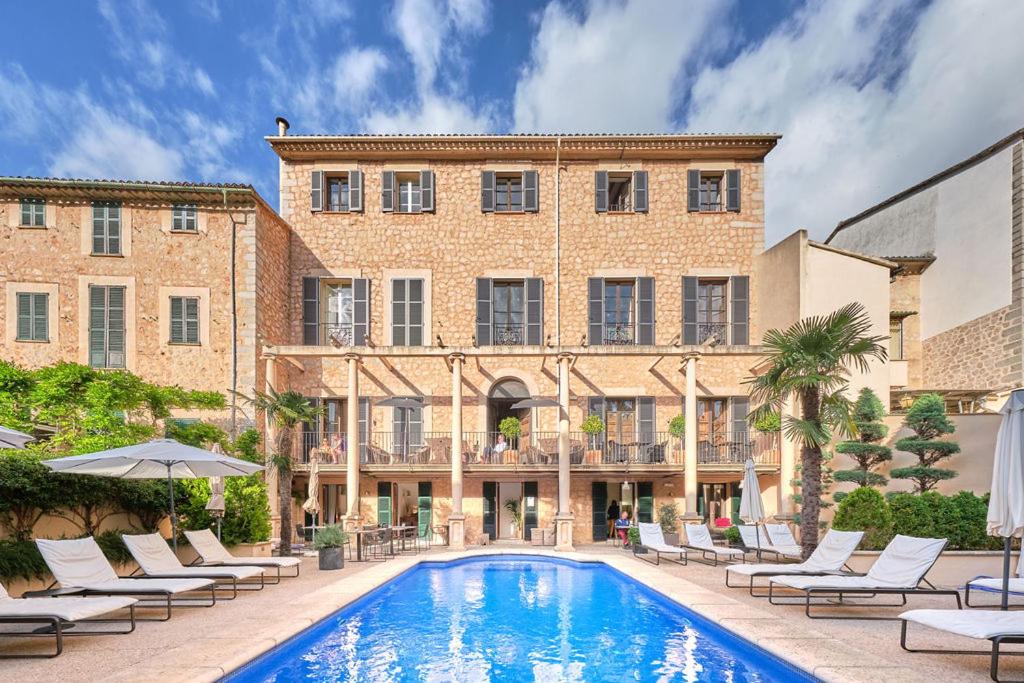
L'Avenida Adults Only
A century-old house with an eclectic feel, a seasonal pool surrounded by sun loungers, bar service and a bistro beside the water. Rooms overlook the mountains, garden or pool, and it’s a good base for taking the tram down to the port. Guests must be at least 14, and nearby public parking is paid.
Where to stay in Playa de Palma
Playa de Palma is the long stretch of sand east of the capital, running from Can Pastilla to s'Arenal, with a continuous seafront promenade and numbered beach clubs that make it easy to find your way around. It’s very close to the airport and connected to the centre by city bus: beach time without giving up the city.
The area has a reputation for partying, especially in s'Arenal, but it also has adults-only hotels, family accommodation and a few country estates inland. If you’re looking for peace and quiet, check the exact location carefully. We suggest two very different styles; see the rest of our places to stay in Playa de Palma.
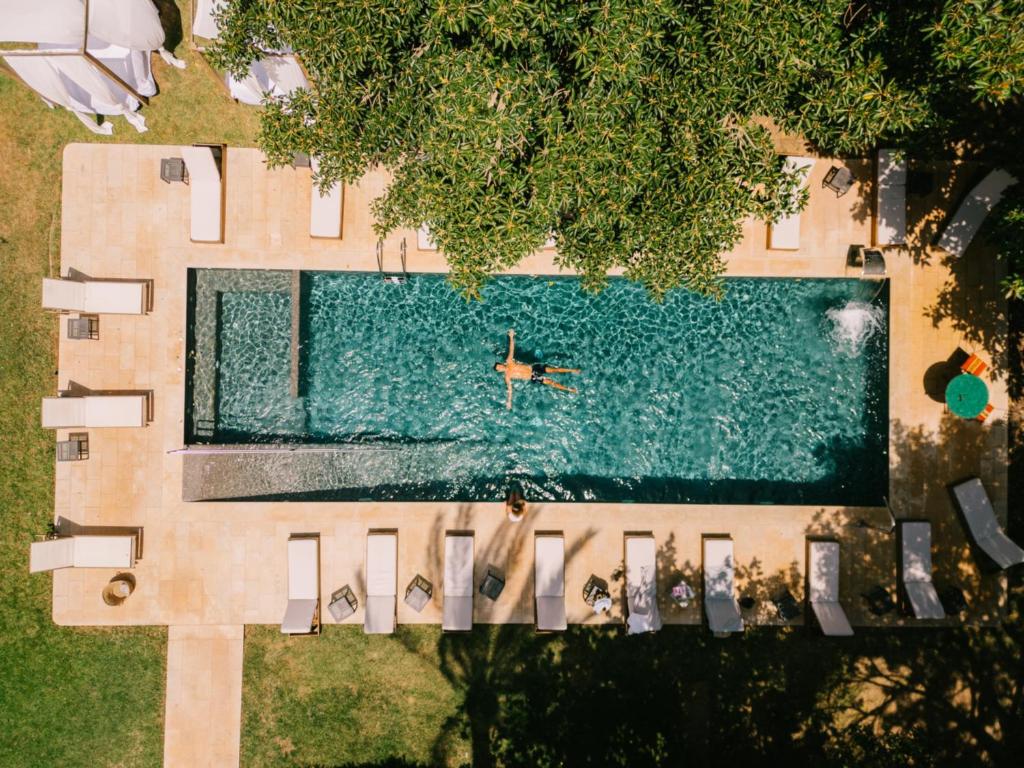
Hotel Son Molí Country House
A country estate with agricultural buildings dating from 1897, renovated in 2025, for those who prefer a rural setting within easy reach of the coast. It has an outdoor pool, gardens, a tennis court and free parking, while the suites with terraces overlook the garden. One dog per room is allowed, up to 25 kg, for an additional fee and a minimum stay of three nights.
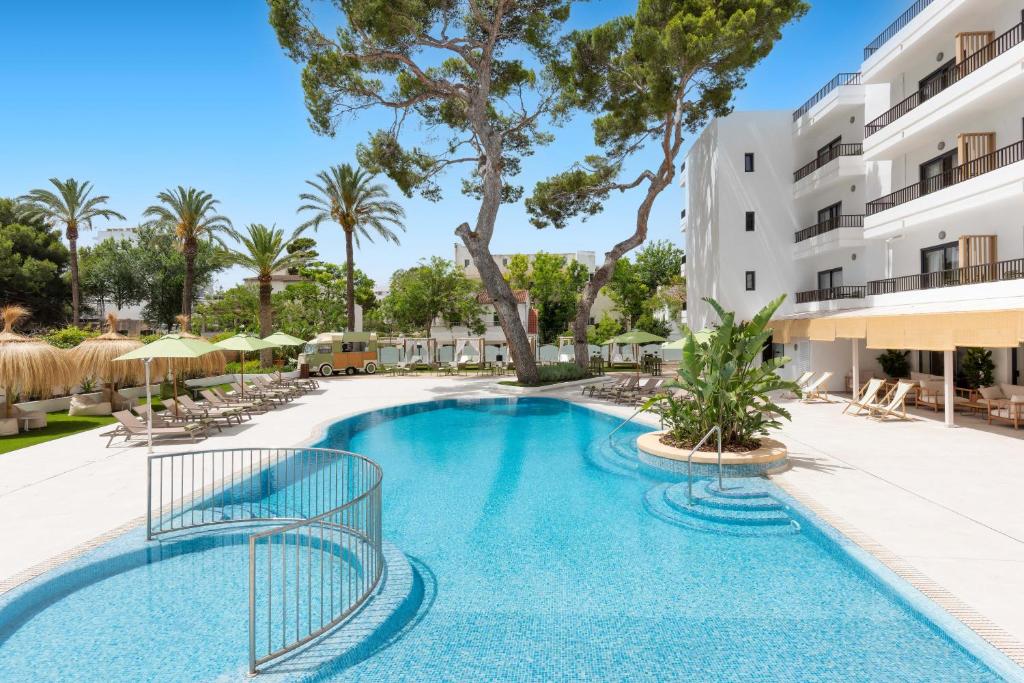
Copaiba by Honne Hotels - Adults Only
For guests aged 16 and over, around 350 metres from the beach, this hotel suits couples and friends who want a beach and pool without children around. There’s a gym, and the rooms have balconies. Breakfast is available at an extra cost, either continental or buffet-style, and there’s no parking.
Where to stay in Paguera
Paguera, Peguera in Catalan, lies in the southwest of the island, in the municipality of Calvià, around half an hour from Palma. It has three sandy urban beaches—Palmira, Tora and La Romana—and Cala Fornells, a rocky cove among the pine trees with exceptionally clear water, is within walking distance.
It’s a peaceful destination, with a pedestrian boulevard lined with shops and terraces, and a good base for exploring the west coast: Camp de Mar, Port d'Andratx or the road to Estellencs. The Aerotib A11 route also connects it to the airport outside the high season.
One option facing the beach and another overlooking the cove; find more places to stay in Paguera.
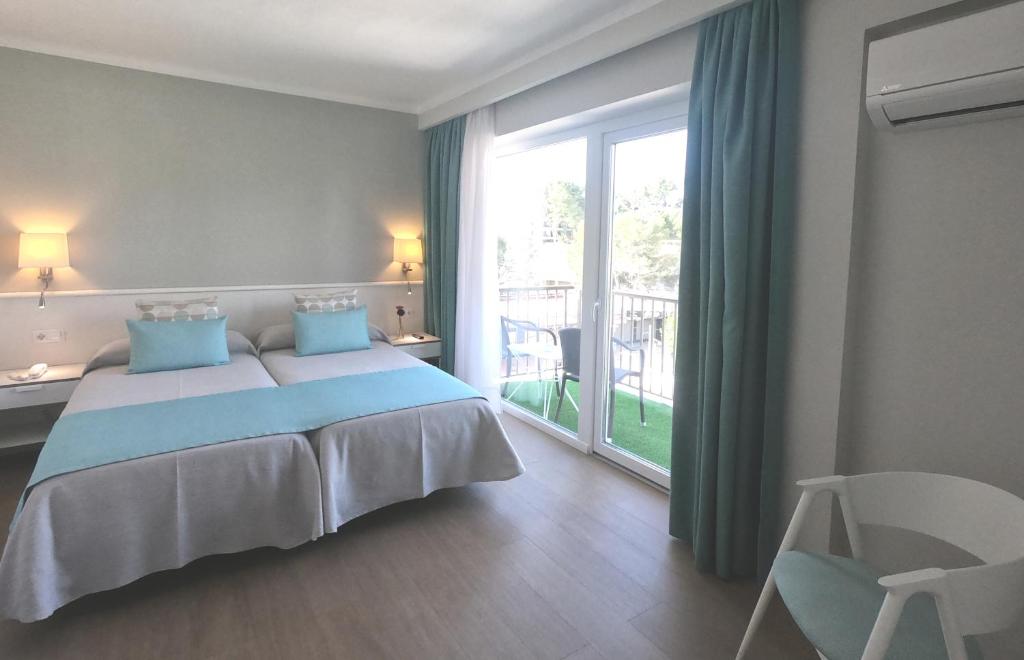
Hotel Creta Paguera
A three-star hotel facing the beach, around 270 metres from Palmira Beach, with a restaurant, bar and café. You can choose a room with sea, mountain or village views, all for a maximum of two people. Parking is public, in the surrounding area, and cannot be reserved.
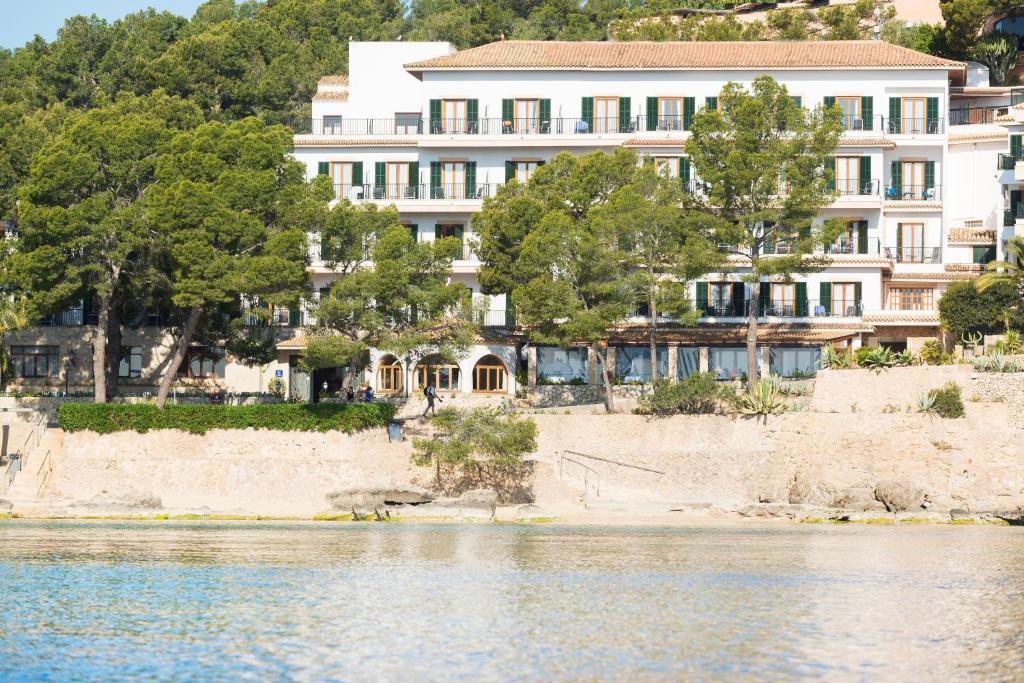
Hotel Cala Fornells
This four-star hotel overlooks Cala Fornells, around ten metres from the water, and has a rooftop pool, indoor pool, sauna, gym and massage services. The restaurant serves Mediterranean cuisine, and room service is available. Private parking is paid, and there’s no longer a hot tub, in case that’s what you were looking for.
Where to stay in Cala Millor
On the east coast, Cala Millor stretches along a bay with almost two kilometres of fine sand, shared between the municipalities of Son Servera and Sant Llorenç des Cardassar. Its pedestrian promenade and shallow water make it one of the island’s most family-friendly bases.
To the south, the Punta de n'Amer nature reserve has a defensive tower and paths through the pine trees; Cala Bona is within walking distance to the north. The Drach and Artà caves are a short drive away, and route 401 connects Cala Millor with Palma.
One straightforward option near the sea and another on the beachfront with a spa; see the rest of our places to stay in Cala Millor.
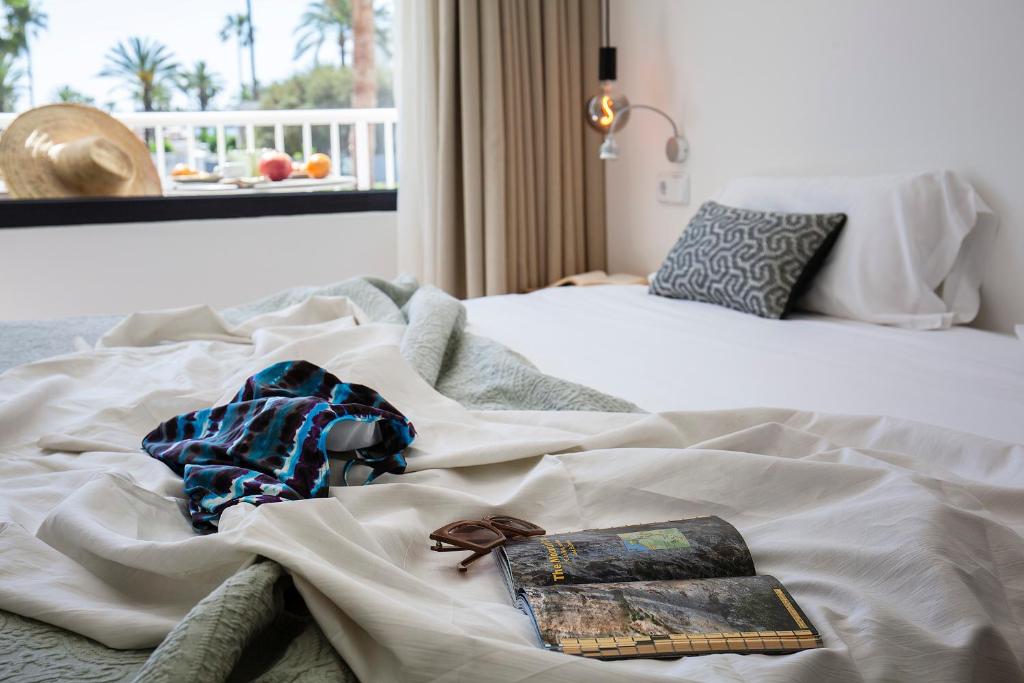
Villa Miel
A two-star hotel around 200 metres from the beach, with rooms featuring balconies and sea views, plus a bar-restaurant with a terrace. It rents bicycles for exploring the promenade and riding to Cala Bona, and accepts pets, although a supplement may apply. There’s no parking, and the double rooms accommodate two people.
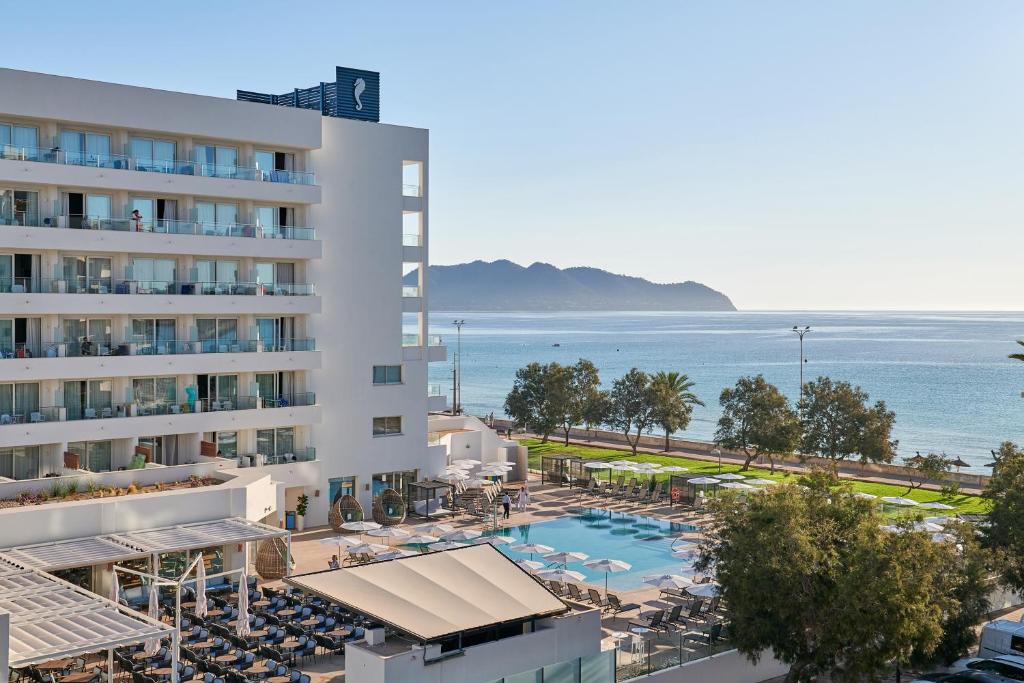
Hipotels Flamenco
Right on the beachfront, in a building renovated in 2024, with an outdoor pool, spa and gym. Rooms have balconies with frontal or side sea views, and the restaurant combines regional and international cuisine, with a buffet breakfast. Free Wi-Fi is limited to the communal areas, and there’s no private parking.
Where to stay in Cala Ratjada
Cala Ratjada, in the municipality of Capdepera, occupies the northeastern tip of Mallorca. It still has a fishing harbour and a lighthouse perched on the cliffs, with some beautiful coves nearby: Cala Agulla, with white sand and a pine forest, Cala Gat beside the harbour, and Cala Mesquida a little farther north.
In summer, it has more nightlife than other coastal towns, but you only need to walk a few streets away from the harbour to find peace and quiet. The medieval castle of Capdepera is well worth a visit.
Two hotels with pools and beaches just a few minutes’ walk away; compare more places to stay in Cala Ratjada.
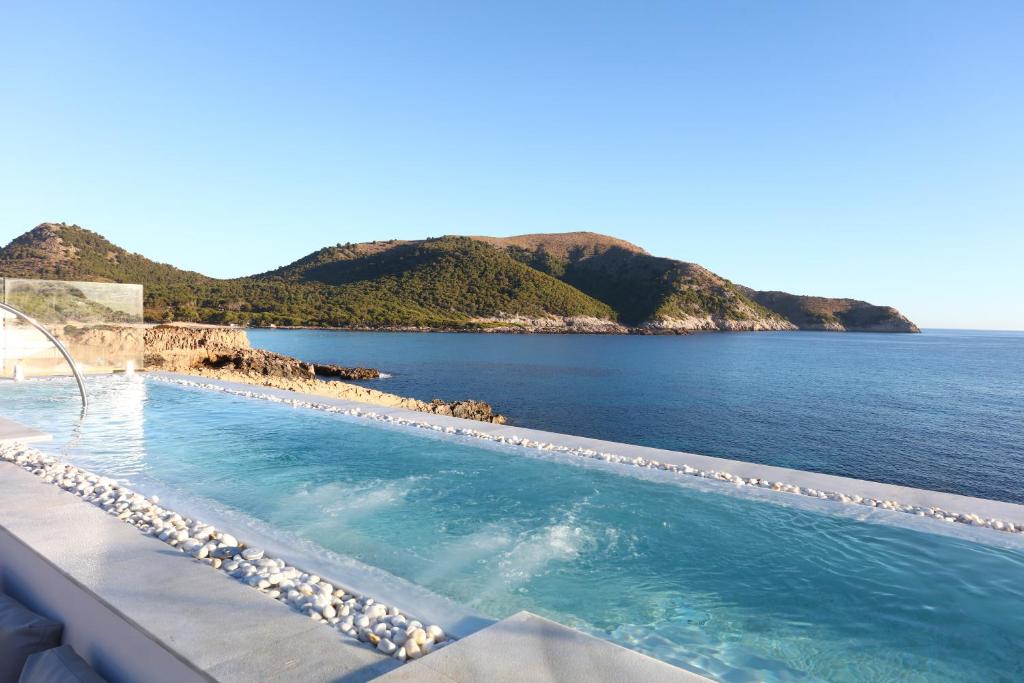
Mar Azul Pur Estil Hotel & Spa - Adults only
Ideal for couples who want to alternate time on the sand at Cala Agulla, around 200 metres away, with a spa circuit, sauna and massages. Alongside the outdoor pool, there’s an indoor pool open all year, handy in spring and autumn, as well as a gym. Children are not accepted, and there’s no parking.
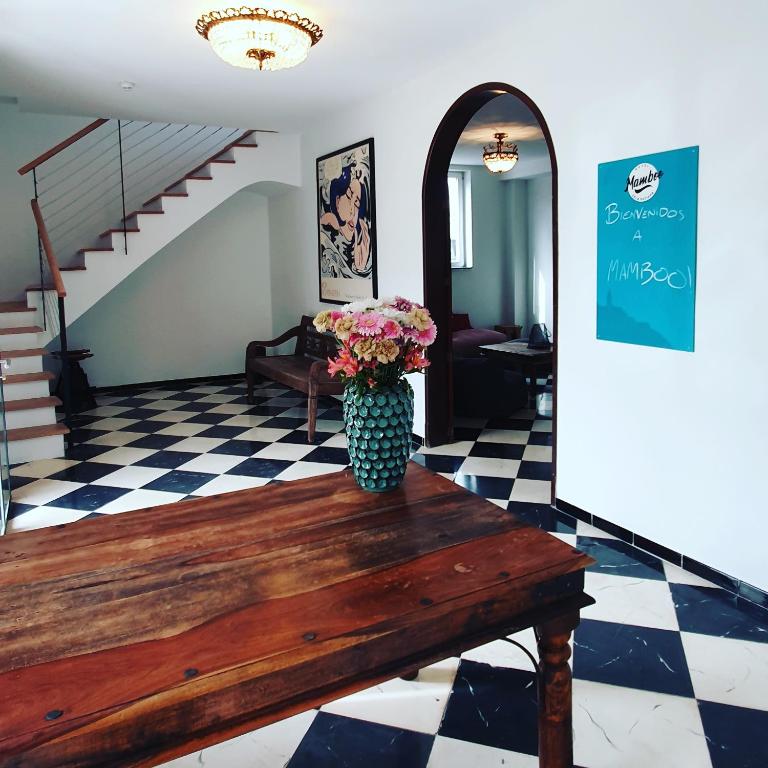
Mamboo Hotel Cala Ratjada
Around 450 metres from Cala Gat and with other beaches nearby, it combines an outdoor pool, garden and terrace with a breakfast that includes vegetarian, vegan and gluten-free options. It has single rooms, handy if you’re travelling alone, as well as doubles. There’s no lift or parking, so bear that in mind if stairs are a challenge.
Other areas of Mallorca
Beyond these six bases, the north has two large bays: Pollença, with its port and the Formentor peninsula, and Alcúdia, with its walled town and a long, shallow beach. During the high season, access to Formentor by private car is restricted: in 2026, from mid-May to mid-October.
In the south, Cala d'Or has small coves and a marina, while Santanyí and Colònia de Sant Jordi are gateways to Mondragó Natural Park, Es Trenc beach and Cabrera National Park. Inland, Petra and the country estates of the Pla offer a more rural Mallorca.
What to see in Mallorca
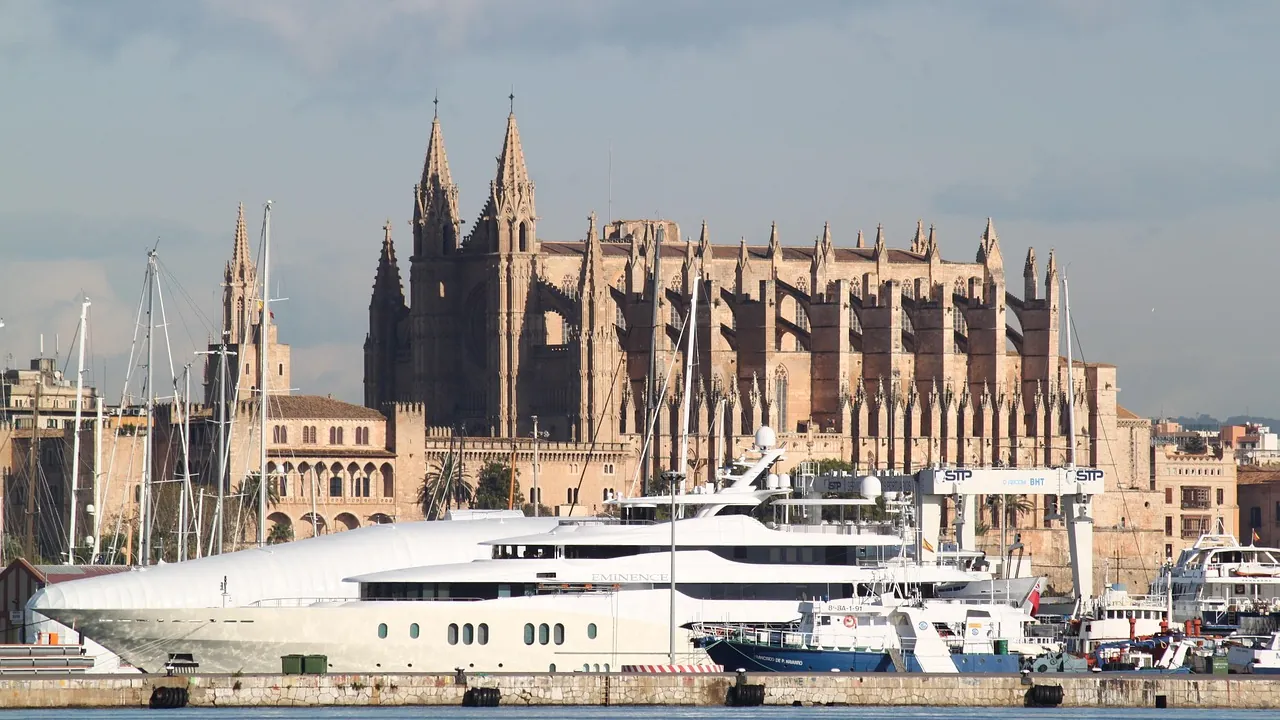
In Palma, start with the Cathedral, La Seu, a vast Gothic building overlooking the bay, with contributions by Gaudí and Miquel Barceló. On top of a pine-covered hill stands the 14th-century Bellver Castle, circular in plan and offering views across the city.
The Serra de Tramuntana deserves at least a couple of days. Valldemossa, home to the Charterhouse where Chopin and George Sand spent a winter, Deià and Fornalutx are the best-known villages; the mountain road leads to Lluc and, through a series of tight bends, to Sa Calobra.
On the east coast, you’ll find the Drach and Artà caves, while the south has Es Trenc and the coves of Mondragó. To experience village life, nothing beats a weekly market, such as the one in Sineu on Wednesdays.
When to visit Mallorca
May, June, September and October are the most balanced months: the weather is mild, the days are long and there are fewer visitors than in the height of summer. Beaches and roads fill up in July and August; winter is mild and perfect for Palma and the mountains, and the capital celebrates Sant Sebastià, its patron saint, in January.
Spring is cycling season: the Mallorca 312, the island’s major cycling event, will hold its next edition on 24 April 2027, so it’s worth booking ahead for those dates. In late March or early April, Palma Bay hosts the Princess Sofia Trophy, an Olympic sailing event.
Getting to and around Mallorca
Almost all visitors arrive via Palma Airport, which ended 2025 with 33.8 million passengers, most of them from Germany and the United Kingdom. Ferries also run from Barcelona, Valencia and Dénia, and from Menorca to Alcúdia.
From the airport, city bus A1 goes to central Palma and A2 to Playa de Palma. Aerotib routes, which have also operated outside the high season since winter 2025, connect the airport with Calvià and Paguera (A11), the bays of Alcúdia and Pollença (A33), the east coast via Manacor (A43), and Llucmajor and Campos (A51).
A car is still the most practical way to explore the island in depth, especially the east coast and inland areas. Trains to Sóller, Inca, sa Pobla and Manacor cover the routes from Palma well; see how to get to Mallorca for details.
This guide is part of where to stay in the Balearic Islands. If you’ve settled on an area, find out more: where to stay in Palma de Mallorca, where to stay in Sóller, where to stay in Playa de Palma, where to stay in Paguera, where to stay in Cala Millor and where to stay in Cala Ratjada.
Frequently asked questions
Here are brief answers to the questions that come up most often when planning a trip to Mallorca.
What is the best area to stay in Mallorca?
It depends on your trip. Palma is the most all-round base, with an old town, urban beach and the best connections, all year round. Sóller is the choice for walking in the Serra de Tramuntana. For a beach holiday, Playa de Palma and Paguera are near the airport, while Cala Millor and Cala Ratjada in the east offer family-friendly sandy beaches and coves, but take longer to reach.
Where should I stay in Mallorca without a car?
Palma is the most convenient option: bus A1 connects it to the airport, and trains and buses to almost every part of the island leave from the intermodal station. Playa de Palma works well with bus A2, while Sóller is served by the historic train, tram and route 204. Aerotib routes reach Paguera, Alcúdia and the east coast, but a car is very useful for getting around day to day elsewhere on the coast.
Which area of Mallorca is best for travelling with children?
Sandy bays with shallow water are the most convenient. Cala Millor has almost two kilometres of beach, a pedestrian promenade and plenty of facilities; Paguera has three quiet urban beaches; and in the north, Alcúdia’s beach is long and slopes very gently. Before booking, check that the accommodation accepts children, as adults-only hotels are common in Mallorca, and check room capacity if there are more than three of you.
Where should I stay in Mallorca for hiking?
Sóller is the classic base: it’s in the heart of the Serra de Tramuntana, the GR 221 dry-stone route crosses the valley, and walks such as the Biniaraix gorge or the trail to Fornalutx start from the village. Palma also works if you’re combining the city and mountains, as trains and buses reach the range. For walks along the east coast, Cala Ratjada gives access to the trails around Cala Mesquida and Capdepera Lighthouse.
When is the best time to visit Mallorca?
May, June, September and October offer mild temperatures and fewer visitors than July and August, when the island is in peak season. Spring is ideal for cycling and hiking: the Mallorca 312 ride will take place on 24 April 2027. Winters are mild and Palma and Sóller remain lively, although many beach hotels close between November and March, so it’s worth choosing your area carefully.