Español
 English
 Français
 Deutsch
 Italiano
 Nederlands
 Português
 日本語
 中文
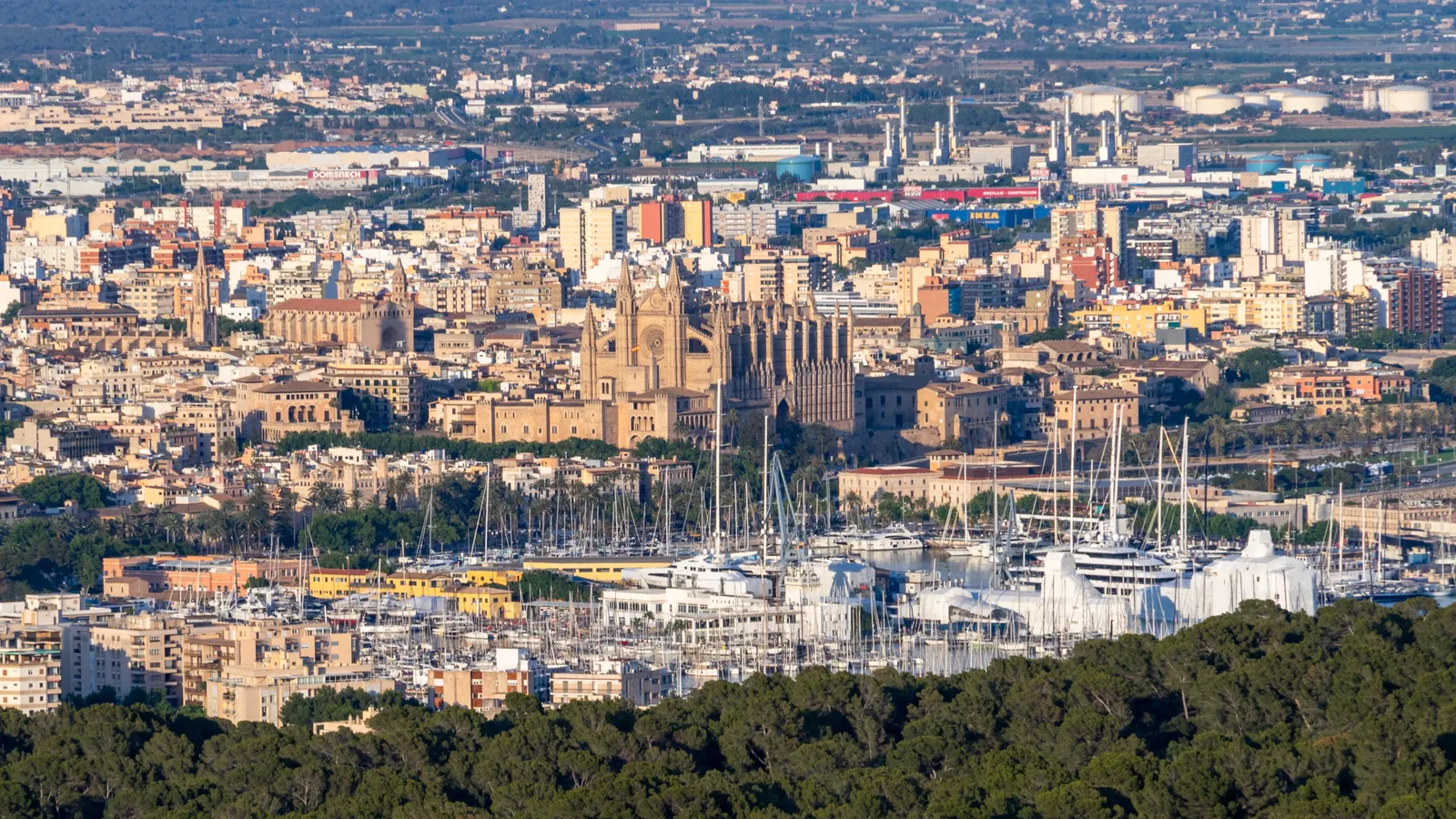
The Balearic Islands are just a short trip from mainland Spain, but each island has its own gateway. The best option depends on where you’re setting off from, whether you want to bring a car and whether you’re planning to visit several islands. If you haven’t decided where to stay yet, start with our accommodation in the Balearic Islands.
Four islands, three airports
Mallorca, Menorca and Ibiza each have their own airport; Formentera, the smallest island, can only be reached by sea. According to Aena, Palma Airport handled 33.8 million passengers in 2025, Ibiza Airport around 9.1 million and Menorca Airport 4.2 million. These figures explain why there are flights at almost any time in summer and why it’s worth booking early.
- Mallorca: Palma Airport (Son Sant Joan), about 8 km from the centre of Palma.
- Ibiza: Ibiza Airport, about 7 km from Eivissa, the capital.
- Menorca: Menorca Airport, about 5 km from Maó; Ciutadella is at the opposite end of the island.
- Formentera: no airport; fly to Ibiza and take a boat to La Savina port.
Flying from mainland Spain
Flying is the fastest option: the flight from Barcelona to Palma takes around 50 minutes, while any of the three islands is a little over an hour from Madrid. Palma has a good range of flights all year round, while routes to Ibiza and Menorca are concentrated between April and October.
Direct connections are reduced in winter, especially to Menorca, so it’s worth checking flights first and planning your dates around them. For Formentera, the usual option is to fly to Ibiza and take a boat from the capital’s port, about 20 minutes from the airport.
By ferry: arriving by sea
Taking the boat makes sense if you want to bring your car, are travelling with a pet or prefer an overnight crossing in a cabin. The main ferry operators from mainland Spain are Baleària, Trasmed and GNV:
- From Barcelona: ferries to Palma and Alcúdia, Maó and Ciutadella, Ibiza and Formentera. Depending on the boat and port, the crossing takes from around 3 hours 30 minutes to over 9 hours.
- From Valencia: daily departures to Palma and Ibiza, and a weekly connection to Maó, which takes considerably longer.
- From Dénia: the shortest route to the Pityusic Islands, with crossings to Ibiza taking around 2 hours; there are also boats to Formentera and Palma.
In July and August, spaces for vehicles sell out quickly, as do cabins. If your trip depends on bringing a car, book the ferry before your accommodation.
Island-hopping
Combining two islands is very easy by boat and a little more complicated by plane. These are the most common ferry routes:
- Ibiza – Formentera: the most frequent connection, with more than 60 departures a day in high season and a crossing time of around 30 minutes on fast boats.
- Mallorca – Menorca: between Puerto de Alcudia and Ciutadella, from one hour on fast boats to around two and a half hours on conventional ferries; there are also ferries from Palma to Maó.
- Mallorca – Ibiza: regular ferries between Palma and Eivissa port.
By air, Palma acts as a hub, with regional flights to Ibiza and Menorca. Between Ibiza and Menorca, it’s usual to connect via Palma.
Travelling with your car: the new rules
The islands are putting a brake on summer traffic, which affects anyone arriving by ferry with a vehicle. Check the rules for your island before booking:
- Ibiza: vehicle restrictions have been approved for the summers of 2026 and 2027, with a daily quota from 1 June to 30 September. If you buy a return ticket, the ferry operator arranges the permit.
- Formentera: visitor cars and motorbikes need prior authorisation to enter and drive on the island via the formentera.eco platform from 1 June to 30 September, with limited spaces allocated in order of application. Campervans, caravans and quad bikes have a quota of zero.
- Mallorca and Menorca: both island councils are preparing their own restrictions on vehicles entering via the ports, with the intention of applying them from summer 2027. While the plans are being processed, there is no quota.
In Formentera, it’s also worth considering whether you need a car: the island is small and easy to explore by bike or hire motorbike.
Getting around each island
Mallorca
It has the best public transport on the islands: TIB buses from Palma’s intermodal station, trains to Inca, sa Pobla and Manacor, and the historic train to Sóller. Even so, a hire car gives you much more freedom to visit coves, viewpoints and villages in the Tramuntana. Find all the details in our guide to how to get to Mallorca.
Menorca
One main road, the Me-1, crosses the island from Maó to Ciutadella over about 45 km, with side roads leading to coves in the north and south. Buses connect the two towns and coastal resorts well in summer, but you’ll need to walk or drive to the designated car parks to reach unspoilt coves.
Ibiza
Since April 2026, the island has had a revamped bus network, with dozens of main, beach and night routes, as well as direct connections between the airport, Eivissa and San Antonio. These make it possible to stay in the main areas without a car. We cover it in detail in our guide to how to get to Ibiza.
Formentera
The island is about 20 km from end to end and almost completely flat, making it ideal for cycling, with a network of signposted paths among salt flats and beaches. Buses run from La Savina to Es Pujols, Sant Francesc and La Mola, and motorbikes and electric cars can be hired at the port.
When to go and practical tips
There are more flights, ferries and buses from June to September, but prices are higher and roads are busy. May and late September offer the best balance: good weather and almost full transport connections.
One last tip: choose your island and area first, then sort out transport. At karmahoteles, we hand-pick our accommodation, and many places are in quiet villages where having a car makes all the difference.
Know how to get there? Now decide where to stay with our guide to where to stay in the Balearic Islands. If you’ve already chosen an island, find out how to get to Mallorca or Ibiza, or discover where to stay in Menorca.
Frequently asked questions
Here are answers to the most common questions when planning a trip to the Balearic Islands.
What’s the best way to get to the Balearic Islands?
For most travellers, flying is best. Palma, Ibiza and Menorca all have airports with direct flights from Spain’s main cities, and the journey usually takes an hour or a little longer. The ferry is the best option if you want to bring your car, are travelling with a pet or prefer an overnight crossing in a cabin. Ferries from Barcelona serve all four islands, and Dénia is the closest port to Ibiza and Formentera.
How do you get to Formentera if it has no airport?
The usual option is to fly to Ibiza and take a boat from Eivissa port to La Savina. In high season there are more than 60 departures a day, and fast boats take around 30 minutes; services are less frequent in winter, but the connection remains. There are also direct ferries from Dénia and Barcelona. If you want to bring a car or motorbike between 1 June and 30 September, you need prior authorisation through the formentera.eco platform.
Can you take a car to the Balearic Islands?
Yes, on ferries from Barcelona, Valencia and Dénia, but each island has its own rules. Ibiza restricts vehicle access from 1 June to 30 September in 2026 and 2027, and Formentera requires prior authorisation for the same dates, with no spaces for campervans. Mallorca and Menorca are preparing their own restrictions for summer 2027. In high season, book your ferry well in advance.
How do you travel from one island to another?
Most combinations are straightforward by boat: Ibiza and Formentera are about 30 minutes apart, Alcúdia and Ciutadella take between one and two and a half hours, and there are regular ferries from Palma to Ibiza and Maó. By plane, Palma acts as a hub, with regional flights to Ibiza and Menorca. The usual way to fly between Ibiza and Menorca is via Palma. If you’re combining islands in summer, book your tickets in advance.
Do you need a car to get around the islands?
It depends on the island and where you’re staying. In Mallorca and Ibiza, buses cover the towns and best-known beach areas well, and Mallorca also has a train. A car gives you much more freedom to visit secluded coves, inland villages and viewpoints. In Menorca, it’s very useful for reaching the car parks near the coves, while small, flat Formentera is easy to explore by bike or motorbike.