Español
 English
 Français
 Deutsch
 Italiano
 Nederlands
 Português
 日本語
 中文
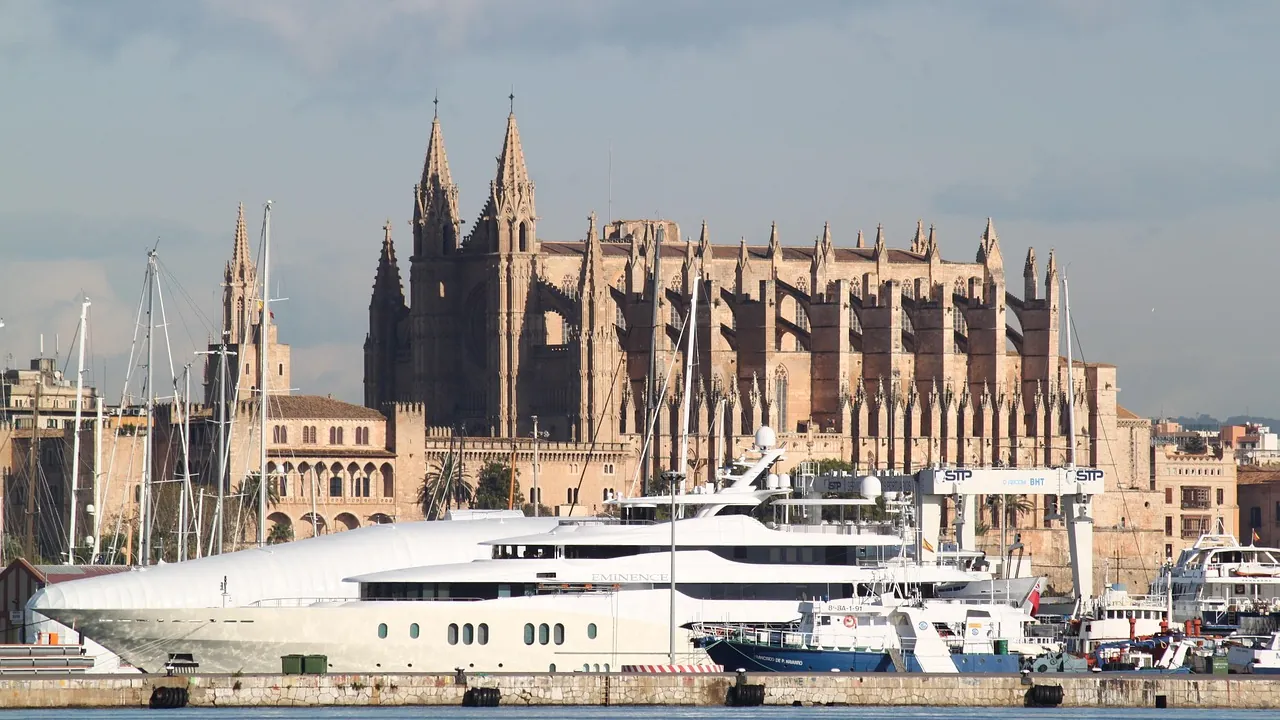
Getting to Mallorca is easy: flights run throughout the day, and there are daily ferries from mainland Spain. The best option for you depends on where you’re travelling from, whether you’re bringing a car and where you’ll be staying. If you haven’t chosen a base yet, take a look at our accommodation in Mallorca.
By plane: Palma Airport
Palma de Mallorca Airport, known as Son Sant Joan (airport code PMI), is about 8 km east of central Palma. According to Aena, it ended 2025 with 33.8 million passengers, with Germany and the United Kingdom as its main international markets and almost 9 million passengers on domestic flights.
Flights from mainland Spain
Barcelona has the most frequent connection: according to IATA data, Barcelona–Palma was Europe’s busiest air route by passenger numbers in 2024, with around two million travellers. The route is served mainly by Vueling, Ryanair and Air Europa, with flights throughout the day and a journey time of around 50 minutes.
Flights from Madrid take around an hour and 15 minutes, and there are direct flights from Valencia, Bilbao, Seville, Málaga and other cities, especially in summer. Services are reduced in winter, so book ahead if you’re travelling between November and March.
From the airport to your accommodation
As you leave the terminal, you’ll find the EMT city bus stops and TIB intercity bus stops together, just past the taxi rank. These are the main options:
- EMT line A1: connects the airport with the centre of Palma, stopping at Plaça d’Espanya and Passeig Mallorca.
- EMT line A2: goes directly to Playa de Palma.
- Aerotib A11: heads to the Calvià coast (Palmanova, Magaluf, Santa Ponsa) and Paguera.
- Aerotib A32/A33: heads north to Inca, sa Pobla and Alcúdia, and to Can Picafort in summer.
- Aerotib A42/A43: heads east to Manacor and, in summer, the Cala Millor and Cala Bona area.
- Aerotib A51: heads south via s’Arenal and Llucmajor to Campos.
Since winter 2025-2026, all four Aerotib routes have operated year-round, with slightly shorter schedules out of season. You can pay on board with a contactless bank card. If you arrive late at night or with lots of luggage, a taxi will take you to central Palma in around 15-20 minutes.
By ferry: arrive by sea with your car
The ferry is the obvious choice if you want to bring your own vehicle, travel with a pet or simply start your holiday on deck. These are the main routes:
- Barcelona: to Palma with Baleària, Trasmed and GNV, and also to Alcúdia. Conventional ferries, many of them overnight, take around 7-8 hours; faster services run during the season.
- Valencia: to Palma with the same ferry companies, with crossings taking around 6 and a half to 9 and a half hours.
- Dénia: Baleària connects this part of the Alicante coast with Palma in around 5 hours.
- Menorca: ferries run between Ciutadella and Port of Alcúdia, taking from an hour on fast services to around two and a half hours on conventional ferries.
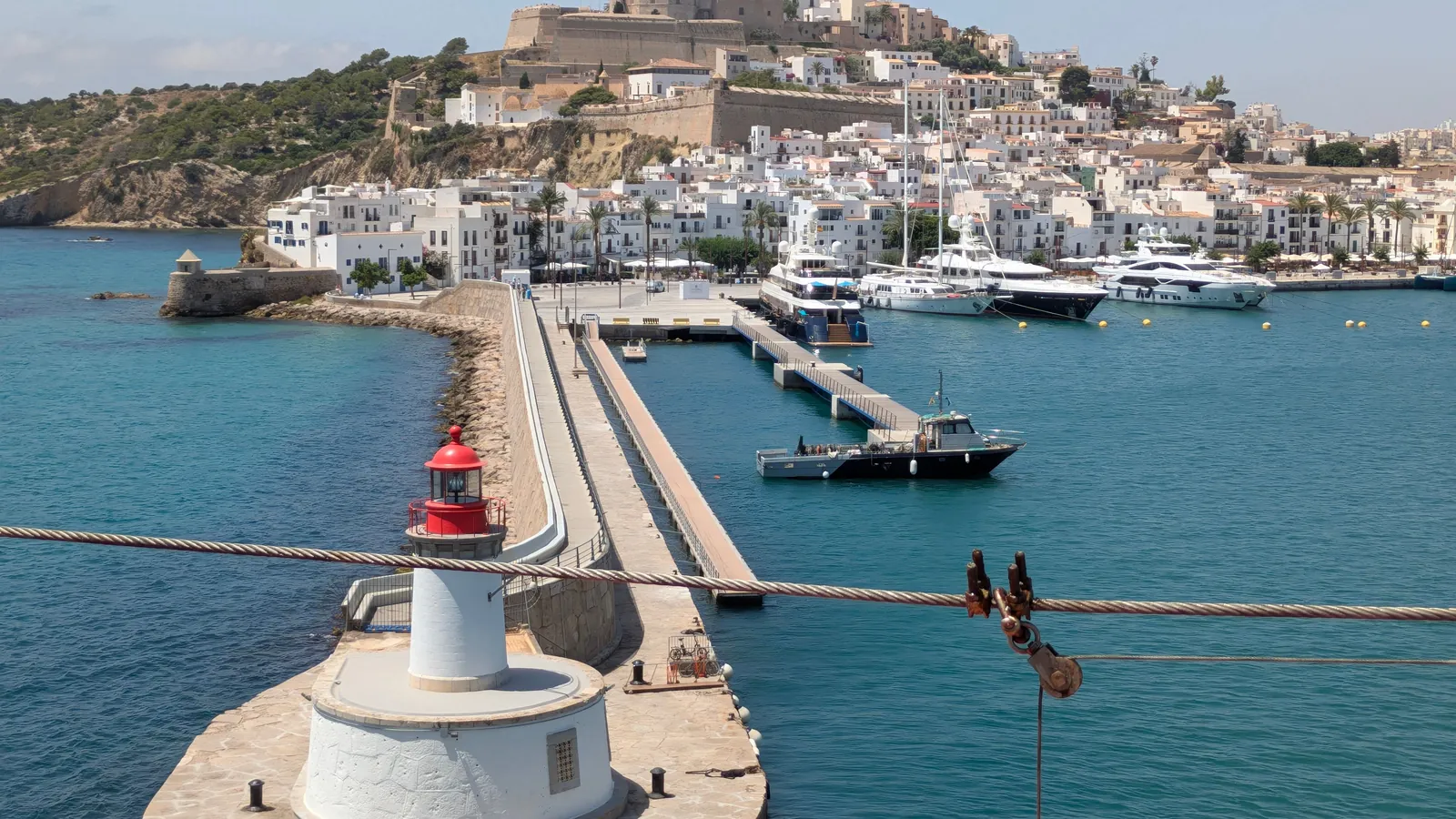
- Ibiza and Formentera: regular connections to Palma.
- France: in season, Corsica Ferries connects Toulon and Sète with Mallorca.
An overnight crossing in a cabin saves you a night in a hotel. That said, car spaces sell out quickly in July and August.
Getting around Mallorca
Mallorca stretches about 100 km from end to end, and almost every corner is less than an hour and a half by car from Palma. Public transport serves Palma and most beach destinations well, but is less useful for the inland areas and smaller coves.
TIB buses
Most TIB intercity buses leave from Palma’s Intermodal Station, beneath Plaça d’Espanya. In the 2026 season, route 204 between Palma and Port de Sóller reached 38 services in each direction per day, while summer routes include coastal links such as Port de Sóller–Alcúdia and Cala Rajada–Porto Cristo. Services between inland towns, by contrast, are infrequent.
Train
SFM trains connect Palma with Inca, sa Pobla and Manacor, and are useful for exploring inland Mallorca or visiting weekly markets. There’s also the historic Sóller Train, which crosses the Tramuntana mountains to Sóller in around an hour; from there, a tram runs down to the port. It’s more an excursion in its own right than a practical means of transport.
Car, taxi and bicycle
Renting a car gives you the freedom to reach coves, viewpoints and mountain villages. Bear in mind that Tramuntana roads are narrow and winding, and finding a parking space in Palma, Sóller or the best-known coves in the height of summer takes patience.
In peak season, private cars are restricted from using the Formentor road during the day, from Port de Pollença to the beach and lighthouse. The alternative is to take the TIB shuttle buses from Port de Pollença. The island is also one of Europe’s top road-cycling destinations: the Tramuntana mountains fill with cyclists in spring and autumn, and many accommodation options have bike storage.
When to go and practical tips
From June to September there are more flights, ferries and buses, but also more traffic and higher prices. Spring and autumn are ideal for hiking and cycling. In winter, many beach areas close for the season, while Palma and Sóller stay lively all year round.
- If you’re staying in Palma or a well-connected beach area, you can do without a car and rent one for just a couple of days.
- For the north (Pollença, Alcúdia) or the east of the island, Aerotib gets you close without going via Palma.
- If you’re staying inland or at a rural estate, a car is almost essential.
Where you stay will determine many of your journeys. At karmahoteles, we hand-pick each accommodation, and you’ll also find Menorca, Ibiza and Formentera on our Balearic Islands page.
Know how to get there? The next step is deciding where to stay in Mallorca, or focusing on the capital with our guide to where to stay in Palma de Mallorca. If you’re planning to visit several islands, start with how to get to the Balearic Islands and where to stay in the Balearic Islands.
Frequently asked questions
Answers to the most common questions when planning a trip to Mallorca.
What’s the best way to get to Mallorca?
For most travellers, flying is the best option: there are direct flights to Palma Airport from almost every city in Spain, and the journey from Barcelona takes just over 50 minutes. The ferry is best if you want to bring your car or pet, or prefer an overnight crossing that saves you a night’s accommodation. Ferries to Palma run from Barcelona, Valencia and Dénia, and from Barcelona to Alcúdia too.
How do I get from Palma Airport to the centre?
The cheapest option is EMT line A1, which connects the terminal with central Palma, stopping at Plaça d’Espanya and Passeig Mallorca. The stop is outside the terminal, just past the taxi rank, beside the TIB bus stops. A taxi takes around 15-20 minutes to the centre, depending on traffic, and is the best option if you arrive very late or with lots of luggage.
Is there a bus from the airport to the beach areas?
Yes. TIB’s Aerotib routes run from the airport to the main tourist areas: A11 to Calvià and Paguera, A32/A33 to Inca, sa Pobla and Alcúdia, A42/A43 to Manacor and Cala Millor Bay, and A51 to s’Arenal, Llucmajor and Campos. Since winter 2025-2026, they have run all year round, with slightly shorter routes and schedules out of season. EMT also runs line A2 direct to Playa de Palma.
Do I need a car to explore Mallorca?
Not always. If you’re staying in Palma or a well-connected beach area, you can get around by TIB bus, take the train to Inca, sa Pobla or Manacor, or ride the Sóller Train. A car makes all the difference for discovering smaller coves, Tramuntana villages or rural estates. A good compromise is to rent one for just two or three days. Remember that parking in Palma, Sóller and the best-known coves can be difficult in summer.
Can you drive to Formentor?
Only with restrictions during peak season. From mid-May to mid-October, private cars are restricted from using the Formentor road during the day, from Port de Pollença to the beach and lighthouse. During those hours, you can take the TIB shuttle bus, cycle or walk up; outside the restricted hours, access is unrestricted again. Check the exact dates before you go, as they are set each year.