Español
 English
 Français
 Deutsch
 Italiano
 Nederlands
 Português
 日本語
 中文
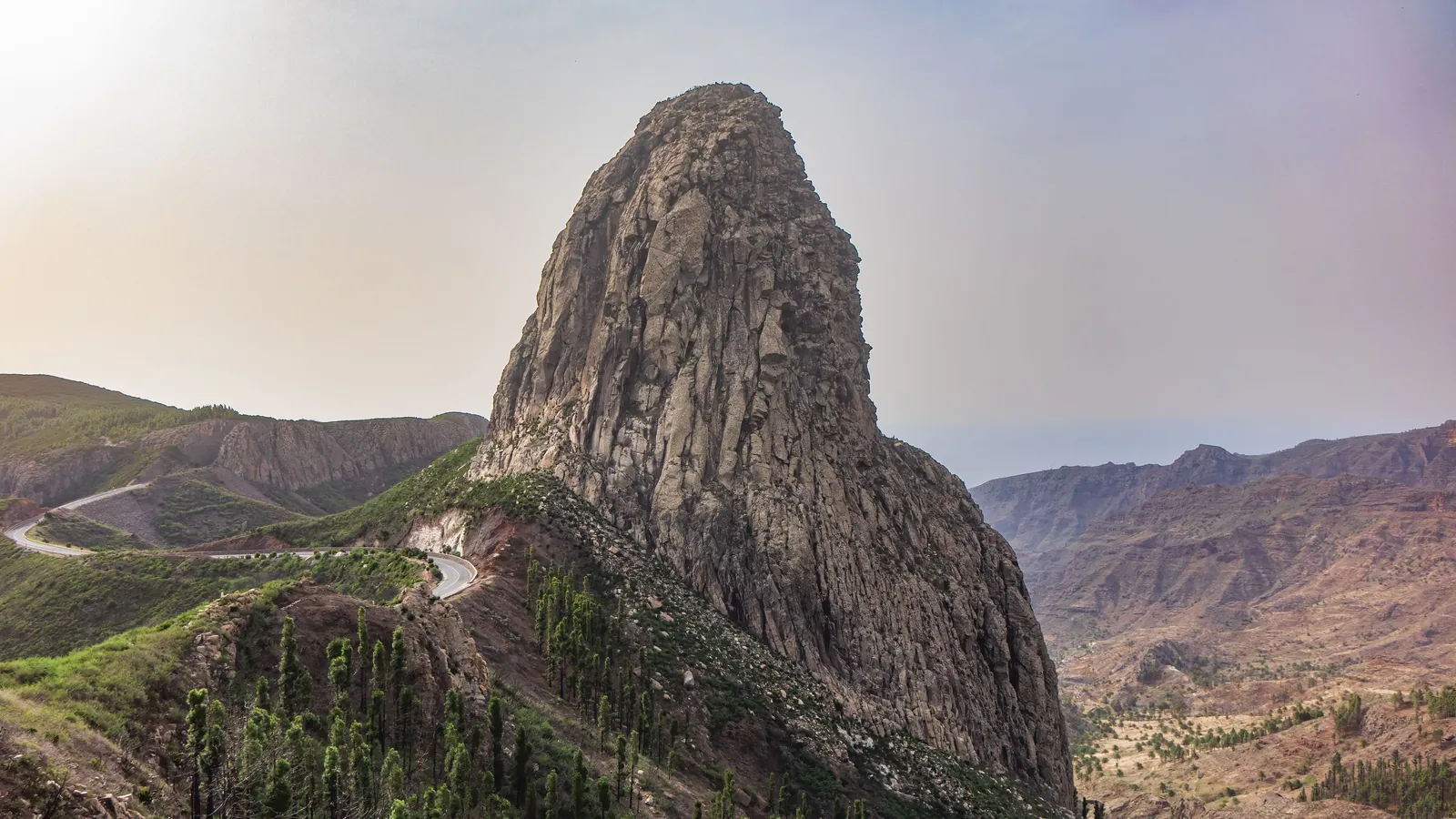
La Gomera is a round, mountainous island, carved by deep ravines that descend from the laurel forest of Garajonay National Park, a UNESCO World Heritage Site since 1986. The island is home to Silbo Gomero, the whistled language that UNESCO declared Intangible Cultural Heritage in 2009, and the whole island is a Biosphere Reserve.
Distances can be deceptive: the roads climb and descend without a break, and choosing the right base saves hours on winding roads. Here’s what each area has to offer, with places to stay that we hand-pick; the full list is at hotels in La Gomera.
How to choose an area
The island has two sides: the north, green and often cloudy, and the south and west, which are drier and sunnier. Here’s how the bases compare:
- San Sebastián de la Gomera: the capital and port, with services and buses to the whole island. Ideal without a car.
- Hermigua: a valley of banana plantations in the north, close to El Cedro forest. For hikers.
- Vallehermoso: a peaceful village in the north, beneath Roque Cano.
If you’re looking for sun and beaches, also consider Valle Gran Rey, in the west, and Playa de Santiago, in the south, near the airport.
Where to stay in San Sebastián de la Gomera
San Sebastián is the gateway to the island and a place steeped in history: Columbus made his last stop here before crossing the Atlantic in 1492, and the Torre del Conde, dating from the 15th century, still stands in the centre. There’s a dark-sand beach facing the port.
Staying here makes arrival and departure easier if you’re relying on the ferry or bus, and it’s the most practical area for short stays. See more options at hotels in San Sebastián de la Gomera.
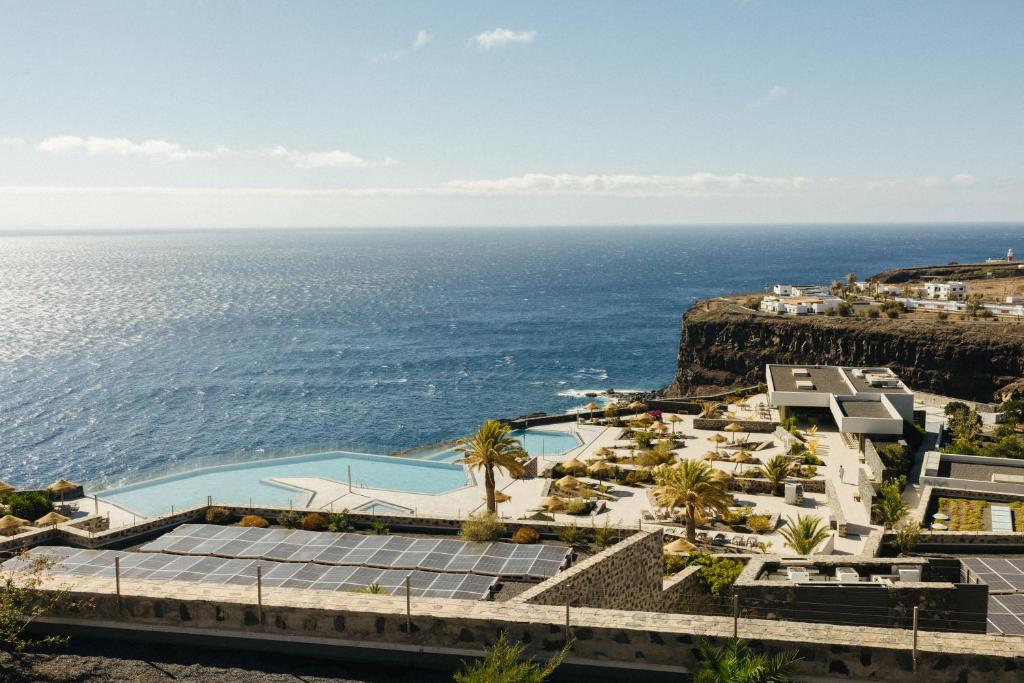
BANCAL HOTEL and SPA
A four-star hotel with a spa, outdoor pool, garden and rooms with sea-view terraces. Families can choose 62 m² rooms, and there’s a kids’ club; private parking is free. Breakfast costs extra, and the ferry terminal is almost two kilometres away, so it’s best to arrive by car or taxi.
Where to stay in Hermigua
Hermigua occupies a narrow, fertile valley that slopes down to the sea between banana plantations. From the village, the road climbs to El Cedro, one of the wettest corners of Garajonay, while the coast is home to Santa Catalina beach and the natural pool beside the old davit.
It’s the base we’d choose for hiking, with the national park close by; the trade-off is that the north gets more cloud than the south. Find the rest of the accommodation at hotels in Hermigua.
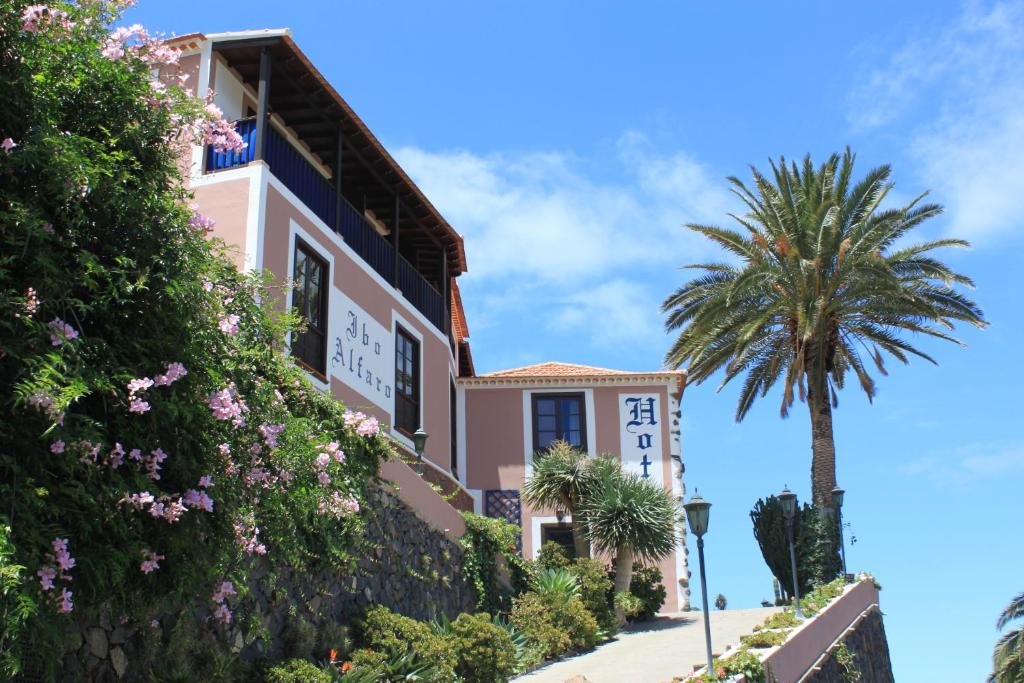
Hotel Rural Ibo Alfaro - OFFLINE HOTEL
A restored manor house with stone walls and wooden beams, perched above the valley with views of the Atlantic. Garajonay is around a ten-minute drive away, and there are hiking trails and bike rentals. Wi-Fi is available only in the common areas and parking is public: the name is a hint that this is a place to switch off.
Where to stay in Vallehermoso
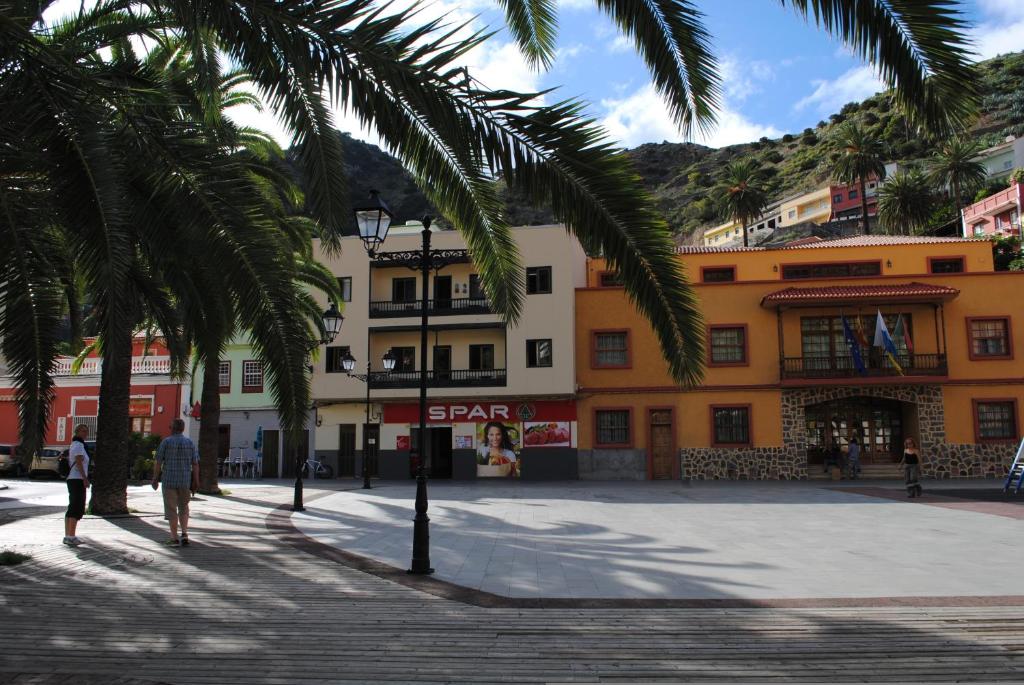
Vallehermoso stretches out beneath Roque Cano, a volcanic plug that towers over the village. The surrounding area has palm groves and a pebble beach; on the way to Hermigua, you’ll find the Mirador de Abrante in Agulo, with its glass walkway suspended above the void.
The atmosphere is village-like, with bars on the square and a slower pace. Find more options at hotels in Vallehermoso; these are our two picks.
Hostal Casa Amaya
A simple hostal with a garden, terrace and picnic area, plus rooms overlooking the mountains and village. There’s a 10 m² single room for solo travellers and 20 m² double rooms. Bathrooms are shared, there’s no parking, and Wi-Fi is limited to the common areas.
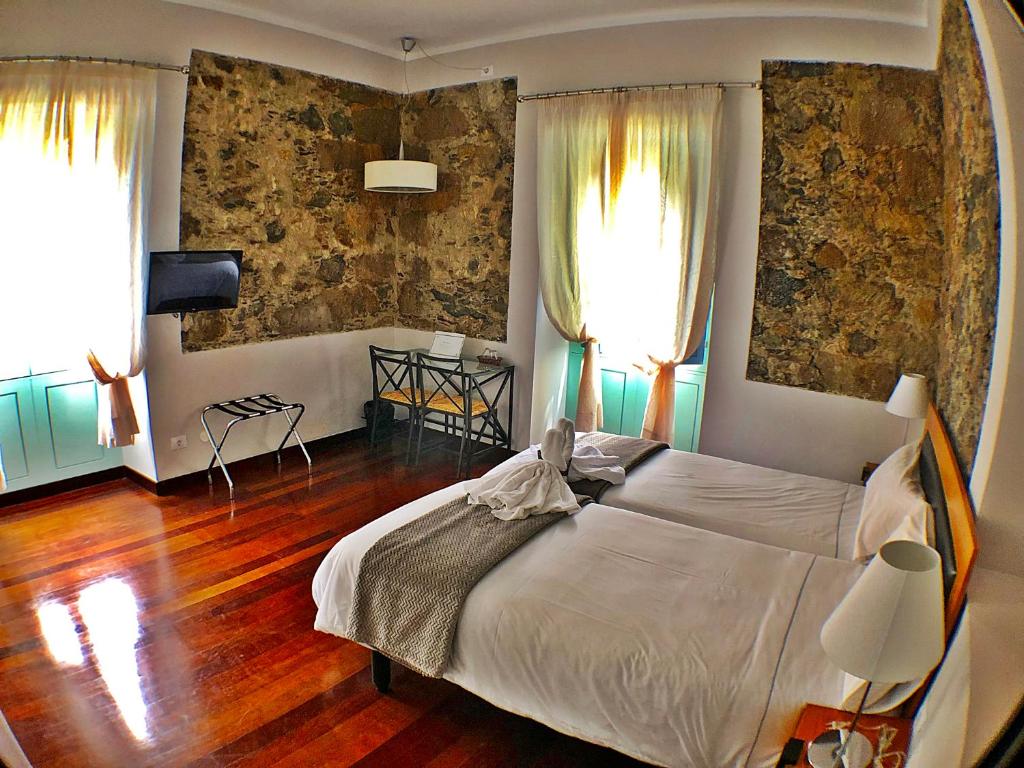
Hotel Rural Triana
A three-star hotel with a garden, terrace and restaurant, plus continental or buffet breakfast at an extra charge. Rooms have private bathrooms and mountain views, with single and double options featuring either two beds or a sofa bed. Free public parking is nearby, and the beach is more than three kilometres away.
What to see in La Gomera
Garajonay is the main attraction: trails through laurel forest and tree heath, Laguna Grande and Alto de Garajonay, at 1,487 metres, with views of Tenerife and Mount Teide on clear days. In May 2026, the island council announced plans to expand the park by around 200 hectares in the Majona area.
For keen hikers, the GR 132 circles the whole island from San Sebastián; in 2026, Lonely Planet’s hiking guide put it at the top of its January trail selection. The island council also offers 27 themed walking and cycling routes, with an official app. And for a taste of the local cuisine: almogrote, palm honey and watercress stew.
How to get there and get around
The main route is by ferry from Los Cristianos, in the south of Tenerife: Fred. Olsen Express and Baleària run crossings daily all year, taking around 50 minutes. La Gomera’s small airport, near Playa de Santiago, handles short inter-island flights.
GuaguaGomera buses leave from the ferry terminal for the main villages. Departures at 07:00 to Valle Gran Rey and Vallehermoso have been announced for the last quarter of 2026; until now, the first buses left at 10:30. Even so, a car gives you much more freedom.
La Gomera is part of our guide to where to stay in the Canary Islands. If you’re combining your trip with the neighbouring island, see where to stay in Tenerife and how to get to Tenerife; for the rest of the flights and ferries, see how to get to the Canary Islands.
Frequently asked questions
Some of the most common questions when planning a few days in La Gomera.
What’s the best area to stay in La Gomera?
It depends on your trip. San Sebastián de la Gomera is the most practical: ferries arrive here, and buses leave for the whole island. Hermigua is the best base for hikers, with El Cedro and Garajonay close by. Vallehermoso offers a village atmosphere in the north. If sun and beaches are your priority, Valle Gran Rey and Playa de Santiago are drier and sunnier.
Is it worth staying in San Sebastián de la Gomera?
Yes, especially for short stays or if you’re travelling without a car. You’re close to the port, with an urban beach, restaurants and the Torre del Conde just a few steps away, and buses leave from the ferry terminal. The downside is that Garajonay and the north coast are farther away than from Hermigua or Vallehermoso, so it’s worth combining two bases for longer stays.
How do you get to La Gomera?
The usual route is by ferry from Los Cristianos, in the south of Tenerife, to San Sebastián de la Gomera. Fred. Olsen Express and Baleària operate year-round, with daily departures and a crossing of around 50 minutes. If you’re taking a car, arrive at the port in good time. There’s also La Gomera Airport, near Playa de Santiago, with short inter-island flights.
Do you need a car to get around La Gomera?
It’s not essential, but it helps a lot. GuaguaGomera buses connect San Sebastián with Valle Gran Rey, Vallehermoso, Alajeró and the airport, and more frequent services have been announced for the last quarter of 2026. Even so, schedules are limited and many trails start far from bus stops. With a car, you can visit viewpoints and villages at your own pace, along winding mountain roads.
When is the best time to visit La Gomera?
The climate is mild all year, so any season works. Autumn, winter and spring are ideal for hiking: Lonely Planet’s hiking guide recommends January for the GR 132. In summer, the south and west are hotter, while the north and Garajonay stay cool. It can be foggy and cold on the peaks in any month.