Español
 English
 Français
 Deutsch
 Italiano
 Nederlands
 Português
 日本語
 中文
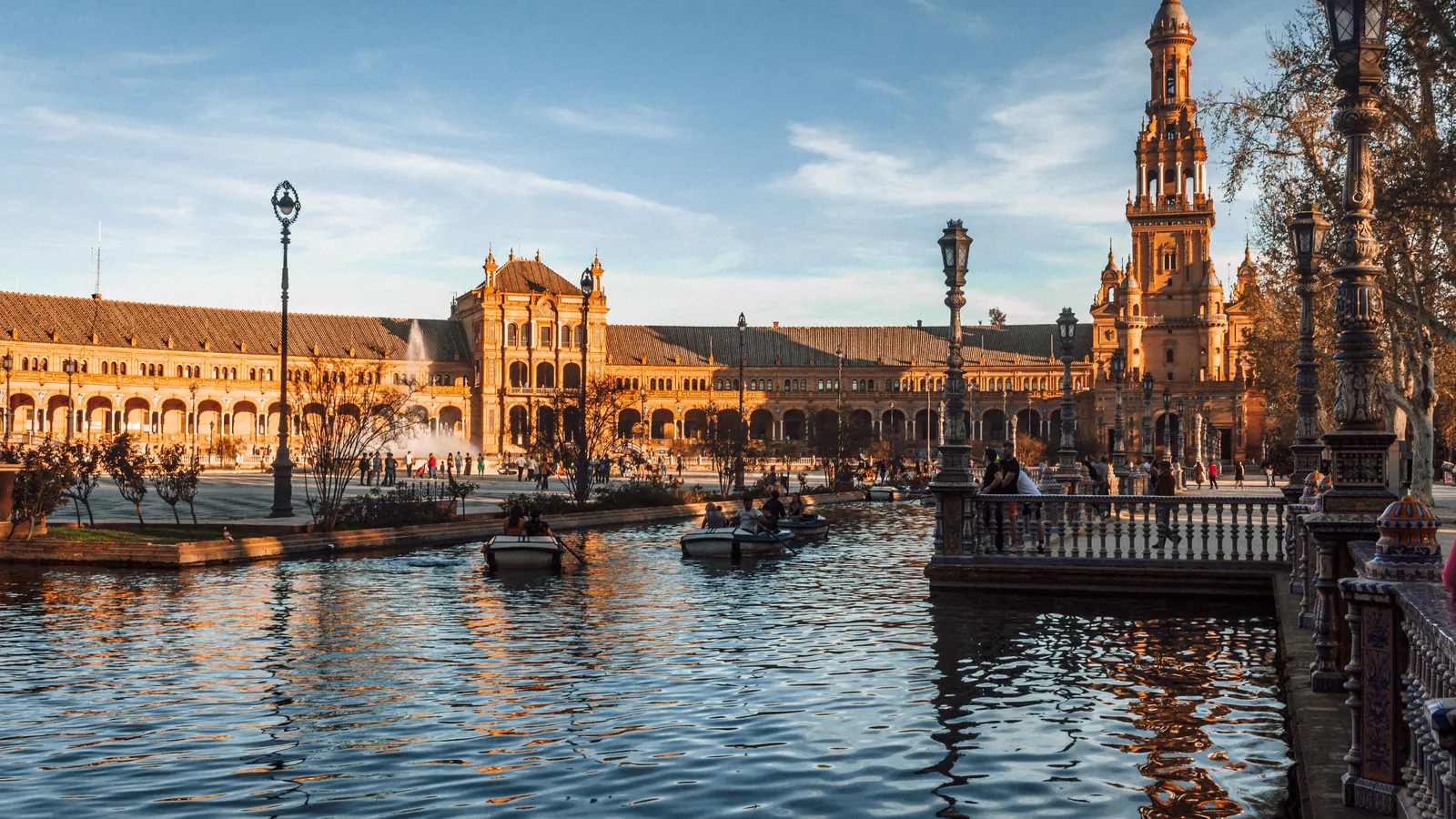
Seville is one of those cities best understood on foot. The Giralda rises above the rooftops, orange blossom perfumes the squares in spring, and the Guadalquivir separates the old town from Triana, the neighbourhood of potters and flamenco. Few cities pack so much heritage into such a vibrant centre.
That’s why deciding where to stay in Seville matters more than you might think. The historic centre is one of the largest in Europe, and waking up beside the Cathedral is quite different from staying on a quiet street near the Alameda or in a home with a pool on the outskirts. In this guide, we explain each area and suggest twelve places to stay that we hand-picked, rather than relying on hearsay.
How to choose an area in Seville
The general rule is simple: the closer you are to the Cathedral, the easier it is to get around on foot—and the more visitors you’ll find on the streets. Head north through the old town or cross the river, and the city feels more everyday, with food markets and neighbourhood bars.
- Santa Cruz, the Cathedral and El Arenal: the monumental heart of the city, home to the Royal Alcázar, the Giralda, the Torre del Oro and the Maestranza. Ideal for a short first visit.
- The northern centre: La Encarnación and Las Setas, La Alfalfa, Plaza del Duque and Alameda de Hércules. Shops, tapas and a more local feel.
- Triana: across the bridge, with its market, ceramics, Calle Betis and river views you won’t find in the city centre.
- Santa Justa and Nervión: near the high-speed train station and shopping district, convenient for work trips or rail breaks.
- The outskirts: homes and villas with pools and parking, suited to families and groups travelling by car.
One thing worth knowing: since October 2024, the city has not allowed any new tourist apartments in the most heavily visited neighbourhoods of the old town, such as Santa Cruz, El Arenal and La Alfalfa, or in Triana’s old town. In these neighbourhoods, especially during busy periods, booking ahead makes all the difference.
Almost no accommodation in the city centre has its own parking, so if you arrive by car, it’s worth leaving it in a public car park and forgetting about it. You’ll find the full range of places to stay in the city on our Seville page; here are our picks, by area.
Santa Cruz, the Cathedral and El Arenal: the monumental heart
Santa Cruz, the former Jewish quarter, is a maze of whitewashed lanes, tiled courtyards and little squares such as Plaza de Doña Elvira and Plaza de Santa Cruz. It borders the gardens of the Royal Alcázar and opens onto Plaza del Triunfo, where the Cathedral and the Archivo de Indias stand.
Stretching towards the river is El Arenal, the old port district, with the Maestranza bullring, the Torre del Oro and a riverside promenade along the Guadalquivir. Here are the three places we recommend, the last just beside Triana Bridge.
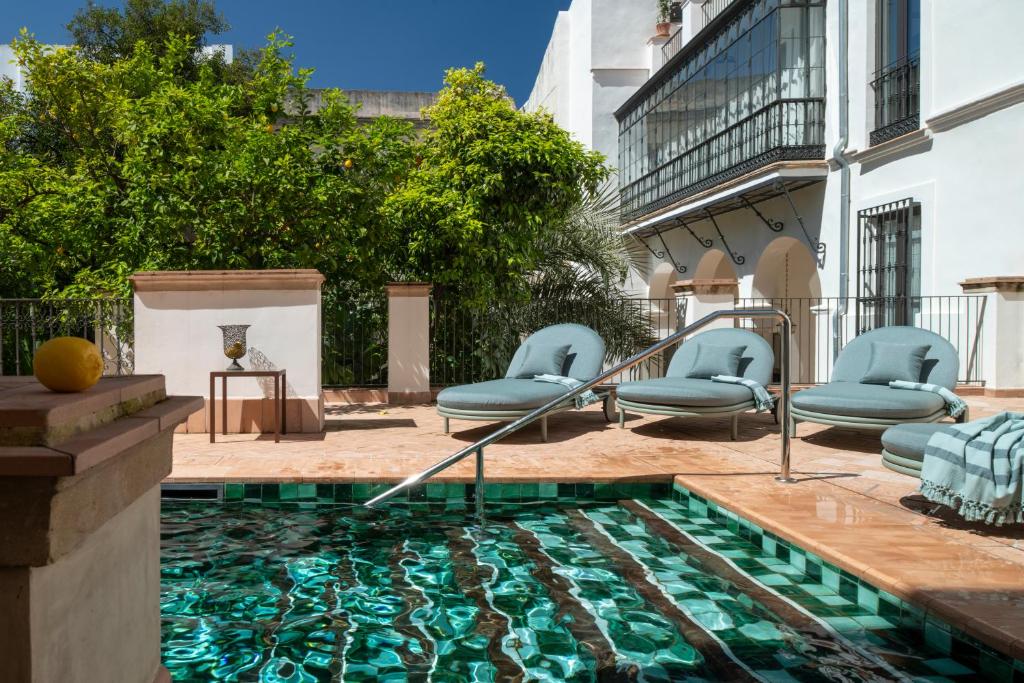
Hotel Boutique Casa del Limonero - Adults Only
A small, adults-only hotel just steps from the Cathedral, with a garden, outdoor pool and hammam for unwinding between sightseeing stops. The rooms are soundproofed, and the 66 m² Duplex Junior Suite also sleeps four. The hotel arranges tours and hires out bicycles; breakfast costs extra and there is no parking.
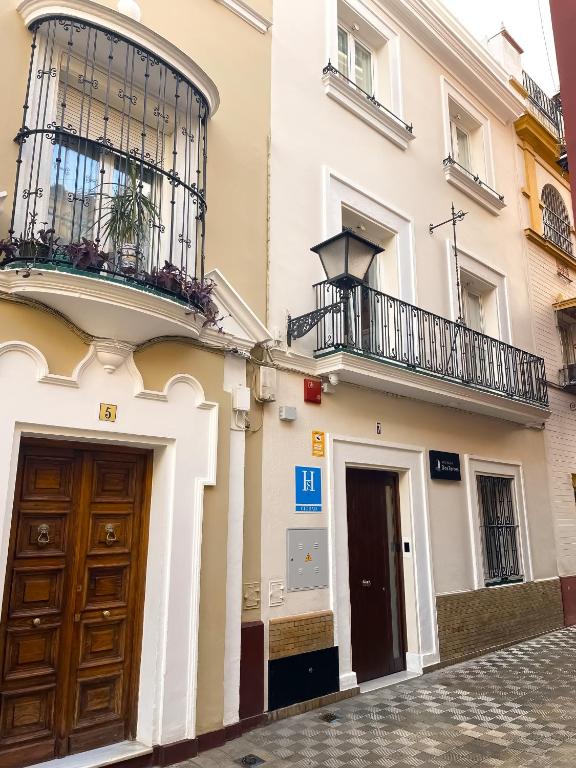
Sevilla DosTorres
An adults-only guesthouse 270 metres from the Cathedral and 500 from the Royal Alcázar, perfect if you want to see the main sights without taking a single bus. Rooms have private bathrooms and soundproofing, and some overlook a patio or terrace. Bear in mind that check-in ends at 20:00 and there is no parking.
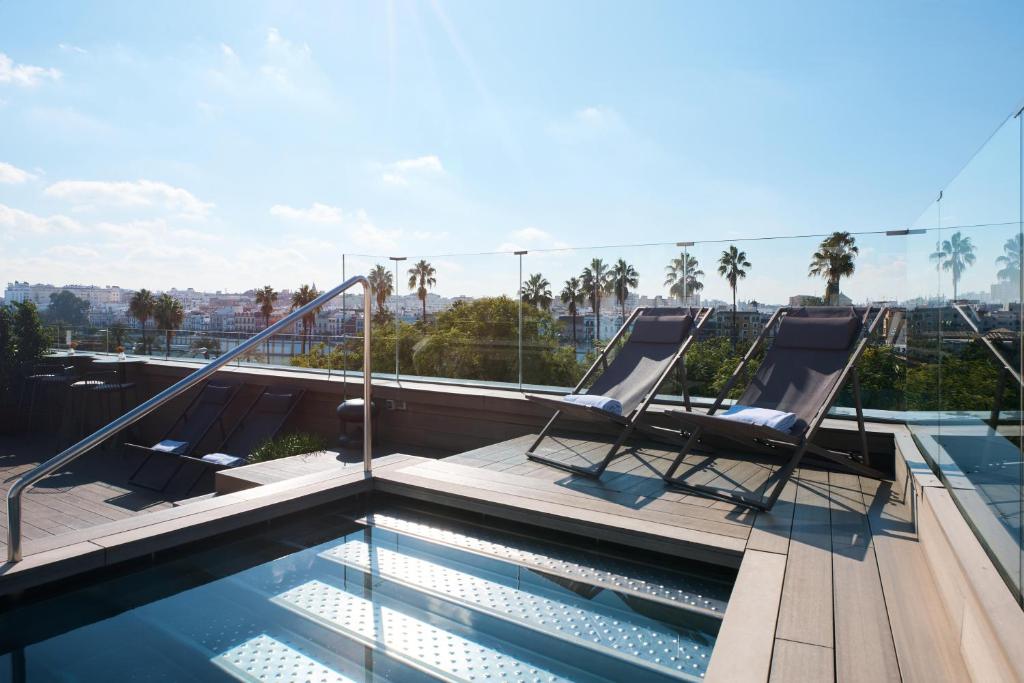
Hotel Kivir
An adults-only four-star hotel 150 metres from Triana Bridge and a ten-minute walk from the Giralda: the monuments and Triana’s lively atmosphere are equally close. It has an outdoor pool with a sun terrace and a buffet breakfast, making it ideal for couples. Rooms sleep no more than two, and there is no on-site parking.
The northern centre: Las Setas, La Alfalfa and Plaza del Duque
North of the Cathedral, the old town feels more residential without losing its appeal. Around Plaza de la Encarnación, covered by the wooden structure of Las Setas, you’ll find a market, shops and terraces. Nearby are La Alfalfa, one of the city’s best areas for tapas, Casa de Pilatos and Palacio de las Dueñas. Further north, Alameda de Hércules is lined with bars, cafés and nightlife.
For many travellers, this is the best area to stay in Seville: the Cathedral is a 15- or 20-minute walk away, and you can eat and go out where the locals do. Plaza del Duque and Calle Sierpes are home to traditional shops. Here are our three recommendations.
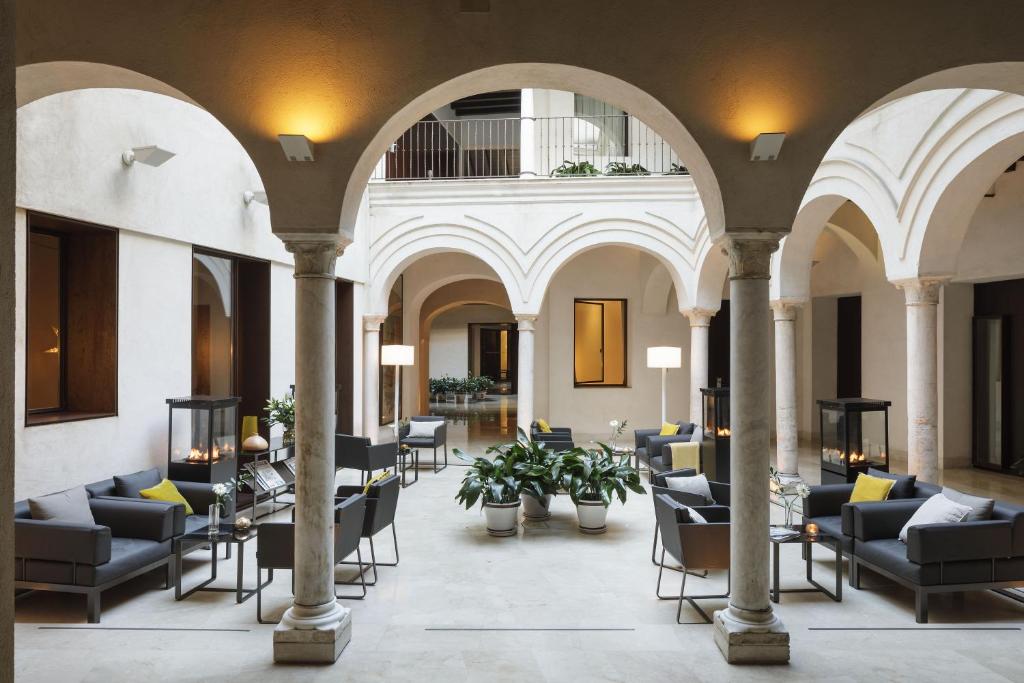
Hotel Posada del Lucero
Stay in a 16th-century building designated a monument, with an Andalusian courtyard of columns and arches, 240 metres from Las Setas and 200 from Palacio de las Dueñas. Alongside its rooms, the hotel offers a four-bedroom house with a kitchen and washing machine, very practical for groups. The outdoor pool is open from June to September only.
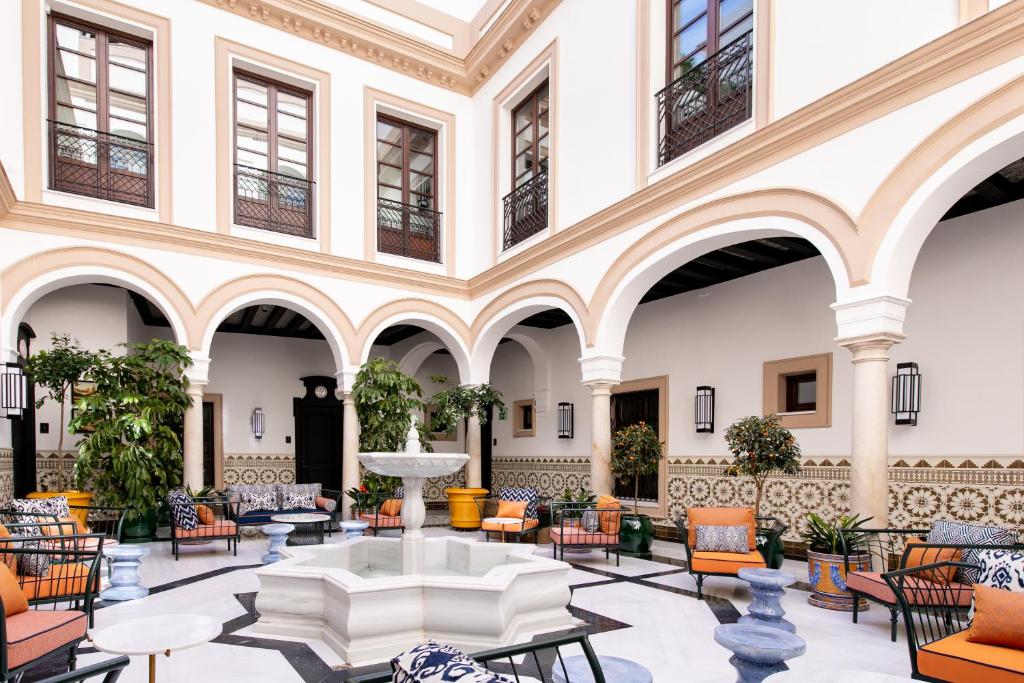
Hotel Casa Palacio Don Ramón
A five-star hotel 30 metres from Plaza del Duque, with an outdoor pool, suites with terraces, a restaurant, café and bar. It’s a good choice if you want a full-service hotel in the heart of the shopping and monumental districts. Small pets weighing up to 7 kg are welcome, and nearby public parking is paid.
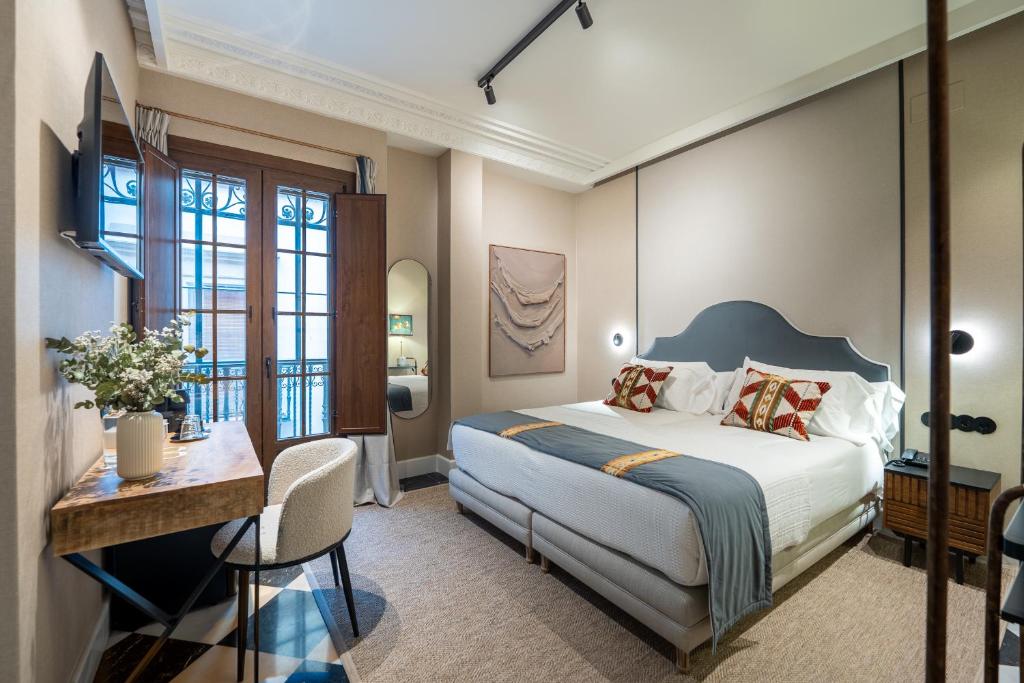
De Domínguez Hotel Boutique
A simple, well-kept boutique hotel 260 metres from Palacio de Lebrija, with a terrace and 24-hour reception. It works well for solo travellers, thanks to its single room, and groups of three, who can stay in the Junior Suite with balcony. There’s a lift and adapted rooms; nearby parking is public and must be reserved.
Triana: the neighbourhood across the river
Triana has an identity all its own, and its residents make sure you know it. Cross Isabel II Bridge to find Triana Market, built over the remains of San Jorge Castle; the potters’ streets, with their tiled façades; and Calle Betis, overlooking the river with the Torre del Oro and the Giralda opposite.
Staying here gives you a more relaxed pace without taking you far from the centre, just a walk across the bridge. It’s especially popular with people returning to Seville. These are the two places we’ve picked in Triana.
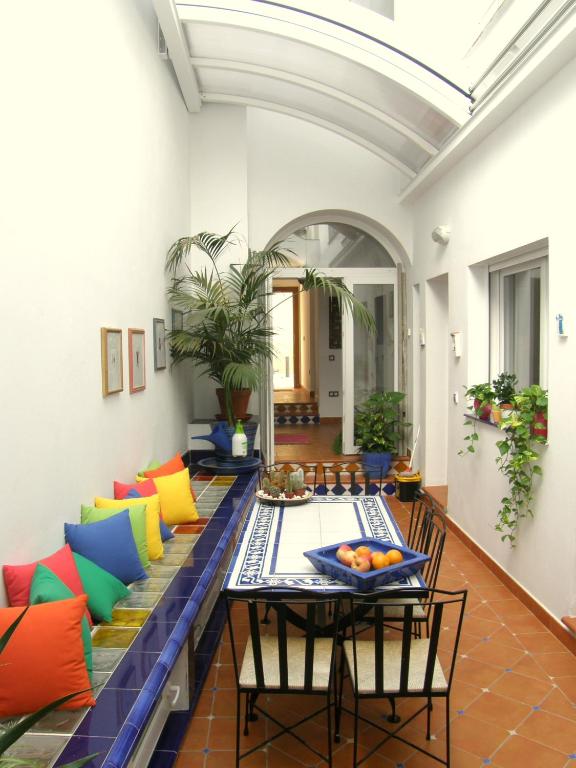
B&B Casa Alfareria 59
On the potters’ street, 230 metres from Triana Market, this bed and breakfast includes breakfast, with vegetarian and gluten-free options. It has rooms for four and five people and a shared kitchen in the courtyard, so it works very well for families with children. Smoking is prohibited throughout the building, and check-in ends at 22:30.
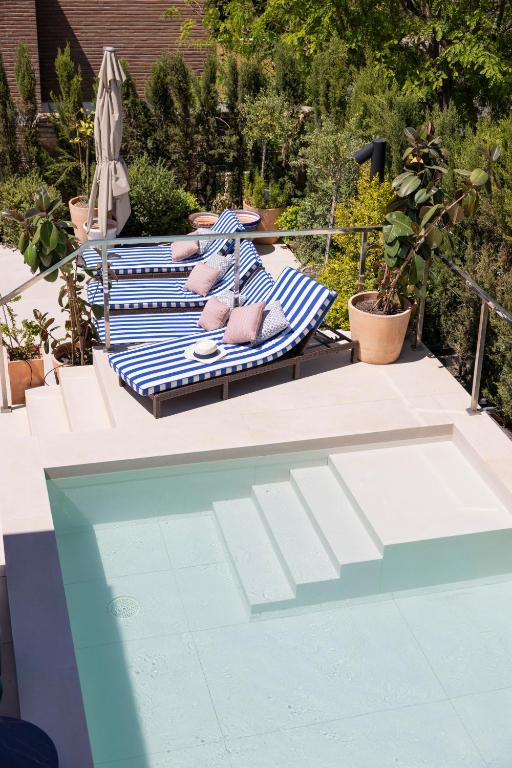
Cavalta Boutique Hotel - Small Luxury Hotels
A five-star hotel in the most authentic part of Triana, 140 metres from San Gonzalo Market and a few minutes from the Triana Ceramics Centre. Some rooms have balconies and city views, and inside you’ll find a restaurant, bar and buffet or à la carte breakfast. Pets are welcome for an extra charge; private parking is outside the building and costs extra.
Santa Justa and Nervión: handy for train arrivals
If you’re arriving by high-speed train or travelling partly for work, the area around Santa Justa station and nearby Nervión, with its shopping district and Sevilla FC’s stadium, is a very convenient option. It doesn’t have the old town’s charm, but the centre is still within easy reach.
From 28 September 2026, tranvibús line 1—a high-capacity electric bus that runs along a reserved lane for much of its route—connects Santa Justa with Plaza del Duque in the heart of the centre. Here’s our pick in the area.
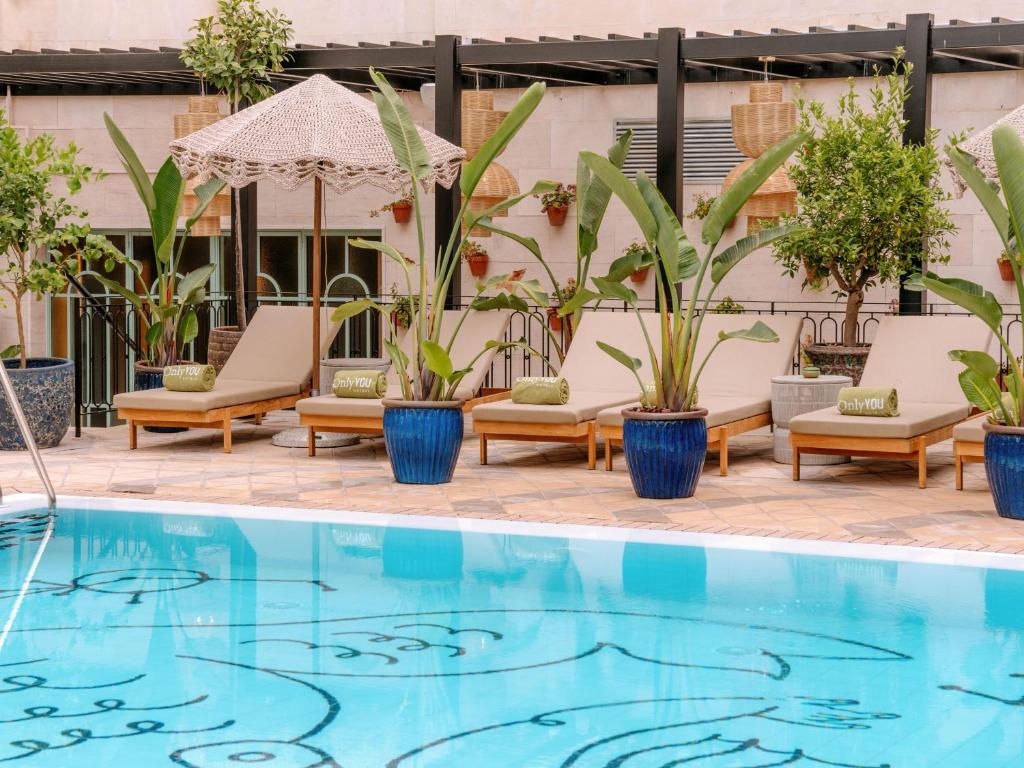
Only YOU Hotel Sevilla
A five-star hotel 250 metres from Santa Justa, with interiors designed by Lázaro Rosa-Violán, two restaurants, a bar and a gym. Some suites have terraces or city views, and one dog weighing up to 10 kg is allowed per room for an extra charge. Parking is public and paid; children must travel with their parents or guardians.
Homes with pools for families and groups
If you’re travelling with children or friends, or visiting in summer, when temperatures in Seville easily top 40 degrees, a home with a pool can transform your stay. Here are three spacious options: one beside the old town, another on the outskirts, and a hotel that also rents out an entire house.
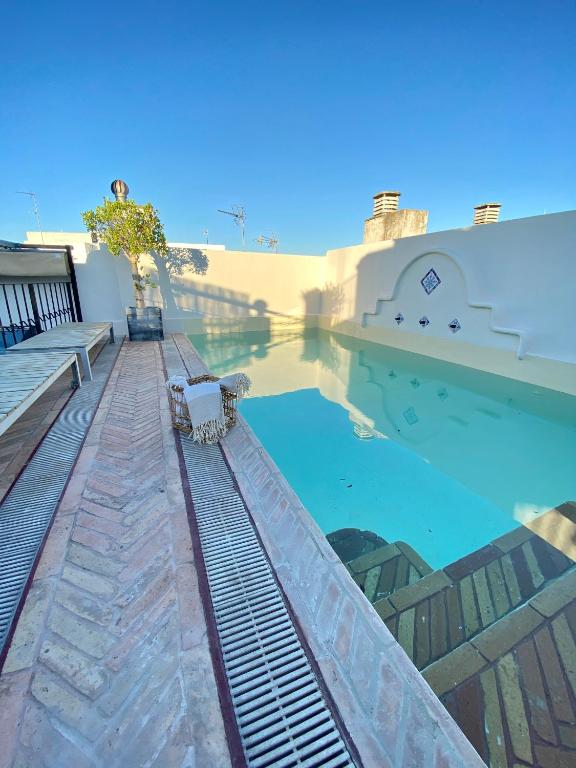
18th-century palace house with pool in Seville’s historic centre
An 18th-century palace house with four bedrooms, two living rooms and five bathrooms, a private pool, whirlpool and terrace with city views. It has a fully equipped kitchen and, unusually for such a central location, free private parking. There’s no lift, only stairs, and parties and hen or stag dos are not allowed.
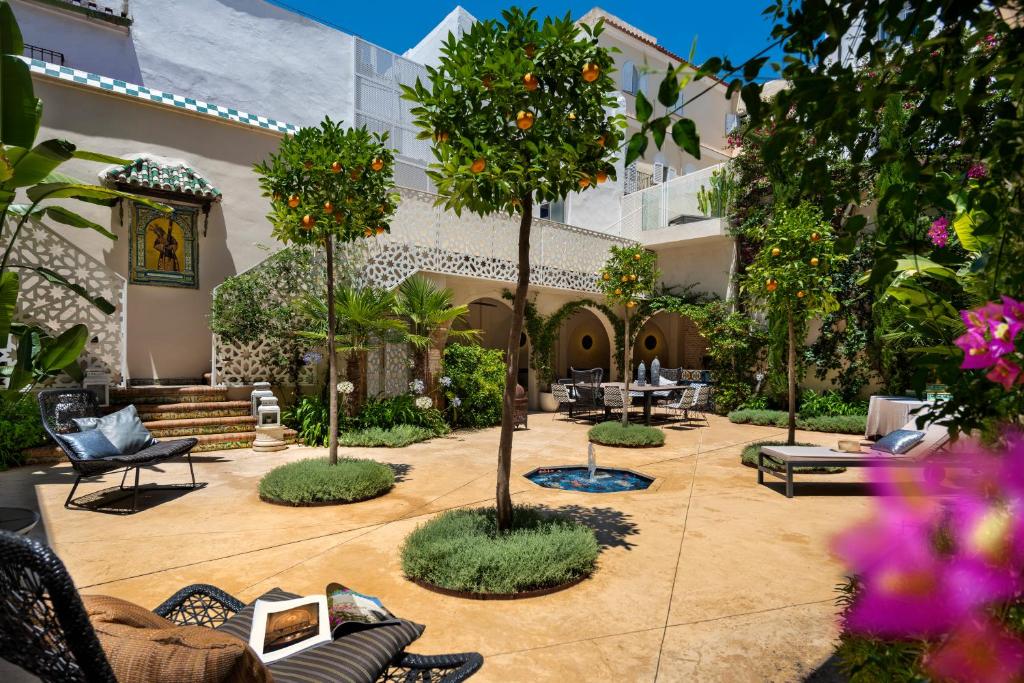
Pájaro Rebelde
An adults-only hotel with a garden, terrace and outdoor pool. Rooms open onto a balcony or overlook the courtyard and pool. For larger groups, there’s a seven-bedroom house that sleeps 15 and has a private pool. Breakfast isn’t included, and there is no parking.
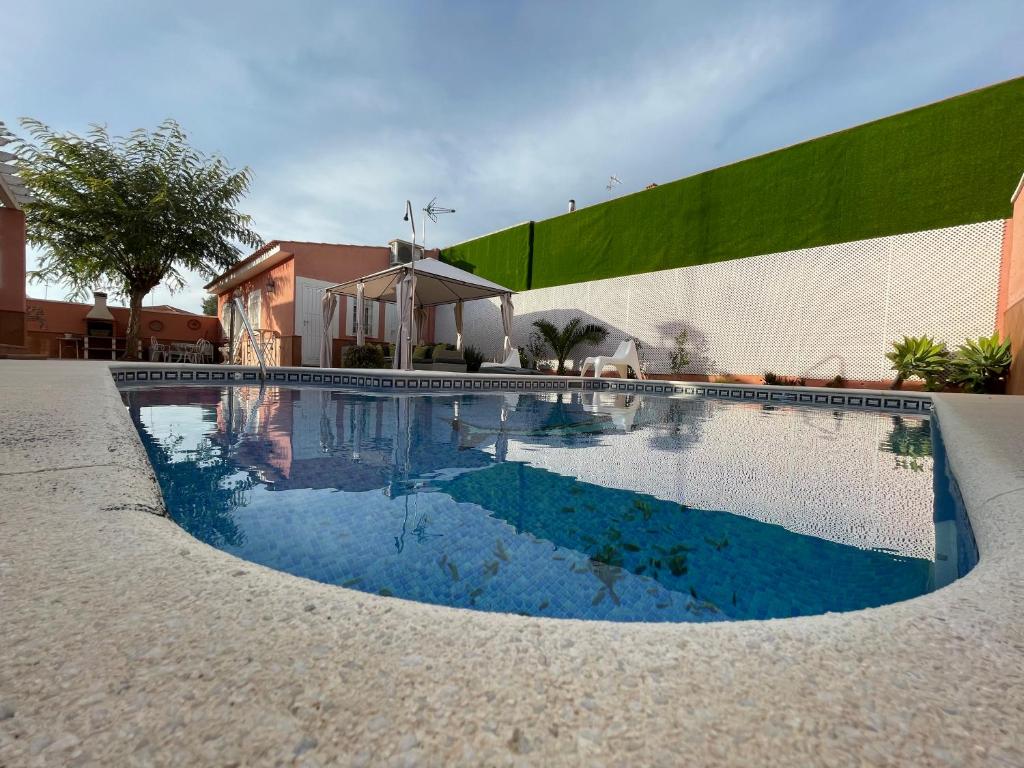
Villa TRIANA with pool
Despite its name, this villa is about 10 km from Triana Bridge: it’s for those arriving by car and looking for peace and quiet. It sleeps up to nine in four bedrooms and three bathrooms, with a private pool, garden, terrace and free parking. The entire home is on the ground floor and wheelchair-accessible.
What to see in Seville
A visit almost always starts at the Cathedral, the world’s largest Gothic church and the resting place of Christopher Columbus, and the Giralda, the former Almohad minaret, which you can climb by ramp. Opposite, the Royal Alcázar remains a working royal palace, with Mudéjar rooms and vast gardens. The Cathedral, Alcázar and Archivo de Indias together form a UNESCO World Heritage Site.
South of the centre, María Luisa Park and Plaza de España, built for the 1929 Ibero-American Exposition, are worth a whole morning. In the north of the old town, Metropol Parasol has a viewpoint over the rooftops; Casa de Pilatos and Palacio de las Dueñas show how Seville’s nobility lived, while the Basilica of La Macarena awaits at the northern end.
In recent years, the Royal Alcázar has offered theatrical night tours in spring and summer, a different way to explore its courtyards in cooler temperatures. And don’t forget the food: tapas in La Alfalfa, El Arenal or Triana—with fried fish, spinach with chickpeas or salmorejo—are all part of the trip.
When to visit Seville
Spring is the peak season, with orange blossom in bloom and the city’s two biggest celebrations. In 2027, Holy Week runs from Palm Sunday, 21 March, to Easter Sunday, 28 March, and the April Fair takes place in mid-April, with the Wednesday of the fair falling on the 14th. Accommodation in the centre gets booked many months in advance for these dates.
Autumn may be the best time to explore the city on foot, with mild temperatures and fewer visitors. The Flamenco Biennial also fills theatres and courtyards every two years, in September and October of even-numbered years. Winter is mild and quiet.
Summer, by contrast, is very hot, especially in July and August. If you’re travelling during those months, plan your sightseeing for early morning and evening, and look for accommodation with a pool or terrace for the hottest part of the day.
Getting to and around Seville
Seville Airport is about ten kilometres northeast of the centre and now handles close to ten million passengers a year. The special EA bus connects it with Santa Justa and the city centre, and the taxi ride is short. Santa Justa station receives high-speed trains from Madrid, which take about two and a half hours, and from Córdoba, which is less than an hour away.
The easiest way to get around the city is on foot: you can explore the whole old town by walking, and Triana is just across a bridge. For longer journeys, there’s the Metrocentro tram between Plaza Nueva and San Bernardo, metro line 1, city buses and the new tranvibús to Santa Justa and Seville East. The city is flat, so it’s also easy to get around by bike outside the hottest hours.
Seville is also a good base for day trips to the Roman site of Itálica, in Santiponce, Carmona, Jerez or the coast of Cádiz.
Seville is the perfect starting point for our guide to where to stay in Andalusia. If you’re continuing your journey, also see where to stay in Córdoba, a short train ride away, where to stay in Granada, home to the Alhambra, and where to stay in Úbeda, the Renaissance city of Jaén. Find the region’s full selection on our Andalusia page.
Frequently asked questions
Here are the questions we’re most often asked by people planning a trip to Seville.
What’s the best area to stay in Seville?
For a first visit, choose the historic centre: Santa Cruz and El Arenal if you want to be steps from the Cathedral and Royal Alcázar, or the area around Las Setas, La Alfalfa and Plaza del Duque if you’d prefer a more local feel with everything within walking distance. Triana is ideal if you already know the city or want a neighbourhood atmosphere, while Santa Justa is convenient if you arrive by high-speed train. The outskirts are only worthwhile if you’re travelling by car and want a pool and more space.
Is it better to stay in the centre or in Triana?
It depends on your trip. The centre puts the main sights within walking distance and is the most convenient option for short stays, although the streets near the Cathedral get very busy during the day. Triana, across the Guadalquivir, is quieter and more traditional, with its market, ceramics workshops and Calle Betis facing the river. Cross the bridge from Triana and you’ll be at the Cathedral in 15 or 20 minutes on foot, so it’s still convenient.
How many days do you need to see Seville?
With three full days, you can see the essentials without rushing: the Cathedral and Giralda, the Royal Alcázar, Santa Cruz, Plaza de España and María Luisa Park, Las Setas, Triana and a palace such as Casa de Pilatos or Palacio de las Dueñas. With four or five days, you can add museums, a flamenco show and a trip to Itálica, Carmona or Córdoba. If you only have a weekend, stay in the centre to make the most of every hour on foot.
When is the best time to visit Seville?
Spring and autumn are the best seasons, with pleasant temperatures for walking. Holy Week and the April Fair take place in spring: in 2027, Holy Week runs from 21 to 28 March and the fair falls in mid-April, so it’s worth booking well in advance. Autumn is quieter and mild. The heat is intense in July and August, so if you visit in summer, choose accommodation with a pool and plan your sightseeing for early morning and evening.
How do you get from Seville Airport to the city centre?
The airport is about ten kilometres northeast of the city. The cheapest option is the special EA bus, which connects it with Santa Justa station and the city centre. A taxi is the quickest alternative, especially if you have luggage or are travelling in a group. If you arrive by train, Santa Justa is just outside the centre, and from September 2026 the tranvibús will connect it with Plaza del Duque.
Can you park in central Seville?
It’s difficult. The old town has very narrow streets, many of them pedestrianised or access-restricted, and most central hotels don’t have their own parking. The usual option is to leave your car in a paid public car park and get around on foot. If you need hassle-free parking, choose a home with a parking space, such as the palace house with a pool we recommend beside the old town, or accommodation on the outskirts with free parking.