Español
 English
 Français
 Deutsch
 Italiano
 Nederlands
 Português
 日本語
 中文

Cádiz is considered one of the oldest cities in the Western world: the Phoenicians founded it as Gadir around three thousand years ago. Its historic centre occupies a peninsula almost surrounded by the Atlantic and the bay, connected to the rest of the province by a narrow isthmus where the modern city has grown.
This geography determines where to stay in Cádiz: from the historic centre, everything is a short walk away, from the cathedral to the market and the beach. Here, we explain how the city is laid out and suggest places to stay that we picked one by one.
How to choose an area
The city is small and flat, but each part has its own character:
- El Pópulo and the cathedral: the oldest neighbourhood, with the Roman Theatre and the port. Convenient if you arrive by train.
- La Viña and La Caleta: taverns and seafood fry-ups by the city’s best-loved beach. Lively by day and night.
- Plaza de San Antonio and El Mentidero: Calle Ancha and the Cádiz Museum. Quiet at night and within easy reach of everything.
- Extramuros: beyond the Puertas de Tierra, by La Victoria beach. More modern, and a few minutes by bus from the historic centre.
The old town, except for its outer ring, and the semi-pedestrianised section of the Paseo Marítimo are a low-emission zone monitored by cameras: access for vehicles from outside the area is restricted, and after the warning period the fine is 200 euros. If you’re driving, leave your car in a public car park before entering.
Where to stay in Cádiz: our picks
These six places are in the historic centre and suit different travellers, from a well-kept guesthouse to a hotel with a spa; none has its own parking. See our places to stay in Cádiz page for the rest of the options.
Dormir en Cádiz
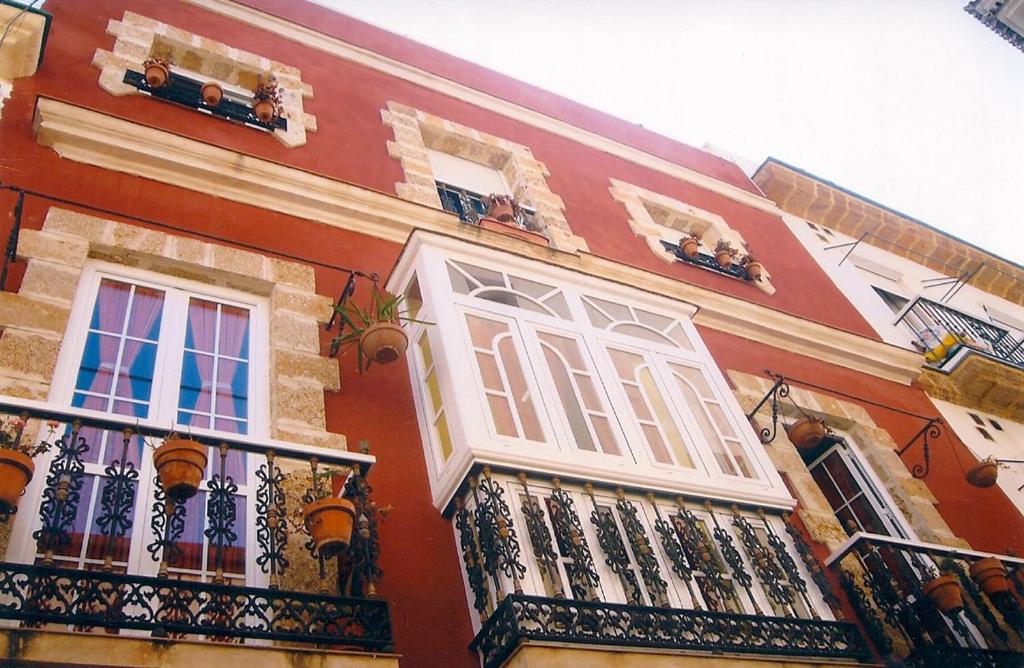
A guesthouse with an Andalusian courtyard and a rooftop terrace for sunbathing or reading, 250 metres from La Caleta. Double rooms have private bathrooms, and Wi-Fi is available throughout the building. Ideal for couples looking for a quiet stay: parties and hen or stag dos are not allowed.

Aparthotel Luz de Gades - Suites Spa Gym - Adults Only
Studios and apartments with equipped kitchens, a gym and an outdoor pool, very close to La Caleta: handy if you want to cook a little and set your own pace. Adults only, with accessible options available. The pool and hot tub are seasonal and close from October to the end of April.
Áurea Casa Palacio Sagasta by Eurostars Hotel Company
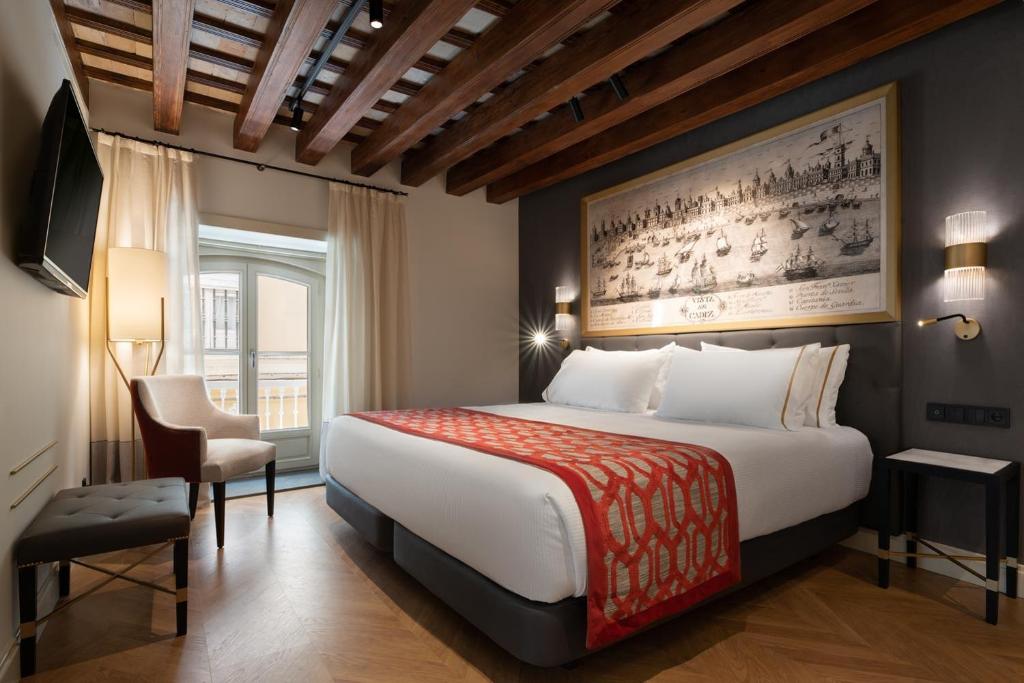
A palatial house just steps from Plaza de San Antonio, with a spa, hammam, sauna and gym to wind down after a day of sightseeing. The buffet breakfast costs extra, and rooms accommodate a maximum of two people.

Boutique Hotel Casa Cánovas
A boutique hotel with its own restaurant, bar and terrace: there’s no need to head out for dinner after a long day. The rooms are soundproofed, which is a bonus in the centre, and wheelchair access is available. Book three rooms or more and your booking is treated as a group, with a deposit required.
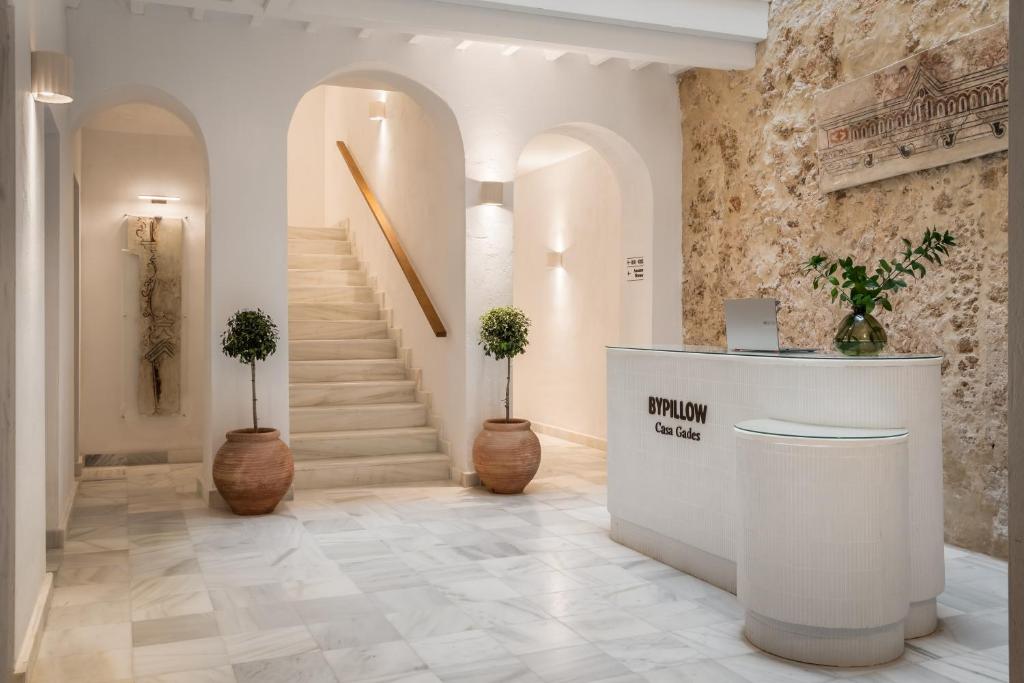
BYPILLOW Casa Gades
A guesthouse with double rooms, private bathrooms and air conditioning, 150 metres from the Cádiz Museum and a short walk from Genovés Park. It has a terrace and free Wi-Fi throughout the building. Rooms are for two adults only: it’s not suitable if you’re travelling with children.
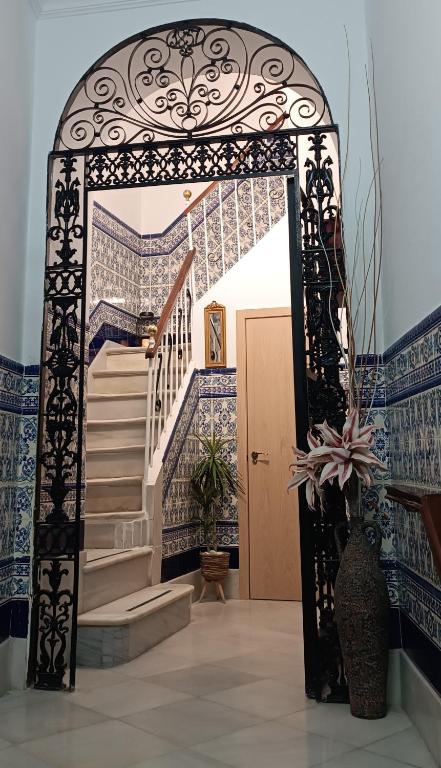
Hostal Colón Don Miguel
Two minutes from the cathedral and 150 metres from the Roman Theatre, with the train station and cruise terminal a short walk away. It offers single, double and one triple room, as well as a shared terrace. The building has three floors and no lift, so it’s not a good choice if stairs are a problem.
What to see in Cádiz
Start your visit at the cathedral, with its golden-tiled dome, then continue through El Pópulo to the Roman Theatre. From Torre Tavira, an 18th-century watchtower, the camera obscura projects the city in real time. The Central Market and Plaza de las Flores are the natural places to stop for a bite to eat.
To the west, you’ll find La Caleta, with its boats and two castles, Genovés Park and Alameda Apodaca, overlooking the bay. The Oratory of San Felipe Neri recalls the Cortes of 1812 and Spain’s first constitution. For afternoons on the beach, La Victoria offers kilometres of urban sand.
Cádiz also makes a good base: take a catamaran across the bay to El Puerto de Santa María, catch a train to Jerez de la Frontera, or drive less than an hour to Vejer de la Frontera.
When to visit Cádiz
Spring and autumn are the best times to visit: temperatures are mild, the sea is still pleasant in September and October, and there are fewer people around. Summer brings beach weather and lively streets, although the Levante wind can blow hard. Winter is mild and quiet.
The biggest event is Carnival, held between February and early March depending on the year, with the groups’ competition at the Gran Teatro Falla and chirigotas performing throughout the streets. Book well in advance for these dates and for Holy Week.
Getting there and getting around
The train station is at the edge of the historic centre, with direct services from Madrid and Seville; some Cercanías commuter trains stop at Jerez Airport, the nearest one. The Trambahía also runs from Chiclana and San Fernando and has been in service since 2022: 24 kilometres, 21 stops and a train approximately every half hour.
You can drive into the city via the Constitution of 1812 Bridge or the isthmus, but remember the low-emission zone. Once you’re there, walking is best; the city bus takes you to La Victoria. For the rest of your trip, see our places to stay in Andalusia.
If you’re continuing along the Cádiz coast, see where to stay in Chiclana de la Frontera, where to stay in Conil de la Frontera and where to stay in Tarifa. For the bigger picture, see where to stay in Andalusia.
Frequently asked questions
Quick answers to the questions we hear most from people planning a few days in Cádiz.
What is the best area to stay in Cádiz?
For a first visit, choose the historic centre: from anywhere, you can walk to the cathedral, the Central Market and La Caleta, and the train station is at its edge. El Pópulo is the most convenient if you arrive by train; La Viña is the liveliest; the area around Plaza de San Antonio is the quietest at night. Extramuros is a good choice if you’re prioritising La Victoria beach.
Can you drive into the centre of Cádiz?
You can reach the city, but the old town, except for its outer ring, and the semi-pedestrianised section of the Paseo Marítimo are a low-emission zone monitored by cameras. Access for vehicles from outside the area is restricted and, once the warning period ends, the fine is 200 euros. The sensible option is to leave your car in a public car park before entering: none of the six places we picked has its own parking.
How do you get to Cádiz without a car?
The train is the most convenient option: the station is next to the historic centre, with direct services from Madrid and Seville, and some Cercanías commuter trains stop at Jerez Airport, the closest one. The Trambahía runs from Chiclana and San Fernando, with 21 stops and a train approximately every half hour. Catamarans also run from El Puerto de Santa María. Once in the city, you can explore the centre on foot.
When is the best time to visit Cádiz?
Spring and autumn bring mild temperatures, fewer people and, in September and October, sea temperatures that are still inviting. Summer is beach season, with strong Levante winds on some days. Winter is mild and quiet, except during Carnival, between February and early March, when chirigotas and comparsas fill the city. Book well in advance for those dates and for Holy Week.
How many days do you need to see Cádiz?
With two full days, you can see the essentials: the cathedral, El Pópulo and the Roman Theatre, Torre Tavira, the Central Market and La Caleta with its castles. A third day leaves time for La Victoria beach or a catamaran trip to El Puerto de Santa María. If you want to add Jerez or Vejer, allow four or five nights using Cádiz as your base.