Español
 English
 Français
 Deutsch
 Italiano
 Nederlands
 Português
 日本語
 中文
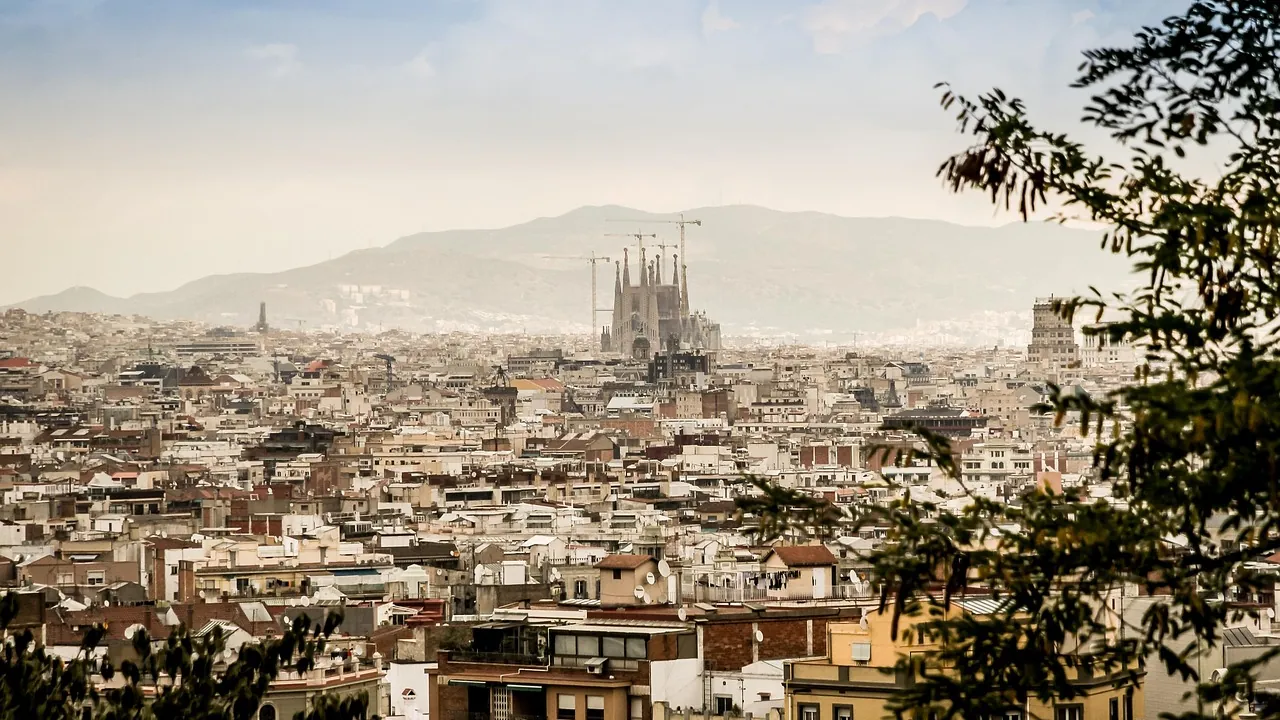
Barcelona is several cities in one: the medieval maze of the Gòtic, the Modernista grid of Eixample, the port and beaches of Barceloneta, and hills with views across the city, from Montjuïc to Tibidabo. The neighbourhood you choose can completely change your trip.
Deciding where to stay in Barcelona depends on what you’re looking for: having everything within walking distance, a quiet night’s sleep or saving money with a bed in a hostel. In this guide, we explain what each area has to offer and suggest places to stay that we choose one by one, from five-star hotels with pools to an entire house for six.
A note before you start looking: the city council will not renew around 10,000 tourist-apartment licences, which will cease to be valid in November 2028, and in 2025 the Constitutional Court upheld the Catalan decree that allows this. If you plan ahead, hotels, guesthouses and hostels are the more reliable option.
How to choose an area
Barcelona is compact and the metro reaches almost everywhere, so your choice has more to do with atmosphere than distance. Here are the main areas:
- Ciutat Vella: the Gòtic, El Born, El Raval and Barceloneta, with the cathedral, Santa Maria del Mar, the port and the beach. It’s the liveliest area and also the busiest, day and night.
- Plaça de Catalunya and Eixample: the commercial and Modernista centre, with Passeig de Gràcia, Casa Batlló, La Pedrera and the Sagrada Família. Wide streets, excellent transport links and a little more peace and quiet after dark.
- Gràcia: a former municipality of squares, terraces and neighbourhood shops, a short walk from Park Güell.
- Upper city (Sarrià, Sant Gervasi and Pedralbes): residential, green and quiet, connected to the centre by the Ferrocarrils de la Generalitat (FGC).
- Les Corts, Sants and Sant Andreu: neighbourhoods with everyday local life, well connected by metro and train, and handy if you arrive by AVE or are going to Barça’s stadium.
For your first visit, stay between the Gòtic and Eixample: you can see almost everything on foot. If you’re returning or travelling with children, the upper city makes up for being farther away with peace and gardens. See all our places to stay in Barcelona.
Ciutat Vella: Gòtic, El Born, El Raval and the port
Ciutat Vella is the old town: the alleyways of the Barri Gòtic around the cathedral, Plaça Reial with its lampposts designed by Gaudí, El Born with Santa Maria del Mar and the Museu Picasso, and El Raval, where the MACBA and CCCB sit alongside markets and long-standing bars. Las Ramblas run from Plaça de Catalunya down to Port Vell.
Staying here means you can walk everywhere and pop back to your hotel between visits. The downside is the noise: ask for an interior room or one on a higher floor if you’re a light sleeper, and forget the car, as almost no accommodation in the old town has its own parking. Here are our picks in the area.
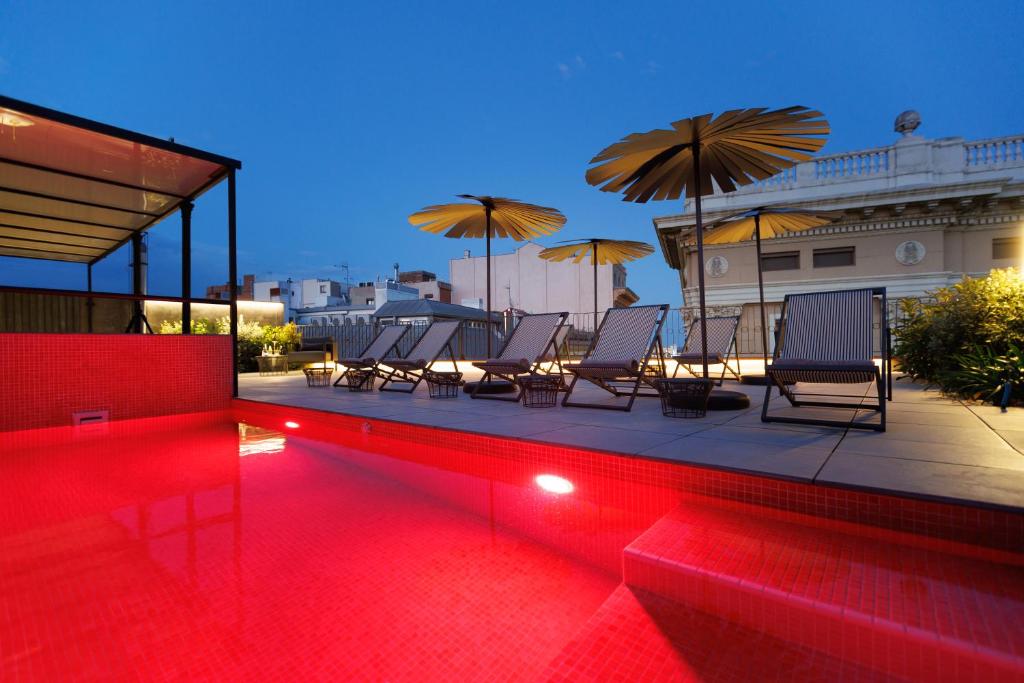
Hotel Boutique La Pau
A four-star hotel two minutes from Las Ramblas and just steps from Plaça Reial, with rooms and suites that open onto the street from a balcony or terrace. It has family rooms, handy if you’re travelling with children, and a 24-hour reception with luggage storage. The buffet breakfast costs extra and there’s no parking.
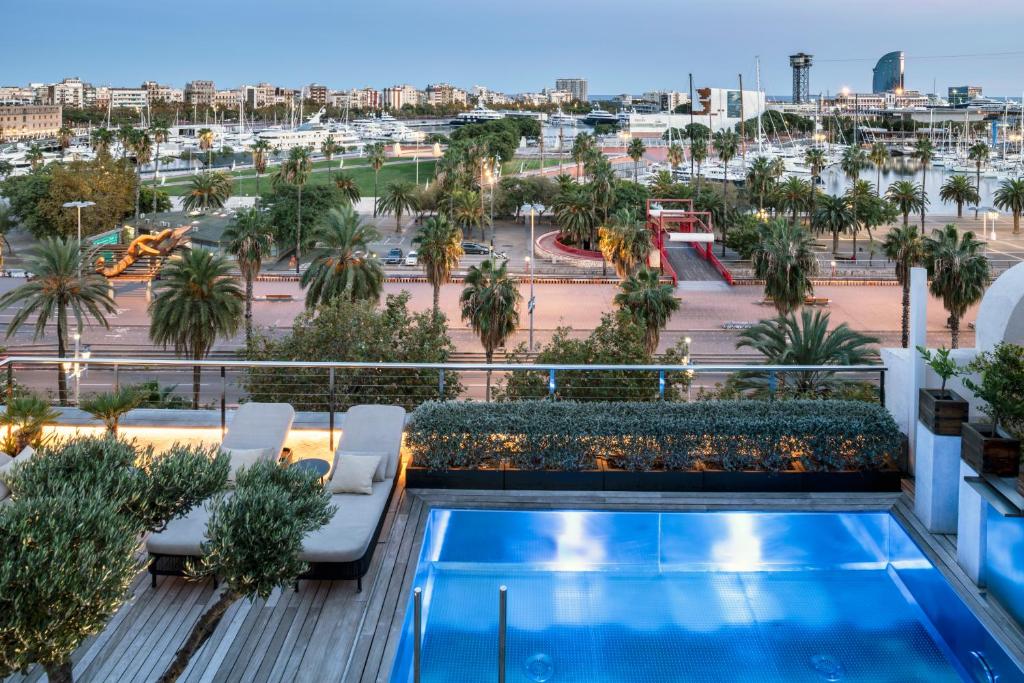
Serras Barcelona
Five-star accommodation in a historic building facing Port Vell, with a rooftop terrace and rooms with balconies; some suites overlook the sea or have a whirlpool bath. The restaurant serves Catalan cuisine and Mediterranean tapas, and there’s a gym, massage treatments and a solarium. Pets are welcome; the nearest parking is public and paid.
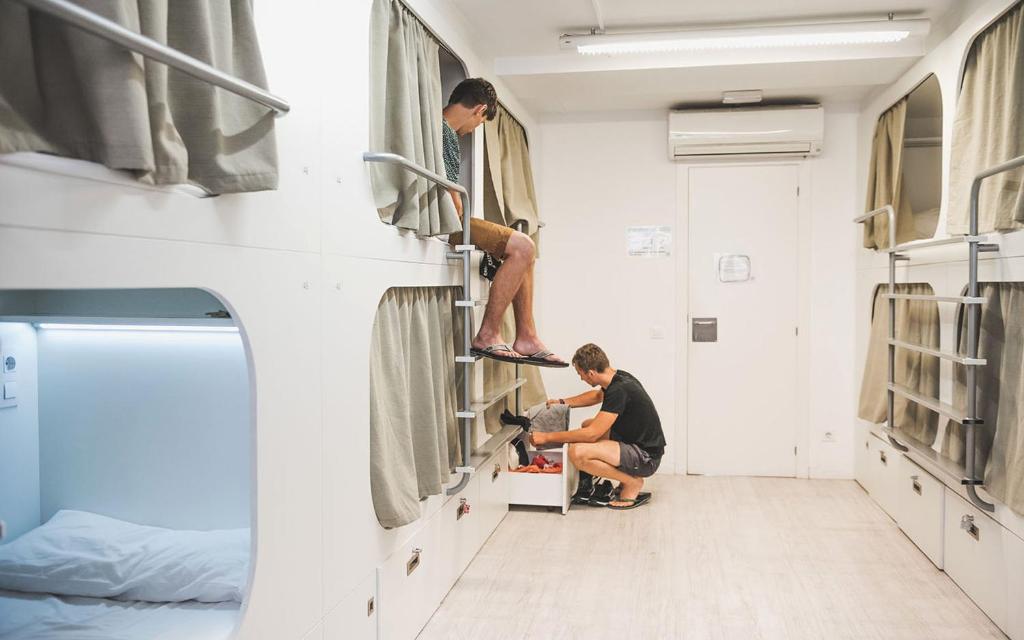
Onefam Ramblas
An adults-only hostel designed for meeting people: there’s a shared kitchen, a lounge with a TV and PlayStation, and a communal terrace where you can wind down at the end of the day. Choose a four-, six-, eight- or ten-bed mixed dorm, five minutes from Las Ramblas and close to the port. The bathrooms are shared, so it’s not for anyone seeking privacy.
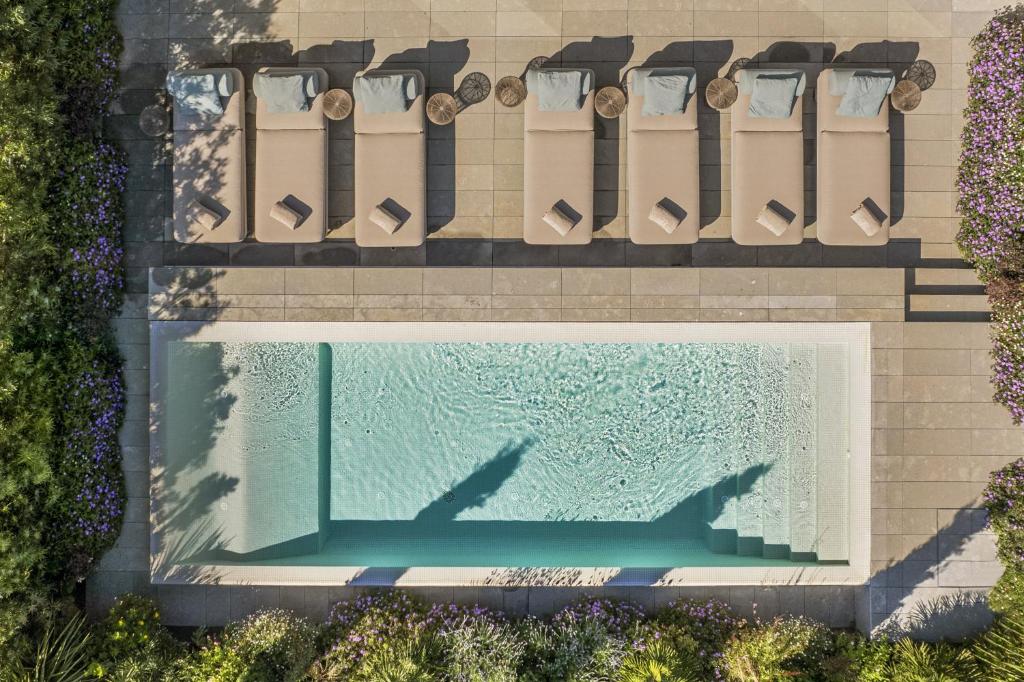
Antiga Casa Buenavista
The standout features of this four-star hotel are its outdoor pool, gym and restaurant. It’s 250 metres from the MACBA and around 600 metres from Plaça de Catalunya. The rooms, with balconies or terraces, air conditioning and coffee makers, are designed for two people. It’s not a good fit for families with children or anyone wanting to be close to the beach.
Plaça de Catalunya and Eixample
Eixample is the city extension designed by Ildefons Cerdà in the 19th century: blocks with chamfered corners, wide avenues and an outstanding concentration of Modernista buildings. Along Passeig de Gràcia are Casa Batlló, Casa Amatller and La Pedrera, while the Sagrada Família rises to the northeast.
It’s the best all-round area to stay: central, with metro, train and bus stops on almost every corner, and quieter at night than the old town. At Plaça de Catalunya, on the boundary with Ciutat Vella, you’ll find the metro, commuter trains and FGC services. Here are three very different places to stay.
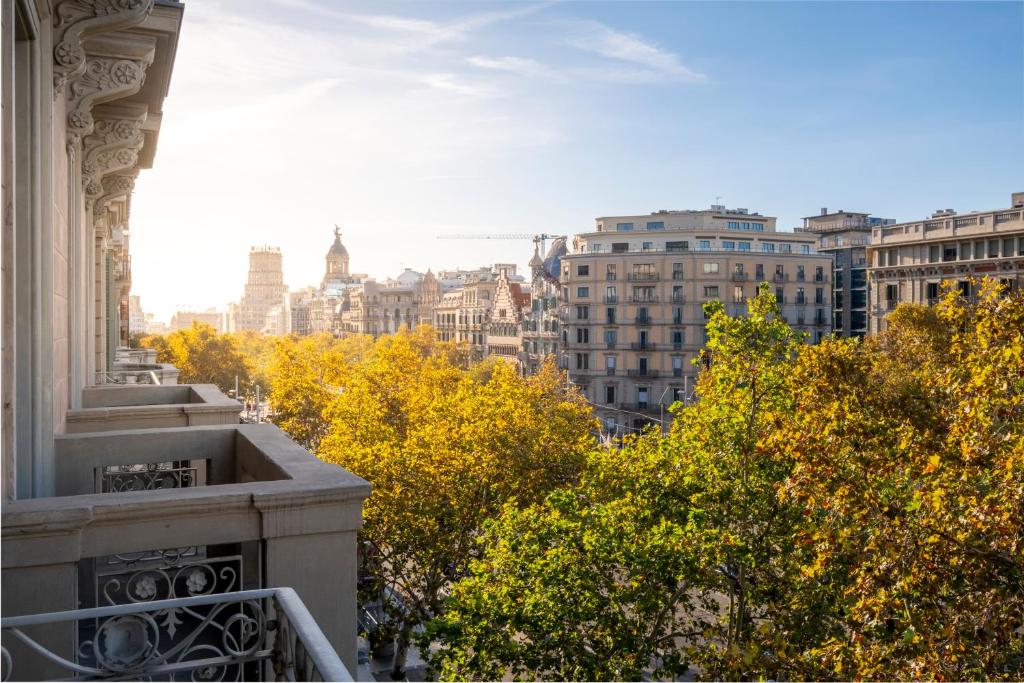
Sixtytwo Hotel
Set in a 19th-century building beside Passeig de Gràcia, with Casa Batlló a hundred metres away and La Pedrera three hundred metres away. It has a Japanese garden, suites with terraces and a 48 m² family room for four. Direct trains to the airport leave from Passeig de Gràcia station; if you need gluten-free food, let them know when you make your reservation.
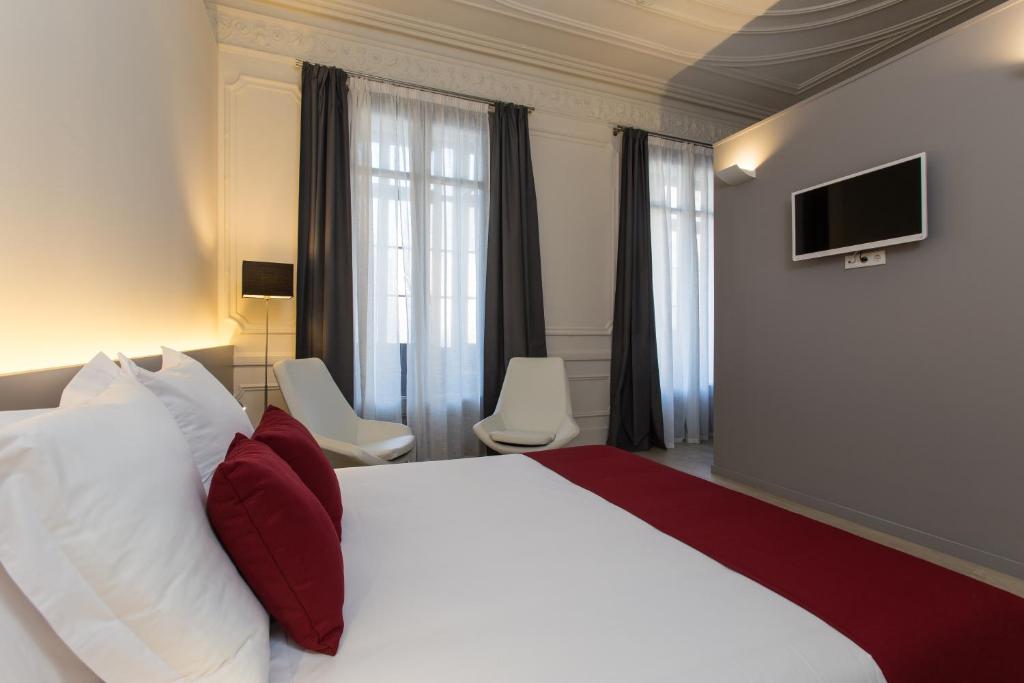
Izaila Plaza Catalunya
A simple, well-designed guesthouse beside Plaça de Catalunya, with Catalunya and Urquinaona stations 150 metres away. The rooms are soundproofed and have air conditioning and private bathrooms; some have a balcony overlooking the street or an interior courtyard. There’s a lift and step-free access, but no room accommodates more than two people.
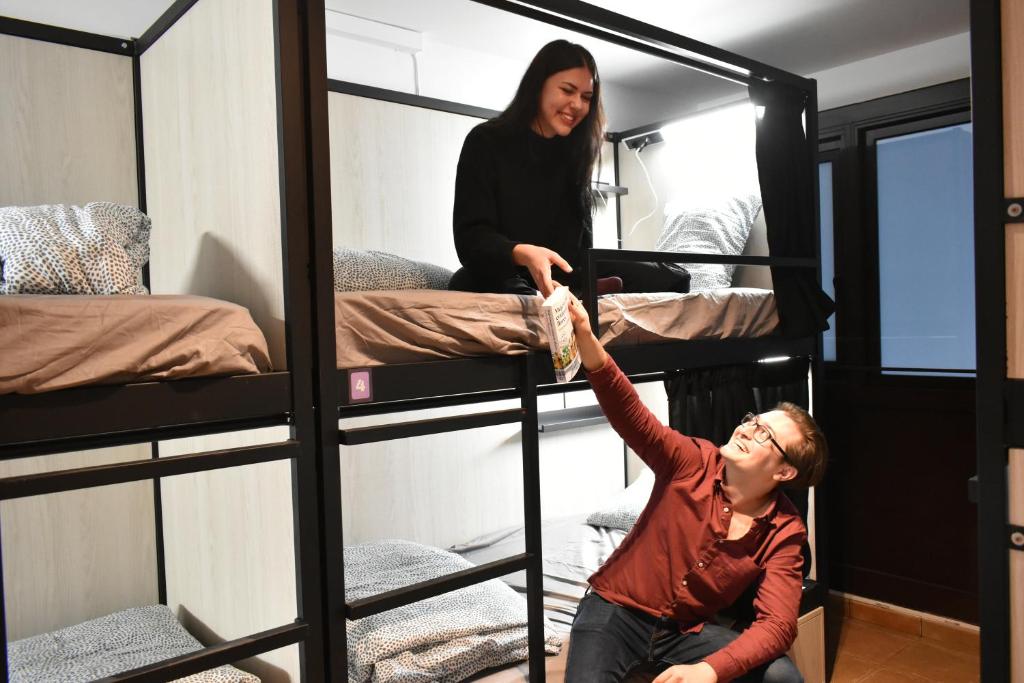
Onefam Batlló
For solo travellers looking for a bed in a shared dorm right in Eixample, with air conditioning in every room. The shared kitchen and lounge come alive with guided walks and themed dinners. There are no private rooms and the bathrooms are shared.
The upper city: Sarrià, Sant Gervasi and Pedralbes
At the foot of Collserola, the upper city is residential Barcelona: hilly streets, gardens, schools and universities. Sarrià retains the feel of the village it once was, with its main street and market, while Pedralbes is home to the Gothic monastery founded in the 14th century by Queen Elisenda de Montcada.
Here you can sleep in peace and enjoy slightly cooler temperatures in summer, while the FGC takes you to Plaça de Catalunya without changing trains. It’s a good choice for families, longer stays or meetings at ESADE, IESE or the university district. The trade-off is that the beach and old town are too far to walk to.
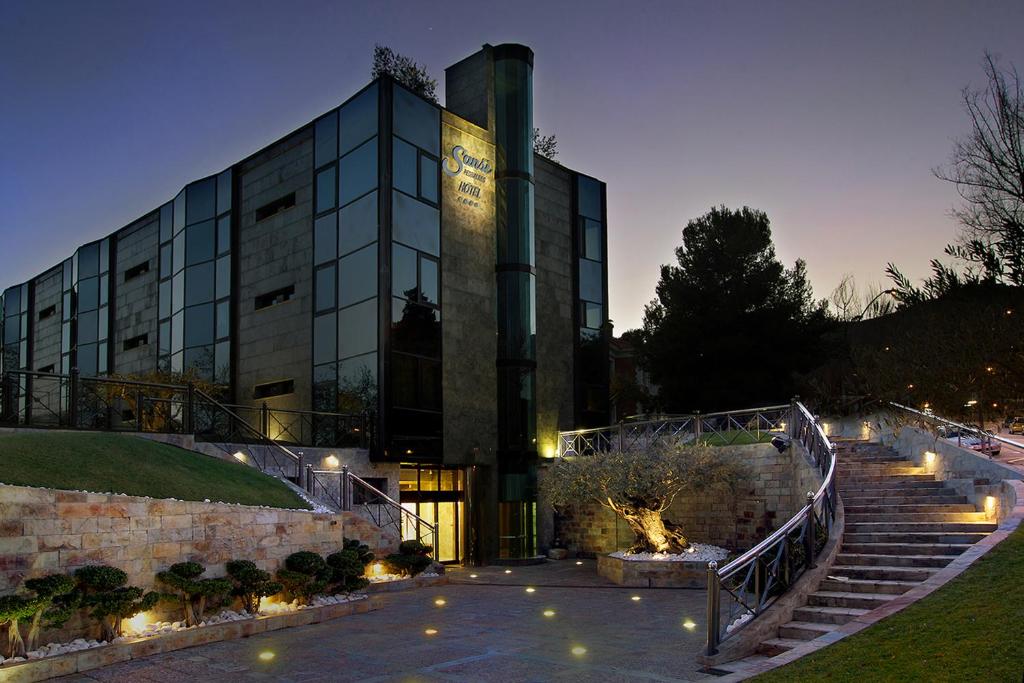
Sansi Pedralbes
Around 200 metres from Pedralbes Monastery and with its own garden, this is the place for a quiet night just steps from ESADE and the UPC. The spa has a heated indoor pool, saunas and aromatherapy showers, although access costs extra and is limited to guests over 18. The bus stops almost at the door and Reina Elisenda FGC station is 750 metres away.
Primero Primera
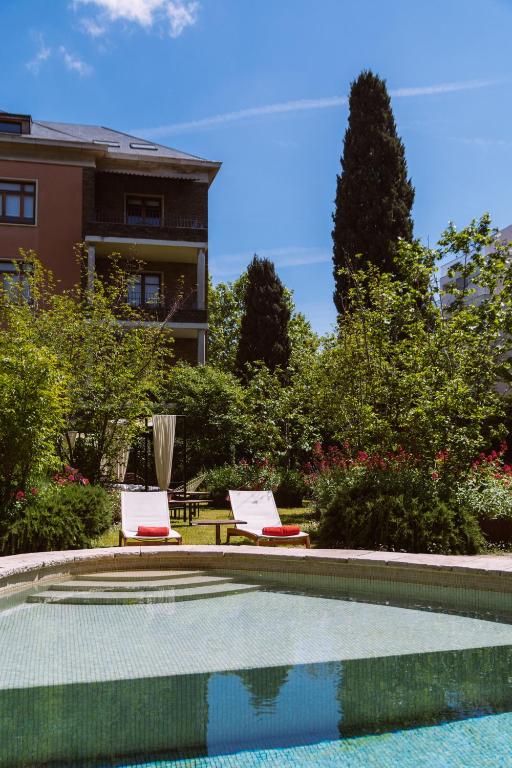
A five-star hotel in Sarrià with a garden, terrace and outdoor pool, as well as a restaurant and gym. Rooms overlook the garden, pool, mountains or city, and the nearest FGC station is 250 metres away. The beaches are around five kilometres away and breakfast isn’t included.
Hotel Boutique Mirlo Barcelona
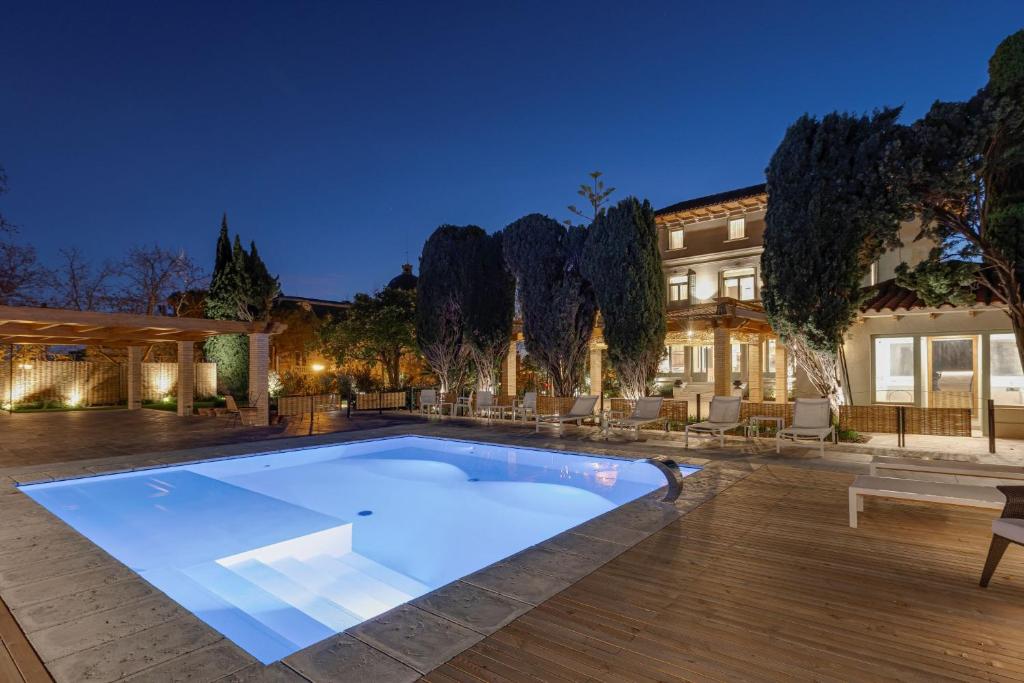
A five-star hotel in Sarrià-Sant Gervasi designed for relaxation, with a hammam, sauna and suites with whirlpool baths. The rooms overlook the garden and, in one category, the city too; breakfast can be buffet-style, à la carte or served in your room. Rooms accommodate a maximum of three people and, if you’re driving, reserve a space at the nearby public car park in advance.
Les Corts and La Sagrera
Beyond the classic tourist routes, some neighbourhoods offer more space and good transport links. Les Corts, between Avinguda Diagonal and Sants station, is home to Barça’s stadium and the Palau Reial de Pedralbes; La Sagrera, in the Sant Andreu district, is a quiet neighbourhood with metro and commuter train services.
These are good options if you’d rather experience the city like a local and don’t mind taking the metro each morning. Both work particularly well for families and groups.
Olivia Barcelona
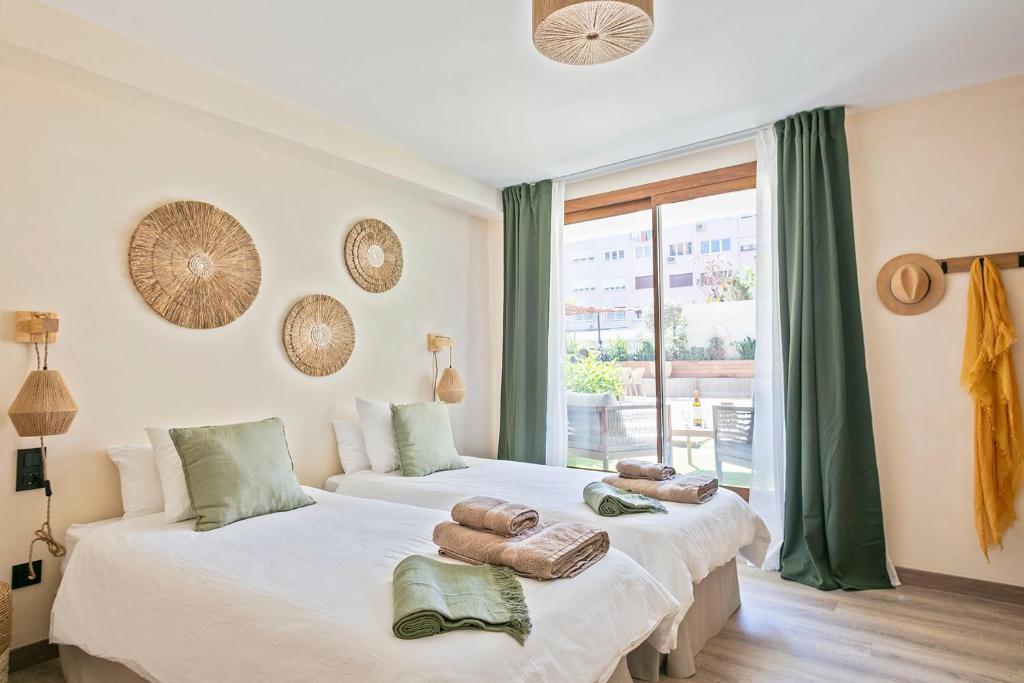
A hostel in Les Corts with the feel of a family hotel: it has family rooms for up to four people and a games room with toys for different ages. The rooms have air conditioning and private bathrooms, and Les Corts metro station is a hundred metres away. Beds are also available in a shared female dorm; hen and stag parties and other parties are not allowed.
La Sagrera House
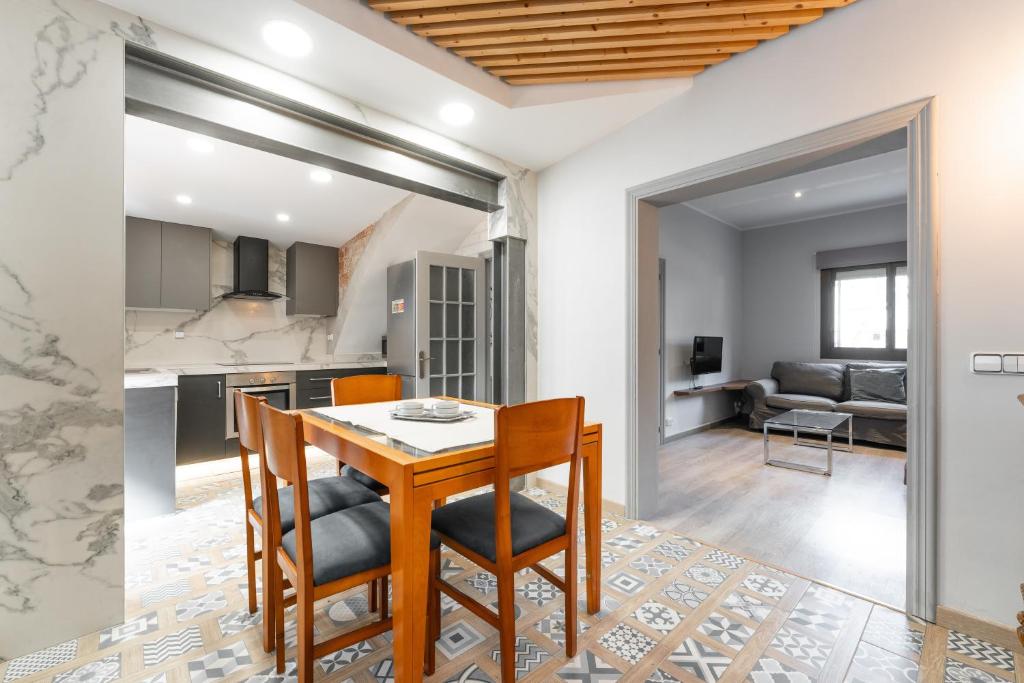
An entire 125 m² house for six people, with three bedrooms, four bathrooms and a kitchen with an oven, dishwasher and microwave. You can spread out between the balcony, patio and terrace, with metro and train stations 150 metres away. Note: the upper floors are accessible only by stairs, and check-in ends at 18:00.
What to see in Barcelona
A visit almost always starts with Gaudí. The Sagrada Família has completed its six central towers: in February 2026, the upper arm of the cross atop the 172.5-metre Tower of Jesus Christ was installed, and interior work on that tower will continue in 2027 and 2028. The route also takes in Casa Batlló, La Pedrera, Palau Güell and Park Güell, where it’s worth reserving an entry time.
Beyond Modernisme, the cathedral and Plaça del Rei tell the story of medieval Barcelona, the Museu Picasso occupies several Gothic palaces on Carrer de Montcada, and the Palau de la Música Catalana is worth visiting in its own right. Montjuïc is home to the MNAC, Fundació Joan Miró and the castle, while Tibidabo and the Carmel bunkers offer the best views of the city.
And then there’s the sea: Barceloneta, Nova Icària and the other city beaches are easy to reach by metro or on foot from Ciutat Vella. La Boqueria is the best-known market, but Santa Caterina in El Born and Sant Antoni market are usually less crowded.
When to visit Barcelona
Spring and autumn are the best seasons for exploring the city on foot: mild temperatures and long days. Summer is hot and humid and brings the most visitors, while winter is mild and the quietest time for museums and monuments.
More than the season, it’s the events calendar that fills the hotels. The Mobile World Congress takes place from 1 to 4 March 2027 at Fira Gran Via, in L'Hospitalet de Llobregat, and the Primavera Sound festival takes over Parc del Fòrum from 3 to 5 June 2027. If you’re going on those dates, make your reservation many months in advance.
Every 23 April, Sant Jordi fills the streets with book and rose stalls, while the La Mercè festivities, around 24 September, round off the summer with concerts, castellers and correfocs. They’re great times to experience the city, although the centre gets crowded.
Getting there and getting around
El Prat Airport is south of the city. Metro line L9 Sud runs from terminals T1 and T2 and connects with the rest of the network at stations such as Collblanc, Torrassa and Zona Universitària in about half an hour; you need a dedicated airport ticket or a Hola Barcelona card, as the T-casual isn’t valid. The Aerobús runs directly to the centre from both terminals, and commuter train R2 Nord leaves from T2.
By train, Sants station receives AVE services from Madrid and France. Within the city, the metro, buses and FGC cover almost everywhere, and the centre is easy to explore on foot or by bike. You can do without a car: parking is expensive and the city is within a low-emission zone.
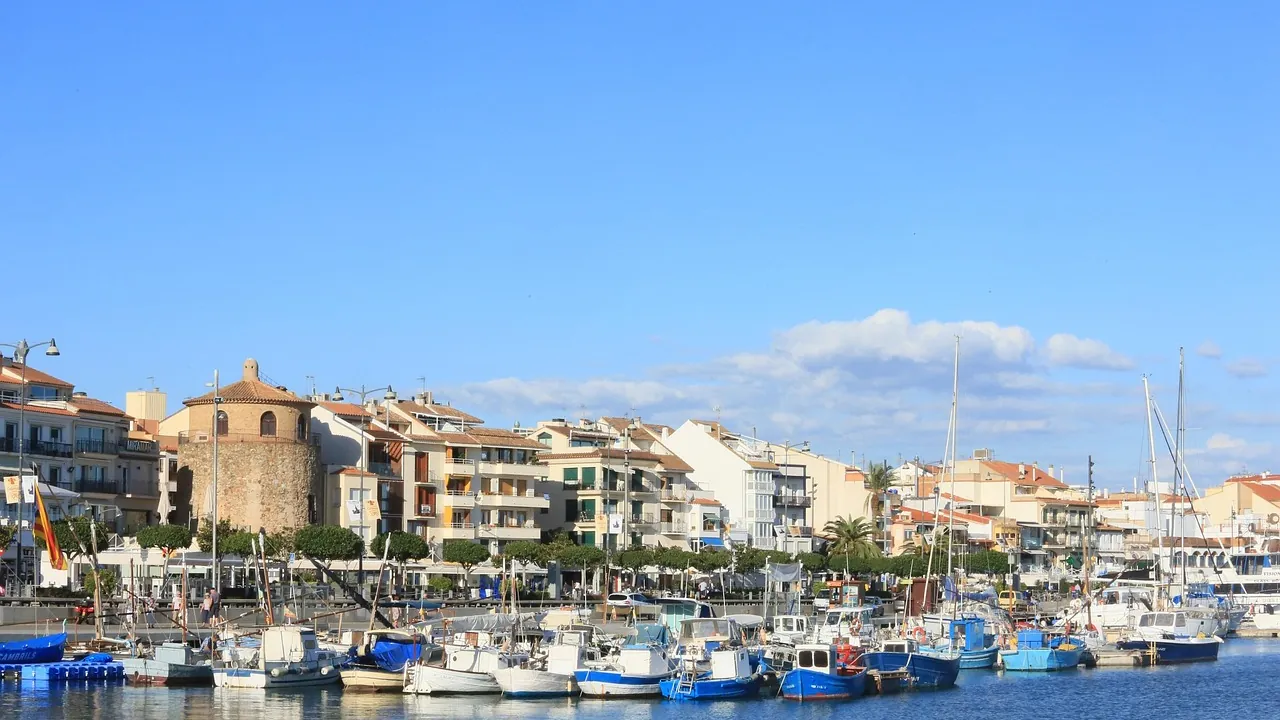
Barcelona is the main gateway to our guide to where to stay in Catalonia. If you’d like to combine your visit with a few days on the coast, also see where to stay in Sitges, less than an hour south by train, where to stay in Tossa de Mar, on the Costa Brava, and where to stay in Cambrils, on the Costa Daurada.
Frequently asked questions
Quick answers to the questions we’re most often asked by people planning a trip to Barcelona.
What’s the best area to stay in Barcelona?
For a first visit, Ciutat Vella and Eixample are the most convenient areas. From the Gòtic or El Born, you can walk to the cathedral, the Museu Picasso and the port; from around Passeig de Gràcia, Casa Batlló, La Pedrera and excellent metro and train connections are close by. If you prefer peace and gardens, the upper city, between Sarrià and Pedralbes, is more residential and connected to the centre by FGC, although the beach and old town are too far to walk to.
Is it better to stay in the Gòtic or Eixample?
It depends on how you sleep and what you want to see. The Gòtic has more character and everything is just a few minutes away, but it’s noisy and very busy, especially near Las Ramblas. Eixample is more spacious and quieter at night, with wide streets and a metro stop on almost every corner, and puts you close to the main Modernista buildings. If it’s your first visit and a good night’s sleep matters, Eixample is usually the best balance of convenience and calm.
Where should you stay in Barcelona with children?
Look for family rooms or accommodation with a kitchen. In the centre, some hotels in the Gòtic and Eixample have rooms for four people, which are handy if you want to get around on foot. The upper city, including Sarrià and Pedralbes, has gardens, pools and quiet streets, and the FGC takes you to the centre without changing trains. For larger groups, an entire house in neighbourhoods such as La Sagrera or a hostel with family rooms in Les Corts gives you more space without being far from the metro.
How do you get from the airport to the centre of Barcelona?
There are three main options. Metro line L9 Sud runs from terminals T1 and T2 and connects with the rest of the network in about thirty minutes, but you need a dedicated airport ticket or a Hola Barcelona card, as the T-casual isn’t valid. The Aerobús runs directly to the centre from both terminals, with frequent service throughout the day. Commuter train R2 Nord also leaves from T2, and a free shuttle runs between the terminals 24 hours a day.
Can you rent a tourist apartment in Barcelona?
For now, yes, but there are fewer and fewer available. The city council announced that it will not renew around 10,000 tourist accommodation licences, which will cease to be valid in November 2028, and in 2025 the Constitutional Court upheld the Catalan decree that allows this. If you’re travelling as a group or family and want a kitchen, also look at hotels with family rooms, aparthotels or homes with a valid licence. Planning ahead will give you more options.
How far in advance should you make your reservation in Barcelona?
During major conferences and festivals. The Mobile World Congress, from 1 to 4 March 2027 at Fira Gran Via, and Primavera Sound, from 3 to 5 June 2027 at Parc del Fòrum, fill much of the city. Demand is also high in summer, on 23 April for Sant Jordi and during the La Mercè festivities around 24 September. It’s worth making your reservation several months ahead for these dates.