Español
 English
 Français
 Deutsch
 Italiano
 Nederlands
 Português
 日本語
 中文
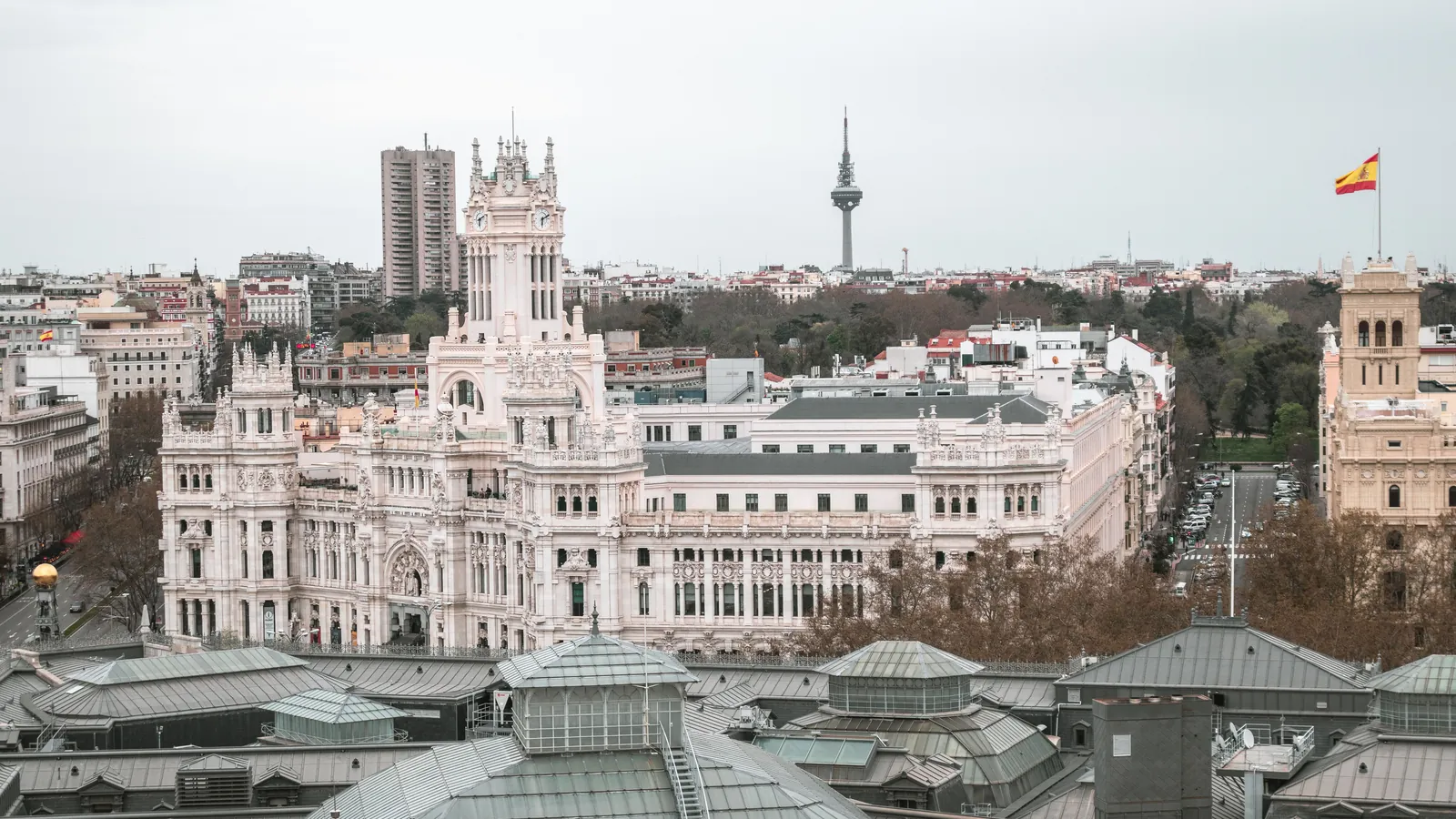
Madrid is easier to explore on foot than it might seem. It takes just over half an hour to walk between the Royal Palace and the Retiro, and along the way you can visit Plaza Mayor, Puerta del Sol, the Literary Quarter and three of Europe’s finest museums.
That’s why deciding where to stay in Madrid has more to do with the pace you’re after than with distances. In this guide, we explain what each area is like and suggest places to stay that we choose one by one, from a five-star hotel in a 19th-century building to an apartment for six with free parking.
One useful thing to know before you look: under the Plan Reside, approved in 2025, standalone tourist apartments in residential buildings are no longer permitted in the historic centre. If you want to stay in the old town, hotels and hostels are the most reliable option.
How to choose an area
The metro network is extensive and reaches almost every neighbourhood, so you can stay away from the centre without wasting time. Even so, each area has its own character:
- Sol, Ópera and the Habsburg Madrid: the city’s central point, Plaza Mayor, the Royal Palace and 17th-century streets. It’s the most central area and also the busiest.
- Literary Quarter, Lavapiés and Paseo del Prado: literary lanes, traditional bars and the Prado, Thyssen and Reina Sofía museums all within walking distance.
- Gran Vía, Chueca and Malasaña: theatres, shops, terraces and the city’s liveliest nightlife.
- Salamanca and Chamberí: elegant, residential neighbourhoods with good shopping and quieter streets.
- Chamartín, Ciudad Lineal and Moratalaz: everyday neighbourhoods, where parking is easier and the metro connects you to the centre.
If it’s your first time, stay in the triangle between Sol, Ópera and Huertas: you can see almost everything on foot. If you’re travelling by car or with a large family, it’s worth staying a few metro stops farther out in exchange for more space and parking. See all the places to stay in Madrid.
Sol, Ópera and the Habsburg Madrid
Around Puerta del Sol is the heart of old Madrid: Plaza Mayor with its arcades, San Miguel Market, Calle Mayor and, to the west, Plaza de Oriente, the Royal Palace and Almudena Cathedral. This is the Habsburg district, named after the dynasty that made the town the capital in the 16th century.
Staying here means you can head back to your hotel between visits and go out for dinner without checking the time. The trade-off is noise and crowds until late, and almost no accommodation has its own parking. These are our picks in the area.
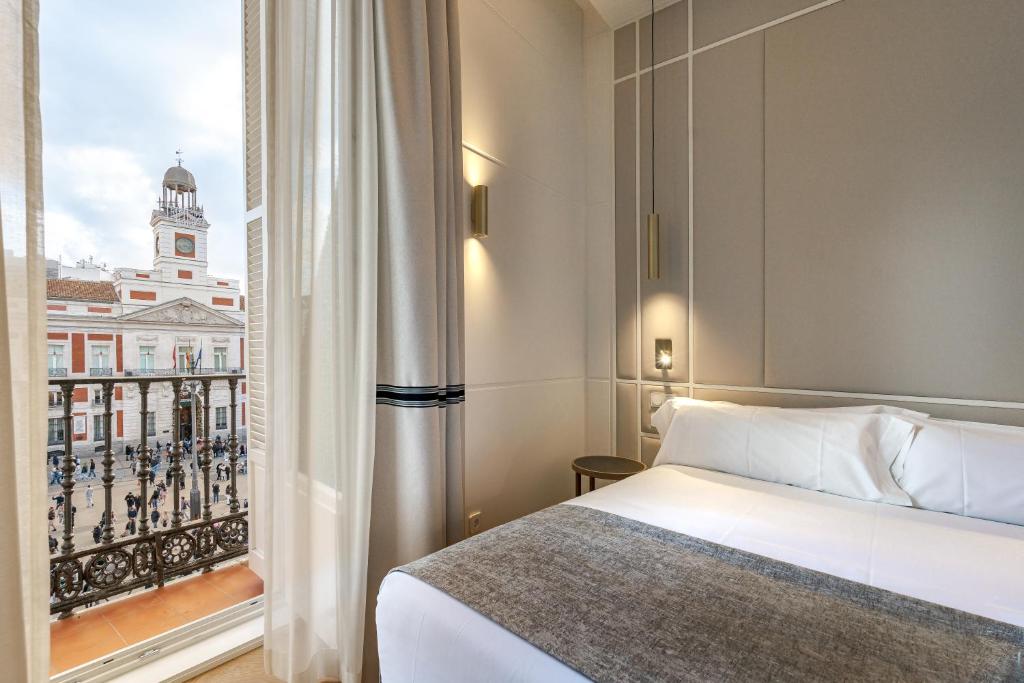
La Fonda de los Príncipes
A four-star hotel overlooking Puerta del Sol, with balcony rooms looking out over the square or the city, and Plaza Mayor just 300 metres away. For longer stays or families, there are suites with living rooms and a penthouse with its own kitchen and terrace. Breakfast includes gluten-free options; quiet is requested from 22:00 to 08:00, and there’s no parking.
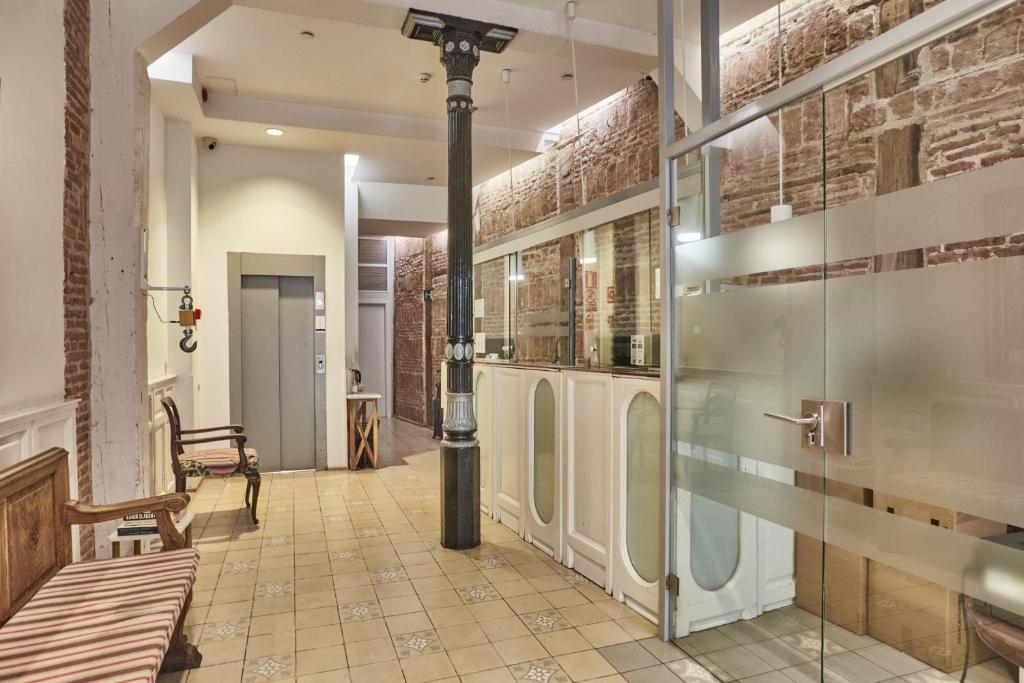
Hostal Madrid
A three-star hostel 150 metres from Sol and Plaza Mayor, practical if you’re travelling alone or in a small group: it has single, double and triple rooms, some with city views. Reception is open 24 hours and luggage can be stored on your departure day. Breakfast isn’t included, and there’s a surcharge if you arrive after 22:00.
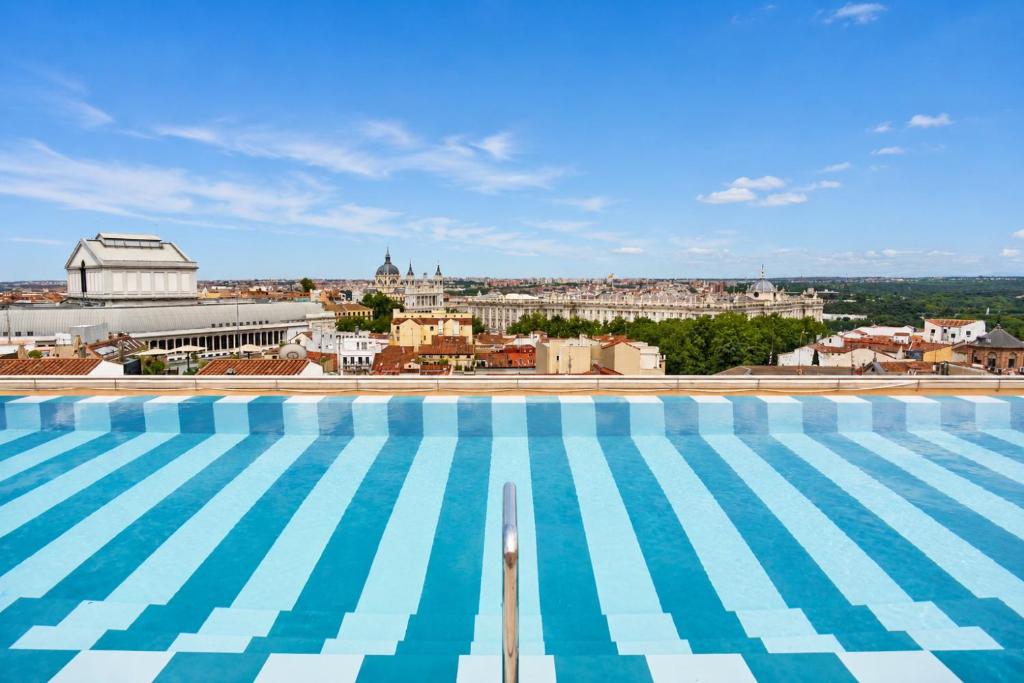
Urban Hive Madrid
Four stars, 350 metres from the Royal Palace and 450 from Plaza Mayor, with something unusual in the very centre: a seasonal outdoor pool, as well as a gym. It has two restaurants, a café and a bar, plus rooms with terraces or city views. Pets are allowed, possibly for an additional fee; there’s no parking.
Literary Quarter, Lavapiés and the Art Walk
The Literary Quarter, or Huertas, stretches between Calle de Atocha and Carrera de San Jerónimo. Cervantes, Lope de Vega and Quevedo lived here, and their verses are engraved in the pavement of Calle de las Huertas. To the east, the Paseo del Prado brings together the Prado, the Thyssen-Bornemisza and the Reina Sofía, and forms part of the Landscape of Light, a UNESCO World Heritage Site since 2021 along with the Retiro.
Farther south, Lavapiés is the most multicultural neighbourhood in the centre, with traditional courtyard houses, small theatres and food from around the world. It’s ideal if you’re interested in museums and taverns, and a little quieter at night than Sol.
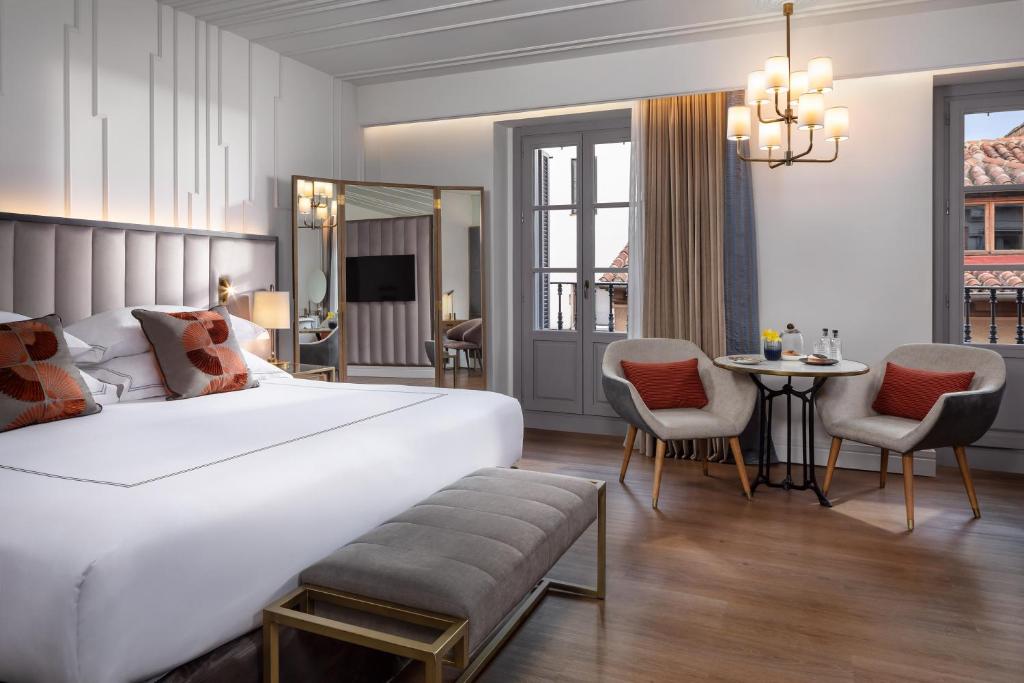
Gran Hotel Inglés - The Leading Hotels of the World
A five-star hotel in a 19th-century building in the Literary Quarter, with Art Deco-style rooms and suites with separate living spaces. It has a spa, gym, yoga classes and massages; the Thyssen is 400 metres away and the Prado 650. Pets stay free on request; parking is off-site, paid and must be reserved.
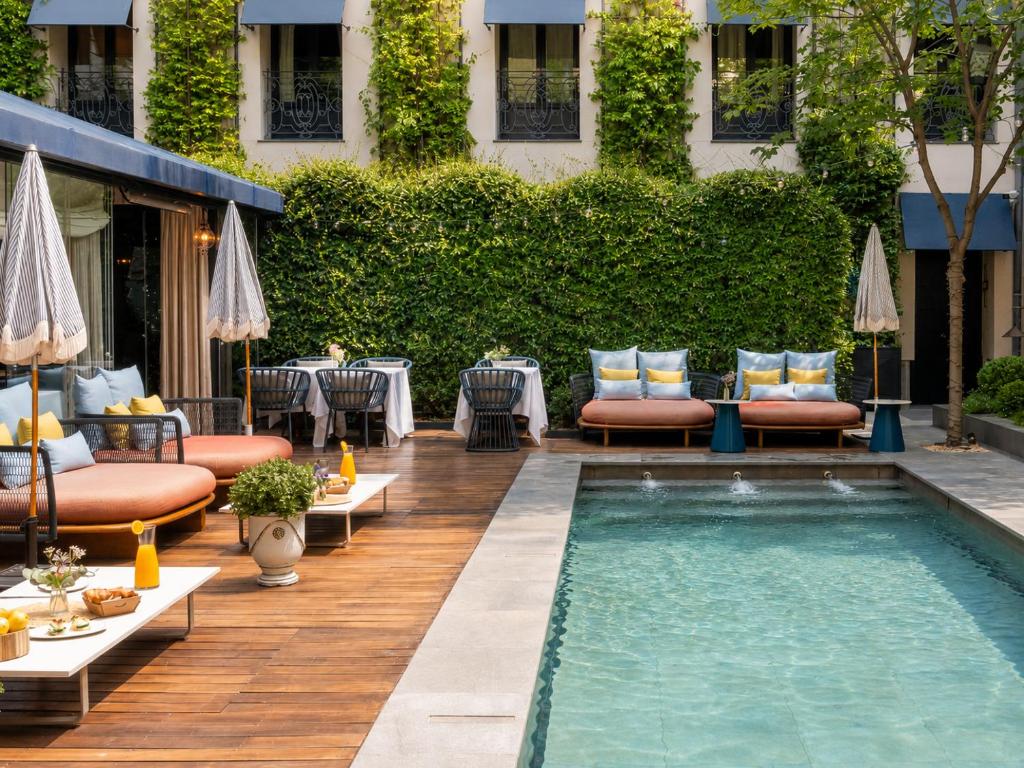
CoolRooms Palacio de Atocha
A four-star hotel in the Literary Quarter with a garden, terrace and solarium—a rare luxury of outdoor space in this part of the city. Suites range from 32 to 100 square metres, and the Superior suite, with two bedrooms and two bathrooms, works well for a family of four. Free Wi-Fi is available in the communal areas, and breakfast is à la carte.
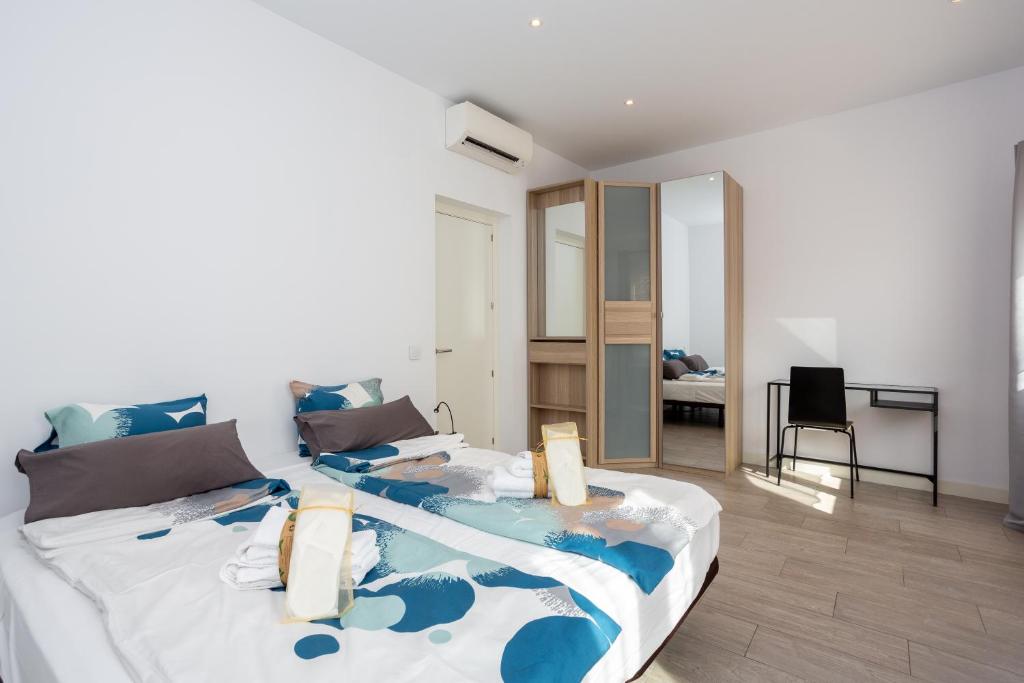
Alma Suites Madrid CH
Apartments of up to 40 square metres with fully equipped kitchens in Lavapiés, 200 metres from the metro and 650 from the Reina Sofía. It’s a good base if you’d rather make your own breakfast and explore the museums and markets at your own pace. The rules are clear: quiet hours from 21:00 to 10:00, no parties and no parking.
Gran Vía, Chueca and Malasaña
Gran Vía showcases early 20th-century Madrid, with its domed buildings, cinemas turned into musical theatres and nonstop activity. To the north are Chueca, the centre of Pride celebrations each year in early July, and Malasaña, with its vintage shops and bars around Plaza del Dos de Mayo.
This is the liveliest area for nightlife, ideal for couples and groups of friends. If a good night’s sleep matters to you, look for soundproofed rooms or rooms that don’t face the main street.
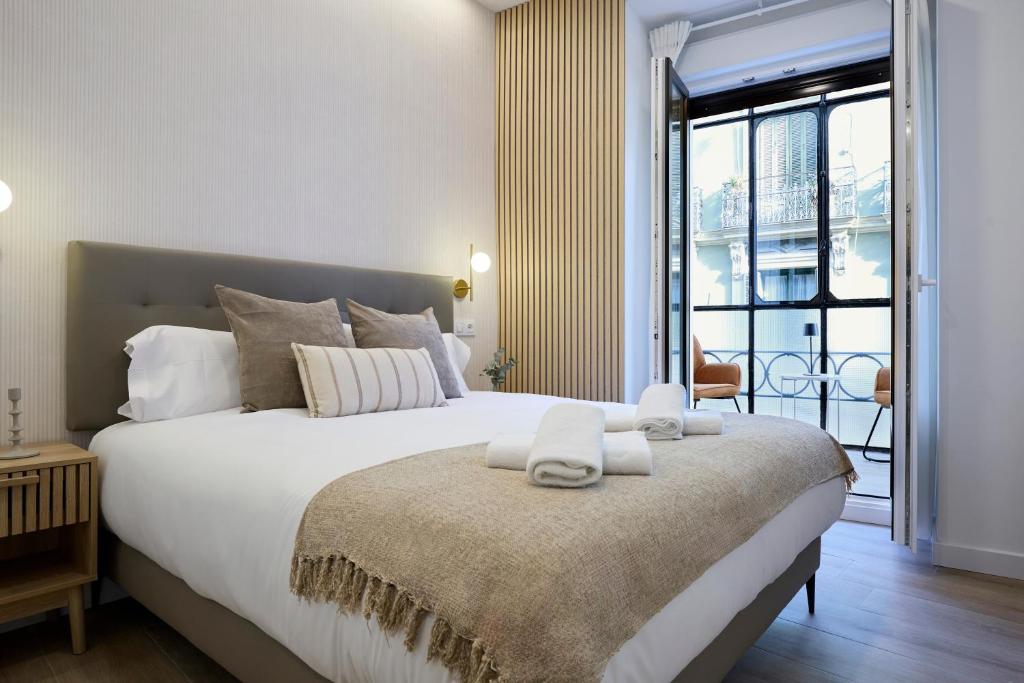
AC Rooms Madrid Centro
A hostel between Chueca and Gran Vía, with Chueca and Gran Vía metro stations about 300 metres away and soundproofed rooms, some with a balcony or terrace. Triple rooms combine a double bed with a single bed or sofa bed, handy for three friends. Bear in mind that payment by bank transfer is required before arrival and there’s no parking.
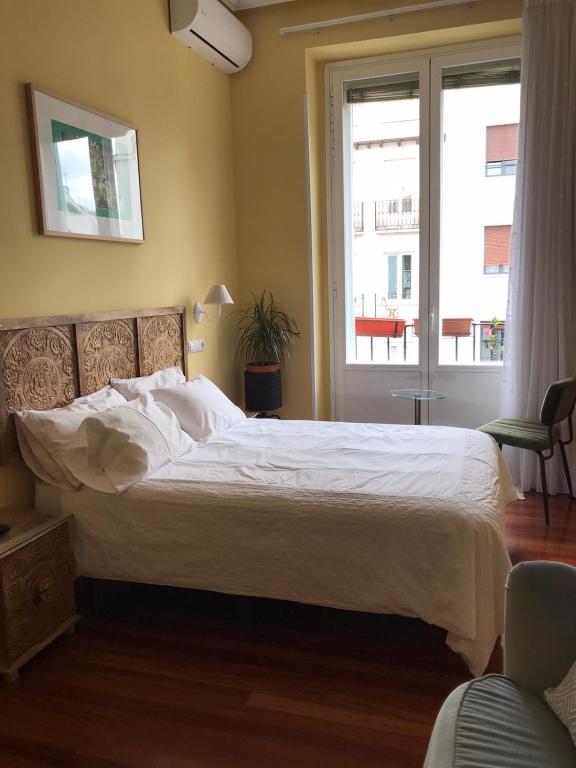
La casa de la escritora
A small place to stay two minutes from Gran Vía, designed for two: the double room has a balcony with city views and soundproofing, and the metro is 100 metres away. It’s a comfortable city break for a couple who want to get around on foot. The upper floors are accessible by stairs only.
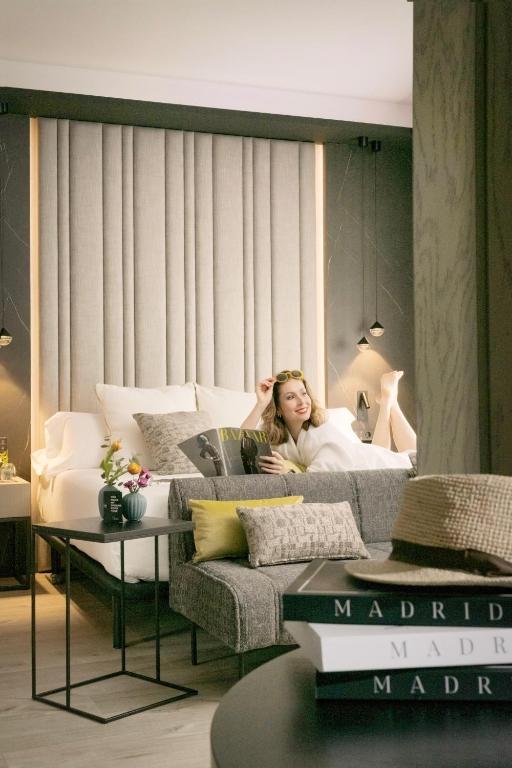
Hotel Regina
Four stars between Sol and the start of Gran Vía, with Sevilla metro station practically on the doorstep. It serves a buffet breakfast and has Castizo, a Mediterranean restaurant; some penthouse rooms also have a terrace and hot tub. It’s accessible for guests with reduced mobility, with a lift to every floor, but there’s no parking.
Outside the centre: Chamartín, Ciudad Lineal and Moratalaz
To the north, Chamartín combines offices, wide avenues and the Santiago Bernabéu stadium; to the east, Ciudad Lineal and Moratalaz are residential neighbourhoods with good metro connections. Places to stay here tend to be more spacious, parking is easier and the streets are quiet at night.
They’re a good choice if you’re arriving by car, travelling in a group or attending a trade fair at IFEMA in the northeast of the city. The trade-off is a metro ride of around twenty or thirty minutes to Sol.
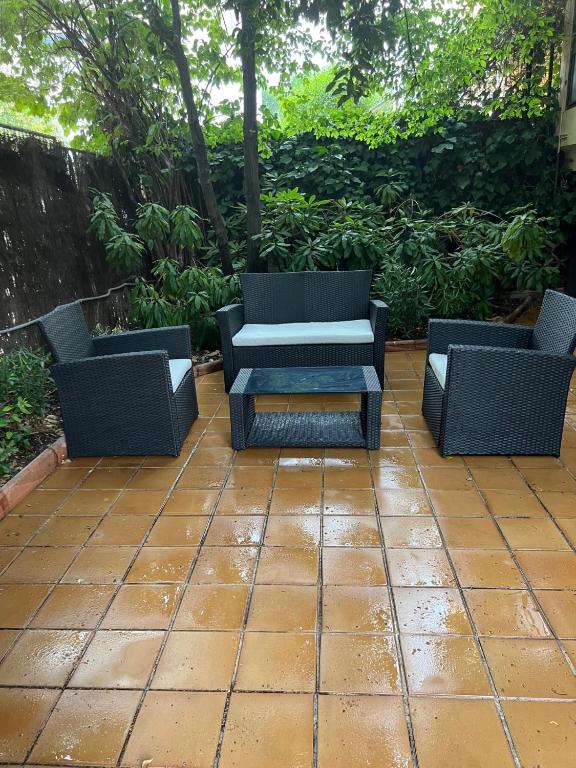
The Garden Madrid
A 60-square-metre apartment in Chamartín, with three bedrooms for six people, a fully equipped kitchen with a dishwasher and garden views. Private parking is free and doesn’t need to be reserved, and the Bernabéu is an eleven-minute walk away. Check-in is only available from 15:00 to 18:00, and parties aren’t allowed.
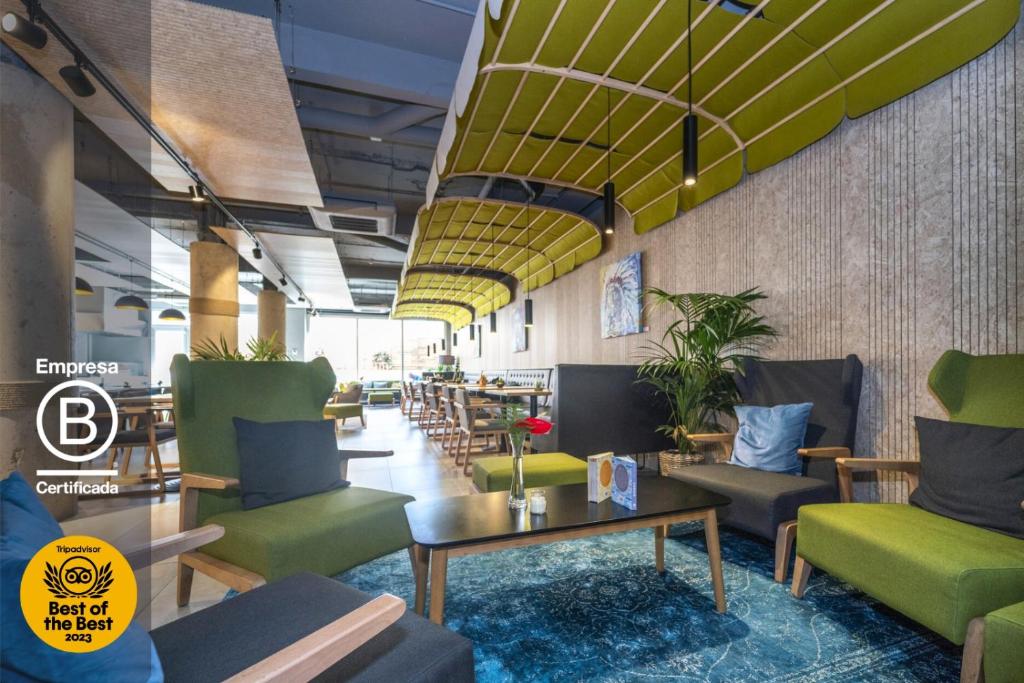
ARTIEM Madrid
Four stars in Ciudad Lineal, convenient for business trips: there are meeting rooms, desks in the bedrooms, and the metro and bus are just a short walk away. The rooms are soundproofed, the gym helps you keep up your routine, and the breakfast buffet is served in The Slow lounge. Private parking is paid and can’t be reserved.
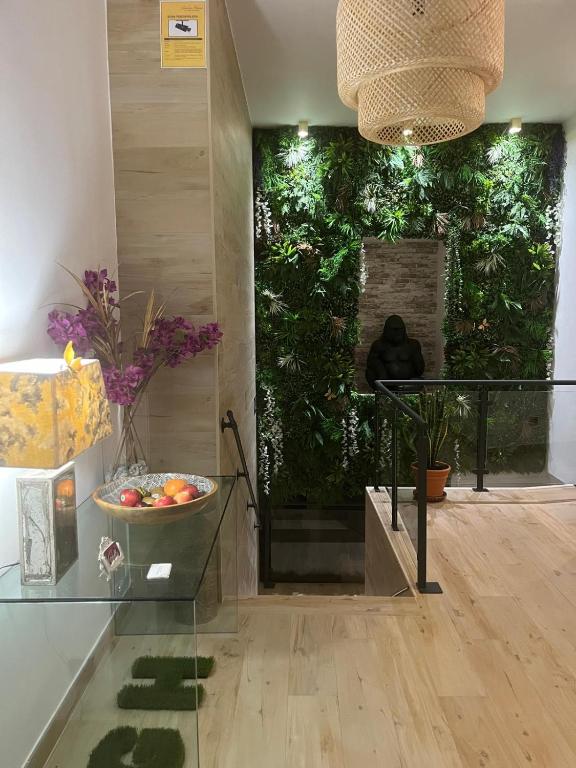
GARDEN HOUSE Madrid
A hostel in Moratalaz with rooms that include a kitchen, fridge, microwave, coffee maker and toaster; some have bunk beds for four people. It has 24-hour reception and an airport shuttle service. Arrivals after 22:00 incur a surcharge, and a cash deposit is required at check-in.
What to see in Madrid
The Art Walk is reason enough to visit: Velázquez, Goya and Bosch at the Prado, the Thyssen-Bornemisza collection and Picasso’s Guernica at the Reina Sofía. Behind the Prado is the Retiro, with its large lake and Crystal Palace, and the Royal Botanical Garden lies down towards Atocha.
In historic Madrid, don’t miss the Royal Palace and Sabatini Gardens, Plaza Mayor, the Convent of Las Descalzas Reales and San Miguel Market. At sunset, people head up to the Temple of Debod, an Egyptian temple gifted to Spain in the 20th century, to watch the sun set over Casa de Campo.
On Sunday mornings, El Rastro fills Ribera de Curtidores with stalls and browsers. For a traffic-free walk, Madrid Río runs for kilometres along the banks of the Manzanares, while the renovated Bernabéu offers stadium and club museum tours.
Madrid as a base for exploring the region
The Cercanías commuter rail network makes Madrid a good starting point for day trips. In an hour or less, you can reach Alcalá de Henares, Cervantes’ birthplace and a World Heritage Site for its university; Aranjuez, with its palace and gardens beside the Tagus; or San Lorenzo de El Escorial, home to Philip II’s monastery.
If you’d rather get out into nature, the Guadarrama mountains begin an hour to the north: Cercedilla and Navacerrada are gateways to mountain trails, while the Lozoya Valley, with Rascafría, is home to El Paular Monastery. To the southeast, Chinchón is worth a visit for its arcaded main square.
If you want to stay outside the capital, see all the options in the region among the places to stay in the Community of Madrid.
When to visit Madrid
Spring and autumn are the best seasons: mild temperatures, busy terraces and plenty of daylight for walking. In mid-May, the San Isidro festival fills the park and traditional street parties; the Pride celebrations follow in early July.
Summer is very hot, and many Madrileños go on holiday in August. The city is quieter, but some bars and restaurants close. Winter is cold and dry, with sunny days that are ideal for museums and the festive lights in the centre.
Keep an eye on major events at the IFEMA exhibition centre, which fill the hotels. FITUR takes place from 20 to 24 January 2027, ARCOmadrid from 3 to 7 March 2027, and the Spanish Formula 1 Grand Prix will be held at the Madring circuit from 10 to 12 September 2027. It’s worth booking well in advance for these dates.
How to get to and around Madrid
From Barajas Airport, metro line 8 has a station at every terminal and reaches Nuevos Ministerios in about 20 minutes. The Cercanías C-1 commuter train also departs from T4, stopping at Chamartín, Nuevos Ministerios, Recoletos and Atocha.
The 203 Exprés bus runs 24 hours a day: during the day it terminates at Atocha, and overnight at Cibeles, with a journey time of 30 to 40 minutes depending on the terminal. Official taxis charge a fixed fare between the airport and the centre.
If you arrive by train, AVE services stop at Puerta de Atocha-Almudena Grandes and Chamartín-Clara Campoamor, both well connected to the metro. In the city, the metro and your own two feet are all you need; a car is more trouble than it’s worth, as the Central District is a low-emission zone with restricted access and parking is expensive.
Madrid is the starting point for our guide to where to stay in the Community of Madrid, with ideas for staying in the mountains, the villages of the Tagus valley or the region’s World Heritage cities.
Frequently asked questions
Quick answers to the questions we’re most often asked by people planning a trip to Madrid.
What’s the best area to stay in Madrid?
For a first visit, the area between Sol, Ópera and the Literary Quarter is the most practical. From there, you can walk to the Royal Palace, Plaza Mayor, the Retiro and the three major museums along Paseo del Prado. If you’re looking for nightlife, Gran Vía, Chueca and Malasaña are livelier. If you prefer peace and parking, neighbourhoods such as Chamartín or Ciudad Lineal offer more spacious places to stay, and you can reach the centre by metro in twenty or thirty minutes.
Is it better to stay in Sol or the Literary Quarter?
Sol is the most central point in the city: the metro and Cercanías trains are on the square, and Plaza Mayor is just a few steps away, but it’s busy at all hours. The Literary Quarter is a five-minute walk away and a little quieter, with narrow streets, traditional taverns and the museums along Paseo del Prado close by. If you’re mainly here for the art, Huertas is the best base; if you want to be in the heart of the city, choose Sol.
Where should I stay in Madrid with children or in a group?
Look for family suites or places to stay with a kitchen. In the centre, some hotels in the Literary Quarter and Sol have two-bedroom suites or penthouses with kitchens, handy for getting everywhere on foot. If you’re travelling by car or there are several of you, it’s worth looking at neighbourhoods such as Chamartín or Moratalaz, where you’ll find apartments for six and rooms for four with nearby or free parking. The metro gets you to the centre easily, and the Retiro is the main park for children.
How do I get from Barajas Airport to central Madrid?
You have four options. Metro line 8 stops at every terminal and reaches Nuevos Ministerios in about 20 minutes, where you can connect to the rest of the network. The Cercanías C-1 departs from T4 for Chamartín, Nuevos Ministerios, Recoletos and Atocha. The 203 Exprés bus runs 24 hours a day, going to Atocha during the day and Cibeles overnight, in 30 to 40 minutes. Official taxis charge a fixed fare between the airport and the centre.
Can you rent a tourist apartment in central Madrid?
It’s getting harder. The Plan Reside, approved in 2025, bans standalone tourist apartments in residential buildings in the historic centre, even on the ground floor; they’re only allowed in buildings used entirely for that purpose or in non-residential buildings. They’re still available outside the historic centre, subject to conditions. If you want a kitchen and space in the very centre, look at aparthotels, hostels with apartments, or hotels with suites and penthouses, which don’t depend on these licences.
When should I book furthest in advance in Madrid?
When major trade fairs and events are on at IFEMA. FITUR, from 20 to 24 January 2027, and ARCOmadrid, from 3 to 7 March 2027, fill many of the hotels, as does the Spanish Formula 1 Grand Prix, held at the Madring circuit from 10 to 12 September 2027. Demand is also high in mid-May for San Isidro and in early July for Pride. It’s worth booking months in advance for these dates.